
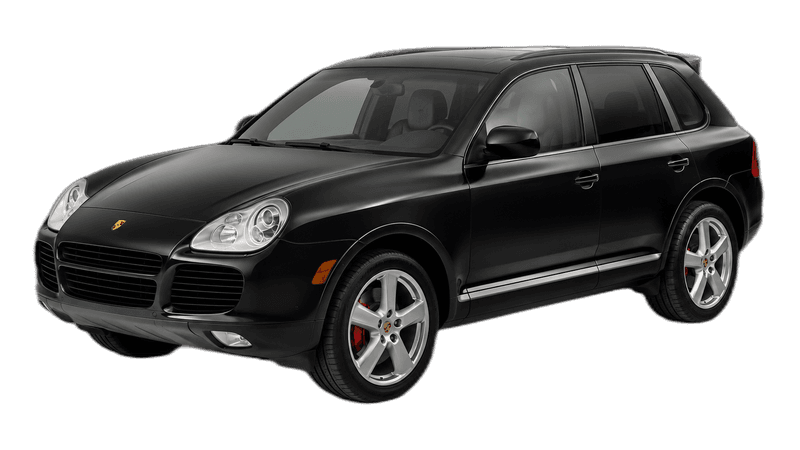
Porsche Cayenne GTS (E3)
£75,000
usedIndicative market price, updated periodically.
454bhp
Power
4.5s
0-100 km/h
270km/h
Top Speed
£75,000
Price Used
How hard it pulls.
Peak g-force the instant you bury the throttle, estimated from the car's 0–100 time and drivetrain.
Porsche Cayenne GTS (E3)Estimated peak launch g from the 0–100 time and drivetrain: an honest approximation, not a measured figure.
The Porsche Cayenne GTS (E3) is a 5-door suv by Porsche, with 454 bhp, 620 Nm of torque, a 0-100 km/h time of 4.5 seconds and a top speed of 270 km/h. Indicative used value: approximately £75,000. Actual values vary with specification, condition and history.
Dream Car Garage Editorial · Last updated 28 October 2026
Overview
We have not driven this car. This review is based on published specifications and the sources listed below.
The V8 GTS in the third-generation Cayenne
The E3 Cayenne GTS introduced in 2020 uses a 4.0-litre, 3,996 cc biturbo V8 producing 460 PS, approximately 454 bhp, and 620 Nm. An eight-speed Tiptronic S transmission drives all four wheels. Porsche quotes 4.5 seconds to 100 km/h with Sport Chrono and 270 km/h. This is the GTS before the later, more powerful facelift, not a V6 Cayenne S or a Turbo.
We have not driven this model for this article. This guide uses Porsche's GTS announcement, the PistonHeads third-generation Cayenne buying guide and Porsche's VIN recall service. The independent guide covers the wider 9Y0 and 9Y3 range, so its experiences are inspection context rather than proof of a GTS-wide fault pattern. No model-specific production total is established, and the count remains unset.
Tiptronic is not PDK
The GTS uses a ZF torque-converter automatic, not a dual-clutch PDK. Assess normal engagement, low-speed behaviour and shifts through the available modes without importing PDK assumptions. Request fluid, software and diagnostic history where applicable. A warning should be read before it is cleared, and the specialist should separate stored information from a current fault.
Inspect for fluid leaks and evidence of underbody contact. The GTS's performance does not make a harsh shift or warning a normal feature. Document the actual behaviour and its conditions rather than repeatedly provoking it during a viewing. If a previous adaptation or software procedure was performed, ask what problem it addressed and whether the symptom returned.
Steel springs, air suspension and rear steering
The standard GTS chassis uses steel springs lowered by 20 mm with PASM and PTV Plus. Air suspension with a further lowering function, rear-axle steering and PDCC were optional. Establish what this vehicle actually has rather than treating every advertised chassis feature as standard. The independent guide provides the same equipment distinction.
For steel-spring cars, inspect springs, dampers, bushes and links, and compare tyre wear with alignment measurements. For air-equipped cars, check level operation, compressor behaviour, warnings and evidence of leakage. Rear-axle steering and PDCC deserve model-appropriate diagnostics where fitted. A dashboard without a warning is not proof that every actuator or sensor has been examined.
V8 service history and fluid evidence
Ask for dated servicing, oil, filter, coolant and diagnostic invoices. PistonHeads describes two-year or 20,000-mile intervals, but its 2022 prices are not current estimates. Obtain quotations for the individual car. Long storage or incomplete history should prompt questions about recommissioning rather than being offset by a polished engine bay.
Check for oil and coolant residue and any overheating or warning history. A clean undertray does not establish the condition above it. The inspector should record where access was possible and which trays remained fitted. Any replacement pump, hose, seal or sensor should be connected with the diagnosis and subsequent verification.
Brakes, wheels and tyre measurements
The GTS has 390 mm front and 358 mm rear brakes in the standard configuration described by Porsche, with 21-inch RS Spyder wheels. Optional tungsten-carbide or carbon-ceramic systems change the inspection and must be identified from the build record. Measure the installed discs and pads rather than applying one braking specification to every GTS.
PistonHeads discusses brake squeal and a brake-wear-warning recall. Treat these as reasons to inspect the actual system and check the VIN, not proof of a universal defect. Check wheel condition, tyre dates, matching specification and wear. Large wheels and substantial power do not make uneven wear or vibration unimportant. Ask for alignment evidence after suspension or wheel work.
Panoramic roof, tailgate and electronics
The buying guide highlights panoramic-roof seal leaks on some third-generation cars. Inspect seals, headlining and accessible drainage areas for water marks, and demonstrate the roof where fitted. This is an inspection prompt, not evidence that every GTS roof leaks. If weather prevents a useful check, record the limitation rather than declaring the roof watertight.
Demonstrate the electric tailgate, Apple CarPlay, PCM, cameras, windows, mirrors, seats and climate control. PistonHeads mentions CarPlay glitches and tailgate issues. Check software history and whether an intermittent fault was diagnosed rather than merely restarted. Also test the front lift or other equipment if fitted, without assuming it belongs to every example.
Coupe, options and repair evidence
The GTS was offered as an SUV and a Coupe. This catalogue entry is for the standard Cayenne GTS body, so do not use the Coupe's equipment or appearance to identify it. Inspect tow equipment, underside, body repairs and replaced panels against the build record. A tow bar and cargo area can provide useful evidence of use but do not by themselves establish condition.
The Cayenne's extensive option list makes equipment verification important. Match wheels, suspension, steering, brakes, seats and driver assistance to the actual chassis. Modifications should have invoices and, where relevant, confirmation of insurance or warranty treatment. Original parts included with the car should be listed rather than assumed to exist.
Provenance, campaigns and inspection limits
A complete file should connect servicing, brake work, software, chassis repairs, tyres and ownership history. An Approved warranty or maintenance agreement needs its own dates and exclusions verified with the provider. A dealer advertisement does not make every fault covered, and an independent inspection remains necessary.
Use the 17-character VIN in Porsche's recall tool and retain dealer confirmation of completed campaigns. The service lists open campaigns and complements, rather than replaces, the service file. A campaign affecting another Cayenne does not establish that this chassis is affected.
We have not driven this model for this article. No present transaction price, future-value assurance or universal reliability claim is made. The strongest assessment identifies the exact GTS and its options, measures brakes and tyres, examines the fitted suspension, demonstrates roof and electrical equipment, and records unresolved symptoms or inaccessible areas. Production uncertainty remains unset rather than borrowing a Cayenne-family total.
Specifications
Engine
4.0L (3996 cc) twin-turbo V8
Displacement
4.0L
Power
454 bhp
Torque
620 Nm
0-100 km/h
4.5s
Top Speed
270 km/h
Drivetrain
AWD
Country
Germany
Body Style
5-door SUV
Years
2020–2023
Price Used
£75,000
Specifications are manufacturer-published figures.
More from Porsche
Frequently Asked Questions
What are the specifications of the Porsche Cayenne GTS (E3)?
The Porsche Cayenne GTS (E3) is a 5-door suv by Porsche, with 454 bhp, 620 Nm of torque, a 0-100 km/h time of 4.5 seconds and a top speed of 270 km/h. Indicative used value: approximately £75,000. Actual values vary with specification, condition and history.
How much does a Porsche Cayenne GTS (E3) cost?
Indicative used value: approximately £75,000. Actual values vary with specification, condition and history.
What drivetrain does the Porsche Cayenne GTS (E3) use?
The Porsche Cayenne GTS (E3) is configured with all-wheel drive.
What type of car is the Porsche Cayenne GTS (E3)?
The Porsche Cayenne GTS (E3) is a suvs manufactured by Porsche in Germany. Production ran from 2020 to 2023.