
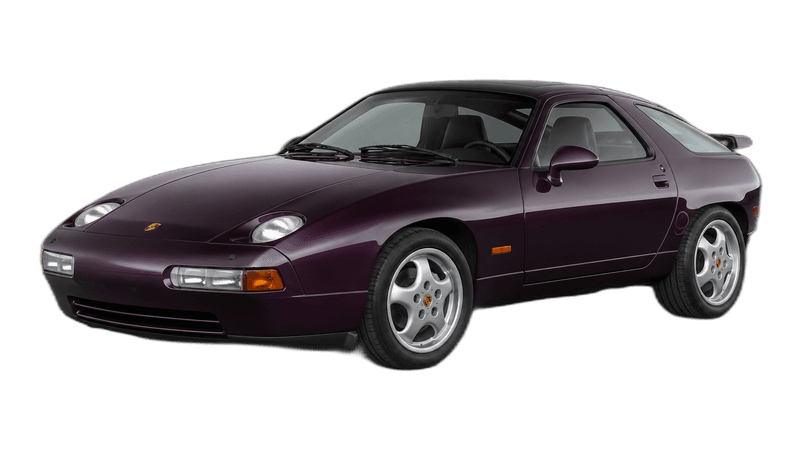
Porsche 928 GTS
£65,000
usedIndicative market price, updated periodically.
345bhp
Power
5.7s
0-100 km/h
275km/h
Top Speed
£65,000
Price Used
How hard it pulls.
Peak g-force the instant you bury the throttle, estimated from the car's 0–100 time and drivetrain.
Porsche 928 GTSEstimated peak launch g from the 0–100 time and drivetrain: an honest approximation, not a measured figure.
The Porsche 928 GTS is a 2+2 coupe by Porsche, with 345 bhp, 500 Nm of torque, a 0-100 km/h time of 5.7 seconds and a top speed of 275 km/h. Indicative used value: approximately £65,000. Actual values vary with specification, condition and history.
Dream Car Garage Editorial · Last updated 28 October 2026
Overview
We have not driven this car. This review is based on published specifications and the sources listed below.
The final development of the front-engined 928
The 928 GTS was offered in model years 1992 to 1995 with a 5,397 cc naturally aspirated V8, 350 PS or approximately 345 bhp, and 500 Nm at 4,250 rpm. The manual version is quoted at 5.7 seconds to 100 km/h and 275 km/h. This is a rear-wheel-drive, five-speed manual GTS, not a GTS automatic and not the earlier S4 covered by most of the PistonHeads guide.
We have not driven this model for this article. The sources are Porsche's official 928 GT/GTS history, the PistonHeads 928 buying guide and an UltimateSpecs GTS specification page. PistonHeads explicitly excludes the GTS from its detailed coverage. Its mechanical observations therefore provide general 928 inspection context, not evidence of GTS-specific failures. No model-specific production total is established by these sources.
Cambelt and coolant evidence comes first
The 32-valve V8 is an interference engine. The guide recommends cambelt replacement every five years or 45,000 miles, ideally with the tensioner and water pump. Ask for dated invoices identifying exactly what was replaced. A recent mileage alone does not establish that an older belt remains suitable, and a receipt for a belt without associated parts does not answer the same question as a complete kit installation.
Inspect coolant level, radiator condition, thermostat history and any evidence of overheating. Regular coolant maintenance matters on a car of this age. Check for oil leaks around crank seals and engine gaskets, and ask a specialist to assess oil consumption or smoke rather than assuming that every 928 consumes the same amount. Previous engine work should identify measurements and findings, not simply state that the engine was repaired.
Manual and automatic cars need different checks
The five-speed manual has a dogleg first gear and a rear transaxle. Assess clutch operation, gear selection, synchromesh behaviour and evidence of transaxle leaks. Do not judge its shift pattern by a conventional manual or confuse its layout with the Mercedes four-speed automatic. Any inspection should record which transmission the individual GTS has before applying a checklist.
For an automatic 928, the guide highlights thrust-bearing failure as a potentially serious historical issue. Establish whether the relevant inspection, measurements and preventative work are documented. Do not assume that a fluid change or an external repair proves the crankshaft and bearing clearances are correct. A Porsche specialist familiar with the 928 should explain what was measured and when.
ATF, wiring and age-related electrical checks
The automatic transmission and power steering both use ATF, and hydraulic or steering-hose problems deserve careful inspection. Inspect hoses, connections and the ground beneath the car for leaks. PistonHeads describes the risk of ATF reaching hot components; that is a reason for careful inspection, not a claim that every GTS is at immediate risk. Ask for hose replacement and system service history rather than accepting a recent clean-up as evidence.
Age-related wiring, sensor and ground faults can affect running and instruments. Inspect distributor-drive belt history, ignition components and accessible connections. The instrument binnacle, printed circuit boards and plugs deserve functional checks as well as visual inspection. Demonstrate warning lights, gauges, climate control and switches. An intermittent fault should be diagnosed rather than dismissed as ordinary behaviour for an old Porsche.
Chassis, brakes and body condition
Inspect suspension bushes, dampers, springs, steering and wheel bearings. Compare tyre wear with an alignment report and check that the 17-inch Cup wheels are correct and free from damage. The guide discusses hydraulic-pump bleeding in connection with brake work, so ask for the procedure used after relevant maintenance. Measure the brakes and review fluid history rather than relying on pedal feel during a short drive.
Check the subframe, jacking points, underbody and body seams for corrosion or previous repair. The GTS has flared rear wings, a colour-keyed rear wing, Cup mirrors and the red rear light strip. Aluminium doors, wings and bonnet require different repair assessment from the steel structure beneath them. Confirm that replacement panels and cosmetic work retain the correct model identity.
GTS equipment and practical inspection
Verify the wider rear bodywork and exterior details against the official model description rather than treating every modified 928 as a GTS. Inspect the tailgate spoiler, cooling ducts and underbody for contact or obstruction. Try the rear hatch, seats, windows and mirrors, and check the cabin for dampness after wet weather. Equipment faults can arise from age and disuse, so a complete demonstration matters more than a polished photograph.
A full history is especially valuable on a low-volume older car. Look for continuous belt, coolant, fluid and electrical records rather than judging by odometer reading alone. Ask about storage and recommissioning after inactivity. Where the PH guide discusses S4 symptoms or automatic-specific hazards, keep those observations bounded instead of presenting them as confirmed GTS defects.
Method and remaining uncertainty
The aluminium doors, wings and bonnet do not eliminate structural or mechanical corrosion checks. Inspect the steel structure, subframes, mounting points and accident repairs separately from cosmetic panel condition. The GTS's wider rear wings and light strip should be assessed for fit and documented repair quality. A respray can improve appearance without explaining why a panel was replaced, so retain photographs, invoices and any alignment evidence from restoration work.
We have not driven this model for this article. An independent inspection should include belt and water-pump documents, cooling and oil systems, transmission-specific checks, wiring, hydraulics, suspension, body and a complete electrical demonstration. Ask the specialist to identify areas that could not be accessed and any test that remains outstanding. No present price, investment return or universal reliability claim is offered, and unsupported production estimates remain unset.
Specifications
Engine
5.4L (5397 cc) naturally aspirated V8
Displacement
5.4L
Power
345 bhp
Torque
500 Nm
0-100 km/h
5.7s
Top Speed
275 km/h
Drivetrain
RWD
Country
Germany
Body Style
2+2 coupe
Years
1992–1995
Price Used
£65,000
Specifications are manufacturer-published figures.
More from Porsche
Frequently Asked Questions
What are the specifications of the Porsche 928 GTS?
The Porsche 928 GTS is a 2+2 coupe by Porsche, with 345 bhp, 500 Nm of torque, a 0-100 km/h time of 5.7 seconds and a top speed of 275 km/h. Indicative used value: approximately £65,000. Actual values vary with specification, condition and history.
How much does a Porsche 928 GTS cost?
Indicative used value: approximately £65,000. Actual values vary with specification, condition and history.
What drivetrain does the Porsche 928 GTS use?
The Porsche 928 GTS is configured with rear-wheel drive.
What type of car is the Porsche 928 GTS?
The Porsche 928 GTS is a gts manufactured by Porsche in Germany. Production ran from 1992 to 1995.