
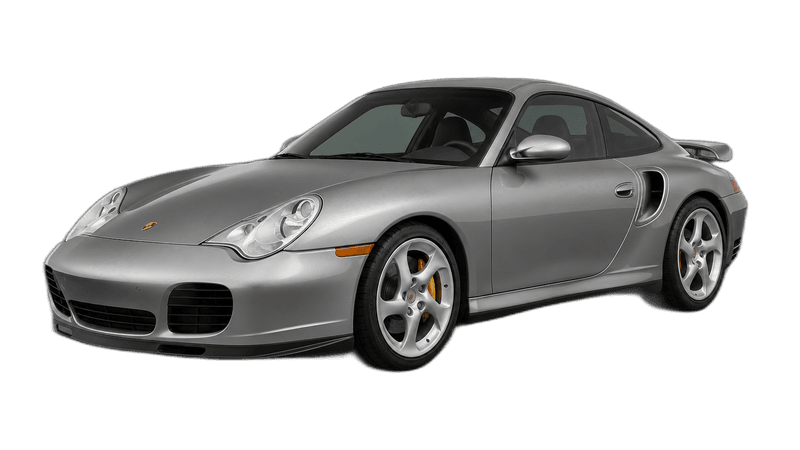
Porsche 911 Turbo (996)
£62,000
usedIndicative market price, updated periodically.
414bhp
Power
305km/h
Top Speed
£62,000
Price Used
The Porsche 911 Turbo (996) is a 2+2 coupe / cabriolet by Porsche, with 414 bhp, 560 Nm of torque and a top speed of 305 km/h. Indicative used value: approximately £62,000. Actual values vary with specification, condition and history.
Dream Car Garage Editorial · Last updated 27 October 2026
Overview
We have not driven this car. This review is based on published specifications and the sources listed below.
A different 996 ownership proposition
The 996 Turbo is not simply a Carrera with more power and wider bodywork. Its 3.6-litre twin-turbocharged engine belongs to the Mezger family rather than the ordinary Carrera engine line. Porsche quoted 420 PS and 560 Nm, with a six-speed manual or five-speed Tiptronic and all-wheel drive. The optional X50 power kit raised output to 450 PS, so an original option list and the identity of the installed engine belong in the file.
This is a desk-researched ownership guide. We have not driven this model for this article. Its appeal is the combination of compact dimensions, hydraulic steering and substantial performance without relying on a later model's electronics. That does not make every example mechanically equivalent. Age, storage, modifications and the quality of previous work can change the ownership calculation more than the badge on the rear lid.
Do not import Carrera engine assumptions
The Turbo's engine architecture differs from the contemporary Carrera's M96 family. Advice about a Carrera intermediate-shaft bearing retrofit should not be applied automatically to the Turbo. Equally, the different architecture is not a reason to skip inspection. Ask a Porsche specialist to identify the engine, assess oil and coolant condition, and investigate smoke, leaks or abnormal noises on their evidence rather than on forum reputation.
Confirm whether the car is standard, factory X50 or modified afterwards. An aftermarket tune can alter boost, fueling and thermal demands; a handwritten claim that it is equivalent to X50 is not documentation. Request the original and current software details where available, associated hardware changes and the identity of the workshop. A return to standard may be sensible for some buyers, but an unknown reverse modification is not automatically reassuring.
Cooling deserves more than a visual glance
The front cooling pack can collect road debris and moisture. Elferspot's buying guide highlights radiators, coolant leakage and the condition of associated hardware. Inspect accessible radiator and condenser surfaces, hoses and mounting areas, and ask what requires removal for a proper view. Clean exterior fins do not prove that concealed pipes, pumps or connections are sound.
Review temperature behaviour and any overheating history with the inspecting specialist. A recent coolant change is routine maintenance, not proof of a healthy system. Test heating and air conditioning as well; front condensers share a harsh environment and an inoperative system deserves diagnosis rather than an assumption that refrigerant alone will resolve it.
Manual and Tiptronic are distinct cars to assess
The manual and five-speed Tiptronic deliver different responses and different published acceleration figures. Do not quote a manual launch figure for an automatic or treat the Tiptronic as a PDK. On a manual, assess clutch take-up, gear selection, synchromesh behaviour and any grinding after the transmission is warm. On a Tiptronic, examine cold and warm shifts, engagement and service records, obtaining diagnosis for an actual symptom.
All-wheel-drive condition, tyre choice and alignment belong to the same assessment. Check matching tyre model, adequate tread, manufacturing dates and correct specification across both axles. Uneven wear can reflect suspension or alignment problems, not simply enthusiastic use. Ask whether the inspecting workshop found any transmission, differential or mounting faults rather than accepting a short demonstration as a clean bill of health.
Suspension, brakes and previous use
Elferspot identifies engine and suspension mounts among the useful inspection points. Bushes, dampers, arms and mounts can all change the way an ageing Turbo conducts itself. Investigate knocks, imprecise tracking and uneven tyre wear. Modifications should be listed individually, with original parts and alignment settings where possible. A collection of recognised brand names does not prove a coherent setup.
PCCB ceramic brakes were optional, so establish what is fitted now. Measure steel discs and pads and inspect hoses and less visible surfaces. On ceramics, obtain a specialist assessment of disc condition and document any later conversion. Ask for evidence of track preparation and incidents if the car has seen circuit use. Low road mileage does not answer those questions.
Body, roof and cabin verification
The Turbo was offered as a coupe and, later in the generation, a Cabriolet. Inspect the body actually for sale rather than treating the catalogue name as a single roof format. Check structural areas, underside condition, panel alignment and repair quality. On a Cabriolet, operate the roof through its full cycle and inspect seals, drainage and evidence of moisture.
Demonstrate seats, windows, mirrors, locks, ventilation and the installed audio and navigation equipment. Check that warning lights complete their normal self-test and remain appropriately extinguished. Dated electronics are not necessarily defective, but non-functioning equipment should be costed from diagnosis. Try the rear seats and luggage space for the intended use rather than assuming the nominal 2+2 layout suits every passenger.
Build a complete ownership decision
Request a pre-purchase inspection from a workshop familiar with this specific Turbo. Ask for separate findings on engine identity, cooling, transmission, chassis, brakes and body repairs. Price the work that is actually evidenced, leaving room for items that cannot be confirmed during a viewing. A folder of invoices is useful only when it explains what remains due as well as what has been completed.
Compare like with like: body style, factory options, transmission, modifications and condition can all change the proposition. This guide makes no prediction about appreciation or future demand. Buy a car whose inspection, maintenance requirements and intended use make sense now, not one whose case depends on a future buyer accepting unresolved questions.
How this review was compiled
We reviewed Porsche's official Turbo-generation history, Porsche's 996 buying guide and Elferspot's model-specific inspection advice. No transaction survey, failure-rate analysis or workshop estimate was undertaken. The checks above are questions for a qualified inspection, not a diagnosis or a promise that any example will be trouble-free.
Specifications
Engine
3.6L (3600 cc) twin-turbocharged Mezger flat-6
Displacement
3.6L
Power
414 bhp
Torque
560 Nm
Top Speed
305 km/h
Drivetrain
AWD
Country
Germany
Body Style
2+2 coupe / cabriolet
Years
2000–2005
Price Used
£62,000
Specifications are manufacturer-published figures.
More from Porsche
Frequently Asked Questions
What are the specifications of the Porsche 911 Turbo (996)?
The Porsche 911 Turbo (996) is a 2+2 coupe / cabriolet by Porsche, with 414 bhp, 560 Nm of torque and a top speed of 305 km/h. Indicative used value: approximately £62,000. Actual values vary with specification, condition and history.
How much does a Porsche 911 Turbo (996) cost?
Indicative used value: approximately £62,000. Actual values vary with specification, condition and history.
Is the Porsche 911 Turbo (996) AWD or RWD?
The Porsche 911 Turbo (996) uses a AWD drivetrain configuration in a 2+2 coupe / cabriolet body style.
What type of car is the Porsche 911 Turbo (996)?
The Porsche 911 Turbo (996) is a sports cars manufactured by Porsche in Germany. Production ran from 2000 to 2005.