
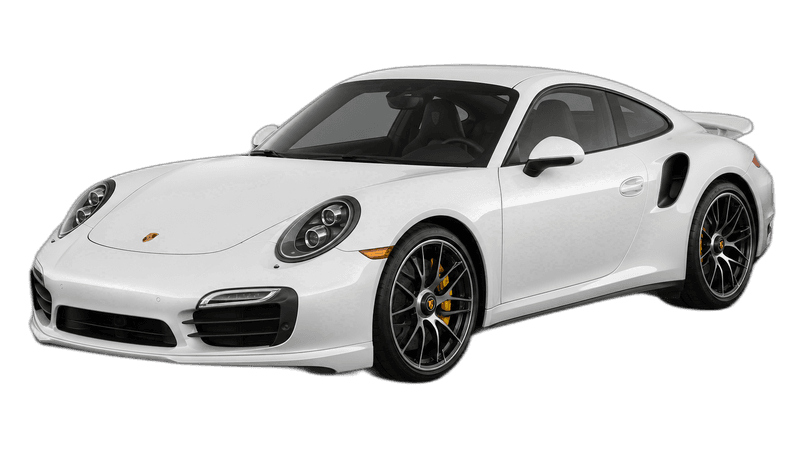
Porsche 911 Turbo (991)
£110,000
usedIndicative market price, updated periodically.
513bhp
Power
315km/h
Top Speed
£110,000
Price Used
The Porsche 911 Turbo (991) is a 2+2 coupe / cabriolet by Porsche, with 513 bhp, 660 Nm of torque and a top speed of 315 km/h. Indicative used value: approximately £110,000. Actual values vary with specification, condition and history.
Dream Car Garage Editorial · Last updated 27 October 2026
Overview
We have not driven this car. This review is based on published specifications and the sources listed below.
The Turbo becomes PDK-only
The 991-generation Turbo arrived in 2013 with a 3.8-litre twin-turbocharged flat-six producing 520 PS. Porsche paired it with seven-speed PDK and all-wheel drive; unlike earlier Turbos, it did not offer a manual gearbox. Rear-axle steering and active aerodynamics became part of the technical package, broadening the difference between this model and the 997 it replaced.
This is a desk-researched ownership guide. We have not driven this model for this article. The early 991 Turbo should also be distinguished from the later facelift, whose output increased to 540 PS and whose dynamic-boost strategy changed throttle response. A generic 991 label is not enough when discussing power or performance.
Confirm phase, options and current software
Use the build record to establish model year, original equipment and any subsequent changes. Sport Chrono affects the published acceleration procedure, while chassis and brake options alter the car's specification. Record whether the vehicle retains its original engine management and whether any tuning, exhaust or suspension changes have been made.
A claimed facelift output does not belong on an early car without evidence of a different engine or modification. Conversely, an early car should not be dismissed because its published figure is lower. Assess the actual vehicle's condition, documentation and suitability rather than treating a twenty-PS difference as the whole decision.
PDK behaviour and maintenance evidence
Every 991 Turbo uses PDK, so transmission assessment is central. Check engagement, low-speed manoeuvring, ordinary shifts and manual selection when the car is cold and fully warm. StuttCars' 991 guide discusses hesitation and the value of fluid-service records. Those symptoms and records are prompts for diagnosis, not proof that every transmission has a defect or that fluid alone will repair one.
Request diagnostic findings for stored faults and any previous mechatronic, clutch or transmission work. A cleared fault history immediately before sale is less informative than a documented repair. Understand what a warranty or service plan actually covers rather than treating its presence as evidence that no work is needed.
Cooling, ignition and engine ancillaries
The wider 991 guide identifies water pumps, coolant condition, ignition coils and sensors among useful inspection areas. Ask a specialist to look for leaks, evidence of overheating and previous cooling-system work. Inspect accessible hoses and radiator areas, recognising that a clean engine bay cannot establish the condition of every internal passage.
An ignition fault, warning light or inconsistent running condition deserves a diagnosis supported by scan data. Do not accept a generic assurance that a sensor is a minor item without identifying which one and why it failed. Modifications that increase boost make a clear maintenance and software history especially important.
Rear steering, PASM and chassis systems
Rear-axle steering was part of the 991 Turbo's technical step forward. Verify correct operation and investigate warnings, abnormal tyre wear or alignment inconsistencies. The system should be assessed by someone equipped to distinguish a calibration or component issue from ordinary 911 behaviour.
PASM, suspension arms, bushes, mounts and wheel bearings all affect how the car copes with its performance. Ask for alignment results and inspect matching tyres, wheel damage and manufacturing dates. Lowering components or spacers should be documented, and a noisy or unsettled car should not be waved away as the inevitable character of a Turbo.
Active aerodynamics and body condition
Active front and rear aerodynamic elements distinguish the 991 from earlier cars. Observe their operation where safely possible and check for warning messages, impact damage or poor repairs. A stationary wing or front spoiler can have several causes; replacing parts before diagnosis is not an inspection strategy.
Examine the front cooling openings, undertrays and lower bodywork for damage. Review structural condition, paint repairs and panel alignment with appropriate equipment. The model was offered as a coupe and Cabriolet, so verify the exact body and inspect roof mechanism, seals and drainage on an open car.
Brakes, electronics and everyday usability
Determine whether steel or PCCB brakes are fitted and inspect that system. StuttCars recommends assessing steel-disc condition and obtaining close inspection of ceramic discs for damage or uneven wear. Include hoses, pads and less accessible surfaces. Track use calls for preparation and consumable records rather than assumptions based on road mileage.
Test PCM, cameras or parking equipment where fitted, seat functions, climate control and driver-assistance features. Software updates can be relevant to PCM behaviour, but an update is not proof that every electronic fault has been resolved. Try the rear seats, luggage access and ride settings in the context of intended use.
Make the inspection outcome actionable
Ask for a written pre-purchase inspection separating urgent safety items, scheduled maintenance, diagnostic uncertainty and cosmetic findings. Include tyres, alignment, brakes and transmission work in the total rather than focusing only on engine output. A car with complete records can still require work; a modified car needs a more precise account of who changed what.
This guide does not estimate failure rates or promise future values. Compare equivalent model phases and equipment, and do not use asking prices as evidence of completed transactions. The right early 991 Turbo is one whose condition and support make its performance usable, not one whose specification sheet conceals unresolved questions.
How this review was compiled
Porsche's official Turbo history supplied model-phase and technical distinctions. StuttCars' 991 ownership guide informed the inspection checklist, and Porsche's 2016 technical documentation clarified the later facelift. We did not test this example, obtain service tariffs or analyse sales. All faults require individual diagnosis.
Specifications
Engine
3.8L (3800 cc) twin-turbocharged flat-6
Displacement
3.8L
Power
513 bhp
Torque
660 Nm
Top Speed
315 km/h
Drivetrain
AWD
Country
Germany
Body Style
2+2 coupe / cabriolet
Years
2013–2015
Price Used
£110,000
Specifications are manufacturer-published figures.
More from Porsche
Frequently Asked Questions
What are the specifications of the Porsche 911 Turbo (991)?
The Porsche 911 Turbo (991) is a 2+2 coupe / cabriolet by Porsche, with 513 bhp, 660 Nm of torque and a top speed of 315 km/h. Indicative used value: approximately £110,000. Actual values vary with specification, condition and history.
How much does a Porsche 911 Turbo (991) cost?
Indicative used value: approximately £110,000. Actual values vary with specification, condition and history.
Is the Porsche 911 Turbo (991) AWD or RWD?
The Porsche 911 Turbo (991) uses a AWD drivetrain configuration in a 2+2 coupe / cabriolet body style.
What type of car is the Porsche 911 Turbo (991)?
The Porsche 911 Turbo (991) is a sports cars manufactured by Porsche in Germany. Production ran from 2013 to 2015.