
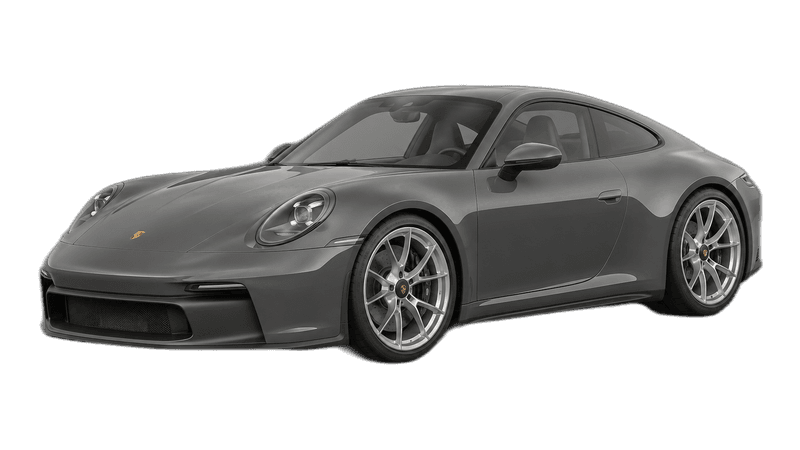
Porsche 911 GT3 Touring (992)
£210,000
usedIndicative market price, updated periodically.
503bhp
Power
£210,000
Price Used
The Porsche 911 GT3 Touring (992) is a 2-door coupe by Porsche, producing 503 bhp, Valued at approximately £210,000.
Dream Car Garage Editorial · Last updated 26 October 2026
Overview
We have not driven this car. This review is based on published specifications, owner reports and market listings.
The 992 Touring formula
The 992 GT3 Touring was unveiled in 2021 as the discreet version of the 992 GT3. It uses the same 4.0-litre naturally aspirated flat-six, rated at 510 PS, and the same double-wishbone front suspension and rear-axle steering as the standard car. The difference is primarily aerodynamic and cosmetic: the fixed swan-neck rear wing is replaced by an automatically extending rear spoiler, and the body is cleaner as a result.
This is a desk-researched ownership guide. We have not driven this model for this article. The Touring is not a comfort model in the way a Carrera is. It shares the GT3's engine, chassis, brakes and track-focused engineering, and it should be inspected as a GT3 rather than as a styling package. The retractable spoiler and the more restrained body create specific checks, but the mechanical priorities are familiar.
The 4.0-litre engine is based on the GT3 R endurance racing engine, according to Porsche. It revs to 9000 rpm and produces 510 PS. The six-speed manual was standard at launch, and for the first time in a Touring, a seven-speed PDK was offered as an option at no extra cost. The manual car weighs 1,418 kg and the PDK car 1,435 kg in Porsche's published figures. At the 2021 launch, Porsche quoted a 320 km/h top speed for the manual and 318 km/h for the PDK; the later 992.2 facelift has different gearing and performance, so verify the applicable figures from the build record.
Engine and transmission
Ask for a cold start and a warm-up, and listen for chain, camshaft or valvetrain noise. Check for oil and coolant leaks, exhaust smoke and evidence of overheating. A compression or leak-down test can add information, but it should be interpreted by someone who knows the engine family. Oil analysis is useful only when the sample and history are known.
The six-speed manual uses a mechanical limited-slip differential. The PDK uses an electronically controlled differential. These are different systems with different service and inspection requirements. A manual car needs the clutch, flywheel, linkage and synchromesh checked. A PDK car needs the transmission fluid, filters, clutches and software checked by a suitably equipped workshop.
The 4.0-litre engine's over-rev report is useful, but the 992's campaign status and aero condition are equally important. Ask for the engine number, any replacement documentation and the completed campaign work orders. A car with a recent engine repair still needs its suspension, brakes and spoiler checked.
The Touring was initially a two-seater with a rear compartment cover rather than a rear bench. Later model-year changes should be checked by the build record, because equipment and seating arrangements can vary. Do not assume that every car described as a Touring has the same specification or that a rear-seat conversion is factory-original.
Chassis and steering
The 992 GT3 introduced a double-wishbone front suspension, derived from the 911 RSR racing car. The rear suspension is a multi-link arrangement, and the car uses rear-axle steering. The chassis is wider than the Carrera, with a front track that is 48 mm wider on the GT3. The Touring shares these fundamentals with the standard GT3.
Check for warning messages and unusual noises from the rear steering system. Ask whether the system has been repaired or replaced. A specialist should inspect the rear steering hardware, wiring and calibration. The optional front-axle lift system, where fitted, should be operated through its full range. Listen for pump noise and inspect for leaks or damaged lines.
Inspect the dampers, springs, top mounts, bushes and ball joints. Ask for an alignment report and establish whether the settings are intended for road or track use. An aggressive camber setting can improve track response while increasing tyre wear on the road. Check the steering rack and tie rods for play or leaks. The 992 uses electromechanical steering, which gives a different feel from the hydraulic system in the 997, but that does not make every example equally healthy.
The Touring's retractable rear spoiler should operate smoothly and without warning messages. Check the rear deck, the spoiler mechanism and the surrounding trim. A car that has been modified with a fixed wing should be assessed for the quality of the installation and the effect on the aero balance. The standard GT3's swan-neck wing is a different assembly, so a conversion is not simply a cosmetic swap.
Body, aero and cabin
The Touring has a cleaner rear deck than the standard GT3, but it retains the wider body, the deeper front bumper and the GT3's cooling openings. Check the panels and mounting points for accident repair, and inspect the front boot area for creases. The radiators and condensers are exposed at the front, so look for stone damage, corrosion and blocked airflow.
The 992 GT3 uses a carbon-fibre-reinforced plastic bonnet, lightweight glass and forged wheels. Inspect the bonnet for cracks, delamination and poor repairs. Check the glass for chips and correct sealing. The front boot holds 132 litres, which is useful but not generous. Try the storage with the items you actually carry.
The cabin is a two-seater in the launch specification, with a fixed rear compartment cover. The Touring was available with most GT3 options, including PCCB, front-axle lift, different seats, Chrono and audio. Verify the actual specification from the build record. A car with a stripped interior is not automatically more authentic, and a car with comfort equipment is not automatically less suitable.
Test the windows, locks, wipers, lights, heater and ventilation. Check the infotainment, audio and driver-assistance systems if fitted. The 992 has complex electronics, and faults can be difficult to diagnose. Ask for the service history and any software updates. A car with a modified exhaust, suspension or engine software should be assessed for compatibility and insurance implications.
Brakes, wheels and tyres
Iron brakes were standard, with PCCB carbon-ceramic brakes available as an option. The iron front discs are 408 mm, and the PCCB system uses larger discs. Identify what is fitted before discussing maintenance. Carbon-ceramic discs need a careful wear and damage assessment, including edge condition and any sign of impact. Iron discs are simpler to replace but still need the correct pads, fluid and cooling.
The car uses 20-inch front and 21-inch rear centre-lock wheels. Confirm the correct torque procedure and the right tools. Inspect the wheels for cracks, repairs and corrosion. Check the tyres for matching specification and manufacturing dates. A car that has been used on track may have high-temperature brake fluid, modified cooling and non-standard pads. Ask for the relevant records.
Check the calipers for uneven pad wear and the lines for corrosion. The 992's PCCB option changes disc cost and inspection, but iron and carbon-ceramic systems both need correct cooling and fluid. A car used on track may have modified ducts and pads that are not suitable for road use.
Campaigns and records
PistonHeads' 992 GT3 buying guide lists campaigns and recalls affecting certain 992-generation cars, including work on the oil filler assembly, front and rear screens, side airbags, seat-belt anchor bolts, the Touring rear spoiler software, a Bose speaker recode and PCM reprogramming. The exact applicability depends on the model year, market and VIN. A campaign is not proof that a particular car has a defect, but completion should be verified.
Ask a Porsche dealer or a specialist to check the VIN against the outstanding campaign list. Request the completed work orders and confirm that any software update was followed by a functional check. Do not rely on a seller's statement that the car has been fully updated. A campaign that is not applicable to the car should not be presented as a missing repair.
Match the service invoices to the VIN and the campaign record. Check the date and mileage of the last PDK or clutch service, brake fluid, tyres and alignment. A low-mileage car can still have aged tyres, dampers and battery, so condition matters more than the odometer alone.
Track use and inspection
Track use in a 992 Touring should be checked through the brake and tyre records, the front radiators, the underbody and the spoiler mechanism. The car's rear steering and double-wishbone front end need a geometry check after any impact. A fixed wing fitted for track events should be removed and the original aero restored before assessing the car as a Touring.
The Touring's retractable spoiler and rear deck should be checked for damage or poor repair. A car that has been used on track may have a fixed wing fitted for track events, with the original parts stored. Ask whether the original components are included and whether the conversion was engineered. The aero balance of the car depends on the front and rear elements working together.
A 992 Touring may have exhaust, suspension, wheel or aero changes. The retractable spoiler and rear deck are model-specific, so a fixed-wing conversion should be documented and reversible. Ask for the original parts, the alignment report and confirmation that software changes do not interfere with the spoiler or driver systems.
Decide on use
The Touring makes most sense for someone who wants the GT3's mechanical package without the fixed wing and the more extroverted presentation. It is still a focused car with limited storage, expensive consumables and track-oriented suspension. If the priority is regular road comfort, a Carrera may be the better starting point. If the priority is track use, the standard GT3's fixed wing and available Clubsport package may be more appropriate.
The Touring's appeal is specification-led, not a guarantee of future value. Compare manual and PDK cars, seating configuration and aero condition on documented build data. A car with a fixed wing or non-standard rear deck should be priced and assessed as a modified car, not as an untouched Touring.
How this review was compiled
Porsche's 2021 GT3 Touring announcement, Porsche's 2021 GT3 world-premiere material and a PistonHeads 992 GT3 buying guide inform the specification, inspection points and campaign references. No test drive, failure-rate study, current transaction survey or workshop quotation survey was undertaken. The links are further reading, not certification of an advertised car. Have the actual build, engine, transmission, aero and campaign status assessed together before purchase.
Specifications
Engine
4.0L (3996 cc) naturally aspirated flat-6 (992.1 and 992.2)
Displacement
4.0L
Power
503 bhp
Drivetrain
RWD
Country
Germany
Body Style
2-door coupe
Years
2021–present
Price Used
£210,000
Specifications are manufacturer-published figures.
More from Porsche
Featured in Carpedia
Frequently Asked Questions
What are the specifications of the Porsche 911 GT3 Touring (992)?
The Porsche 911 GT3 Touring (992) is a 2-door coupe by Porsche, producing 503 bhp, Valued at approximately £210,000.
How much does a Porsche 911 GT3 Touring (992) cost?
The Porsche 911 GT3 Touring (992) has a used market value of approximately £210,000.
Is the Porsche 911 GT3 Touring (992) AWD or RWD?
The Porsche 911 GT3 Touring (992) uses a RWD drivetrain configuration in a 2-door coupe body style.
What type of car is the Porsche 911 GT3 Touring (992)?
The Porsche 911 GT3 Touring (992) is a track focused manufactured by Porsche in Germany. Production started in 2021.