
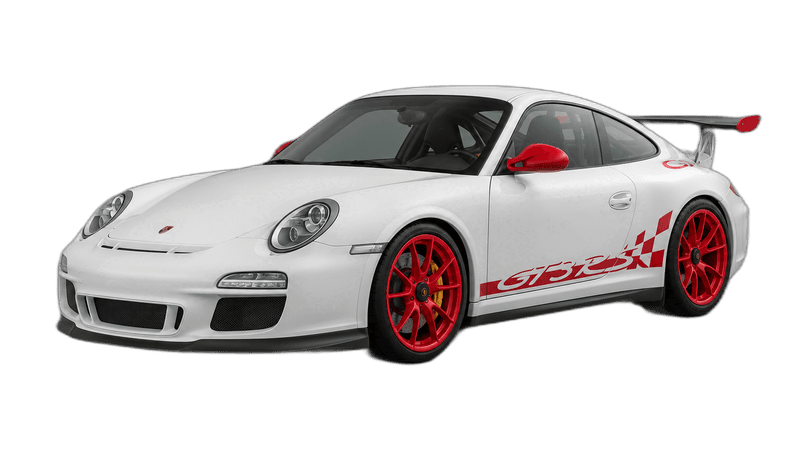
Porsche 911 GT3 RS (997.2)
£185,000
usedIndicative market price, updated periodically.
444bhp
Power
4s
0-100 km/h
310km/h
Top Speed
£185,000
Price Used
How hard it pulls.
Peak g-force the instant you bury the throttle, estimated from the car's 0–100 time and drivetrain.
Porsche 911 GT3 RS (997.2)Estimated peak launch g from the 0–100 time and drivetrain: an honest approximation, not a measured figure.
The Porsche 911 GT3 RS (997.2) is a 2-door coupe by Porsche, producing 444 bhp, and 430 Nm of torque, with a 0-100 km/h time of 4 seconds, and a top speed of 310 km/h, Valued at approximately £185,000.
Dream Car Garage Editorial · Last updated 26 October 2026
Overview
We have not driven this car. This review is based on published specifications, owner reports and market listings.
The second-generation RS
The 997.2 GT3 RS arrived for the 2010 model year as a more focused version of the 997.2 GT3. Porsche quoted 450 PS from the naturally aspirated 3.8-litre flat-six and paired it with a six-speed manual gearbox. The RS is distinguished by a rear body 44 mm wider than the GT3, a wider track, centre-lock 19-inch wheels and a large carbon rear wing. It is not the same car as the later 4.0 RS, which used a larger engine and a separate limited production run.
This is a desk-researched ownership guide. We have not driven this model for this article. The RS package is about more than a wing and a badge: the wider body, chassis changes, weight reduction and aero work alter the car's proportions and the way it is likely to be used. Those changes also create specific inspection points, especially around body repairs, wheels and track equipment.
The contemporary launch material described a short-shift, low-ratio six-speed manual, wider front and rear tracks, extended front wheel arches and a carbon rear wing on aluminium supports. It also noted an optional lithium-ion battery that saved weight. Those details are useful when checking whether a car matches the RS specification, but they do not replace the build record.
Distinguish RS, GT3 and 4.0 RS
The 997.2 GT3 is already a focused car, so the RS differences can look subtle in photographs. The wider rear body and track, the centre-lock wheels, the larger wing and the model-specific interior are the starting points. The RS also used a more track-oriented chassis specification and a reduced weight package. A standard GT3 with an aftermarket wing is not an RS, and a car described as an RS should have documentation that supports the identity.
The 4.0 RS is a separate model with a 4.0-litre engine and a different production story. Do not accept a 3.8-litre car described as a 4.0 because it has a carbon wing or a limited-edition plaque. The engine capacity, build record and model designation should be consistent. If a seller uses the two names interchangeably, ask for the documents that resolve the question.
Production numbers and colour combinations can be researched, but they are not a substitute for authentication. Check the VIN, the build sheet and the RS-specific body and interior parts. A specialist should inspect the wider quarter panels, the wing mounting points and the chassis for repairs. Carbon parts can be replaced, and paint can be changed, so the underlying structure matters more than the finish.
Engine and gearbox
The 3.8-litre engine is naturally aspirated and revs to a high limit. It is related to the motorsport engine family rather than the direct-injection Carrera unit, and it has its own inspection requirements. Ask for a cold start, a warm-up and a check for oil or coolant leaks. Listen for camshaft, chain or valvetrain noise, and review any records for engine work, rebuilds or replacement.
A compression or leak-down test can add evidence, but it is not a complete diagnosis. Oil analysis can be useful if the history is known and the sample is taken correctly. Neither test should be treated as a guarantee. Ask the inspector to explain the results and any uncertainty, particularly if the car has been used on track or has a modified exhaust or engine software.
The six-speed manual uses a mechanical limited-slip differential. Check clutch take-up, gear selection, synchromesh behaviour and noise under load. A short-shift kit or aftermarket linkage can change the feel, so establish what is fitted. Inspect the differential for wear and confirm the correct lubricant. The gearbox and differential are expensive to repair, and a track car may have more wear than the mileage suggests.
The RS's over-rev history is useful because the engine is high-revving and expensive to rebuild. Ask for a report and the rev-range hours, but treat it as one input. Check the gearbox linkage, clutch and differential; a track-focused car may have more wear than the mileage suggests.
Body, aero and wheels
The wider rear body and track are central to the RS identity. Inspect the quarter panels, door gaps and rear arches for accident repair. The carbon rear wing and its aluminium supports should be secure and correctly fitted. Check the front splitter, bumper and underbody for damage. A car that has been used on track may have scrape marks and stone damage, but structural repairs need to be identified.
The centre-lock wheels require the correct torque procedure and the right tools. Inspect the wheels for cracks, repairs and corrosion, and check the centre-lock mechanism for wear. Tyres should be matched, correctly sized and within a sensible age range. A car with track tyres may be less suitable for regular road use, and a car with road tyres may need a different setup for track events.
The optional lithium-ion battery saves weight, but it is a specialised component. Check its condition, charging behaviour and replacement options. A conventional battery may have been fitted instead. Neither choice is a defect, but the car's electrical system should be assessed as a whole. Look for warning messages, charging faults and any signs of poor installation.
Chassis, steering and brakes
Inspect the dampers, springs, top mounts, bushes and ball joints. The RS is lower and more focused than the standard GT3, so clearance and alignment matter. Ask for an alignment report and establish whether the settings are intended for road or track use. A car that has been lowered further or fitted with aftermarket suspension should be assessed for bump travel, tyre clearance and correct geometry.
Check the steering rack and tie rods for play or leaks. The 997 has hydraulic steering, which provides a different feel from later cars but still needs to be in good condition. Listen for noise over bumps and check the front and rear wheel bearings. A worn bearing or bush can mimic a chassis problem, so diagnose rather than replacing parts by assumption.
PCCB carbon-ceramic brakes were optional, and many RS cars were specified with them. Identify what is fitted before discussing maintenance. Carbon-ceramic discs need a careful wear and damage assessment, including edge condition and any sign of impact. Iron discs are simpler to replace but still need the correct pads, fluid and cooling. Check the brake lines, hoses and calipers for leaks or corrosion.
Cabin and track equipment
The RS cabin may include bucket seats, a roll cage, harnesses, a fire extinguisher and an electrical cut-off. These items have service lives and installation requirements. Check the cage mounting points, the seat rails and the harness dates. A harness that is out of date may not be acceptable for track events, and a cage that interferes with the interior or restraint system needs specialist review.
Air conditioning and audio may or may not be fitted. The RS was available with a reduced equipment list, but cars can be specified or modified in different ways. Check that the climate system and audio work if present, and inspect the trim for missing parts. A stripped cabin is not automatically more authentic, and a comfort-equipped car is not automatically less suitable.
Test the windows, locks, wipers, lights and instruments. Check the carpets and rear compartment for dampness. Water leaks can affect the electrics and the structure. The RS is a two-seater with limited storage, so try the cabin with the people and luggage it will actually carry. The driving position and seat support should be assessed before assuming the car will be comfortable on a long journey.
Identity and history
The history file should include registration documents, service invoices, MOT or equivalent records, track preparation and any body or engine repairs. Compare the dates and mileages. A car with a thick file can still have gaps, and a car with a simple file can be coherent. The quality of the evidence matters more than the number of receipts.
Ask whether the car has been used on track and for the supporting records. Track use changes the inspection priorities but is not a defect in itself. Check the brake and tyre history, the suspension work and the underbody. Look for evidence of off-track excursions and repairs. A car that has been prepared for competition may have modifications that affect its road use or insurance.
If the car is advertised with a famous history or a limited production number, ask for documentation. Production and competition records can be checked, but they do not replace an inspection. A car with a display history still needs its structure, engine and safety equipment assessed.
Decide without a forecast
Compare the RS with other examples on documented identity, specification, condition and history. This guide establishes no resale floor and no appreciation trend. A rare car can be expensive to maintain, and a modified car can be harder to return to standard. Budget for tyres, brakes, fluids, suspension work and the possibility that an inspection finds something significant.
The RS makes most sense for someone who wants the wider, lighter, more focused 997 GT3 and is prepared to use it within its limits. If the priority is regular road comfort, a standard GT3 may be the better starting point. If the priority is track use, confirm the safety equipment, cooling and consumables are suitable for the intended events. Choose the car whose identity and condition you can verify.
How this review was compiled
Autocar's contemporary 997.2 GT3 RS launch report, Porsche's 997 GT3 model history and a PistonHeads 997 GT3 buying guide inform the specification and inspection points. No test drive, production audit, current transaction survey or workshop quotation survey was undertaken. The links are further reading, not certification of an advertised car. Have the actual identity, engine, structure and safety equipment assessed together before purchase.
Specifications
Engine
3.8L (3797 cc) flat-6 naturally aspirated petrol
Displacement
3.8L
Power
444 bhp
Torque
430 Nm
0-100 km/h
4s
Top Speed
310 km/h
Drivetrain
RWD
Country
Germany
Body Style
2-door coupe
Years
2010–2011
Price Used
£185,000
Specifications are manufacturer-published figures.
More from Porsche
Frequently Asked Questions
What are the specifications of the Porsche 911 GT3 RS (997.2)?
The Porsche 911 GT3 RS (997.2) is a 2-door coupe by Porsche, producing 444 bhp, and 430 Nm of torque, with a 0-100 km/h time of 4 seconds, and a top speed of 310 km/h, Valued at approximately £185,000.
How much does a Porsche 911 GT3 RS (997.2) cost?
The Porsche 911 GT3 RS (997.2) has a used market value of approximately £185,000.
Is the Porsche 911 GT3 RS (997.2) AWD or RWD?
The Porsche 911 GT3 RS (997.2) uses a RWD drivetrain configuration in a 2-door coupe body style.
What type of car is the Porsche 911 GT3 RS (997.2)?
The Porsche 911 GT3 RS (997.2) is a track focused manufactured by Porsche in Germany. Production ran from 2010 to 2011.