
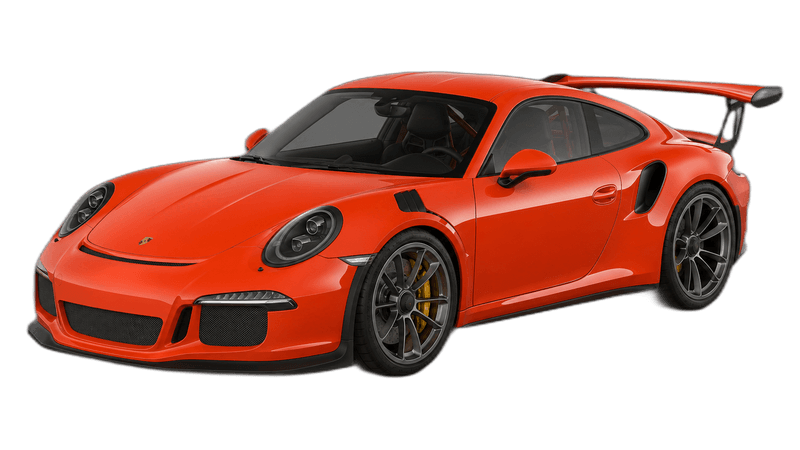
Porsche 911 GT3 RS (991)
£200,000
usedIndicative market price, updated periodically.
493bhp
Power
3.3s
0-100 km/h
310km/h
Top Speed
£200,000
Price Used
How hard it pulls.
Peak g-force the instant you bury the throttle, estimated from the car's 0–100 time and drivetrain.
Porsche 911 GT3 RS (991)Estimated peak launch g from the 0–100 time and drivetrain: an honest approximation, not a measured figure.
The Porsche 911 GT3 RS (991) is a 2-door coupe by Porsche, with 493 bhp, 480 Nm of torque, a 0-100 km/h time of 3.3 seconds and a top speed of 310 km/h. Indicative used value: approximately £200,000. Actual values vary with specification, condition and history.
Dream Car Garage Editorial · Last updated 27 October 2026
Overview
We have not driven this car. This review is based on published specifications and the sources listed below.
More than a 991 GT3 with a larger wing
Porsche's 2015 announcement gives the first 991 GT3 RS a 4.0-litre naturally aspirated engine producing 500 PS, or about 493 bhp, and 480 Nm. Power reaches the rear wheels through a specially developed seven-speed PDK. Rear-axle steering and Porsche Torque Vectoring Plus are part of the chassis specification. There was no manual version of this RS.
This is a desk-researched ownership guide. We have not driven this model for this article. Its performance and motorsport presentation do not replace ordinary checks on identity, maintenance and accident history. The wide body and lightweight materials also make some damage and repairs more consequential than they appear in photographs.
Engine evidence without GT3 assumptions
The RS has its own 4.0-litre specification and should not be treated as a 3.8-litre GT3 with different bodywork. Ask for engine identity, service records and diagnostic results. Over-rev and operating-hour information may provide context, but a printout needs interpretation by someone who understands PDK and the model.
Do not transfer claims about a campaign on another GT model to this car without VIN-specific confirmation. The source material used here does not establish a universal engine problem or completion rate. A specialist should assess leaks, cooling, abnormal noises and any recorded faults for the individual vehicle.
Service continuity matters even on a low-mileage example. Reconcile dates, invoices and storage periods. A recent inspection is useful only when its scope and findings are available, not when the file merely says that one occurred.
PDK and rear-axle steering calibration
The seven-speed PDK should be assessed for documented service, software history and diagnostic evidence. Any hesitation, warning or abnormal behaviour needs diagnosis rather than a general statement about how PDK usually behaves. The inspection should also account for fluid and maintenance records where applicable.
Rear-axle steering is part of the RS chassis, not an optional feature to discover after purchase. Suspension damage, alignment work or replacement components can affect calibration. Request alignment readings and any rear-steering calibration records, particularly after suspension or accident repairs.
Geometry should be compared with the intended setup and factory tolerances rather than with a generic 911 printout. Aggressive circuit settings may be deliberate, but they should be disclosed and understood.
Lightweight bodywork and aerodynamic parts
Porsche specifies a magnesium roof and carbon-fibre bonnet and rear lid, together with front-wing vents and a substantial rear wing. These details help identify the car and define its inspection. Check panels, vents, wing mounts and underbody components for cracks, distortion and poor repairs.
The 9Werks buying guide recommends careful inspection of carbon-fibre-reinforced parts, undertrays and the areas revealed when trays are removed. This is more useful than judging panel gaps alone. Ask for photographs and invoices relating to any replacement lightweight panel.
The front tyres are 20 inches and the rears 21 inches, with centre-lock wheels. Confirm sizes, specification, age and condition, and have the wheel-locking hardware inspected with the correct equipment. A clean set of wheels does not establish that the tyres or mounting hardware are sound.
Brakes and evidence of circuit use
Steel brakes and optional PCCB should be distinguished using the build record. Do not assume that every RS has ceramic discs. For PCCB, inspect for disc damage and obtain specialist condition evidence; for steel brakes, measure wear and inspect the complete system. Previous replacement discs or calipers should be identified.
Circuit use is consistent with the car's purpose and should be documented rather than treated as an automatic disqualification. Ask about alignment, brake and tyre replacements, inspections after use and any off-track incidents. A claimed road-only history should be consistent with wear and records.
There are no rear seats. Equipment presented as a rear-seat conversion is not a factory feature of this model and deserves close scrutiny.
Brake fluid, flexible lines and cooling hardware should be checked even when the visible discs look sound. A car used mainly on circuit may have a different consumable history from a low-mileage road car, and neither history removes the need for measurement. Ask for the most recent brake and coolant service records and confirm what was actually replaced.
Documentation before presentation
Verify the VIN, factory options and major components. Paint, film and detailing can make a car look consistent while hiding different repair histories. Inspect panel finishes in suitable light and request paint or repair records where available. Protective film can also obscure edges and damage, so its presence is not a substitute for inspection.
The file should explain ownership, storage, servicing and any modifications. Original parts supplied with the car should be listed. No claim about future collectability is needed to justify that documentary work.
Tyres should be checked for specification, production date and condition on all four corners. The centre-lock system also requires the correct torque procedure, so ask who last removed the wheels and why. A set of expensive-looking wheels is not evidence that the tyres are safe or that the suspension geometry is correct. Where a road evaluation is possible, it should follow the static inspection and take place with insurance and consent in place. It cannot replace a workshop assessment.
How this review was compiled
We have not driven this model for this article. Porsche's launch material supplies the engine, torque, transmission and chassis facts. The 9Werks 991.1 GT3 RS buying guide informs the PDK, wheel, bodywork and inspection checklist. Its market and production commentary is not used here. We did not establish fault frequencies or survey transactions, and no value assurance is made. Purchase should follow a VIN review and GT-specialist inspection.
Specifications
Engine
4.0L (3996 cc) naturally aspirated flat-6
Displacement
4.0L
Power
493 bhp
Torque
480 Nm
0-100 km/h
3.3s
Top Speed
310 km/h
Drivetrain
RWD
Country
Germany
Body Style
2-door coupe
Years
2015–2016
Price Used
£200,000
Specifications are manufacturer-published figures.
More from Porsche
Frequently Asked Questions
What are the specifications of the Porsche 911 GT3 RS (991)?
The Porsche 911 GT3 RS (991) is a 2-door coupe by Porsche, with 493 bhp, 480 Nm of torque, a 0-100 km/h time of 3.3 seconds and a top speed of 310 km/h. Indicative used value: approximately £200,000. Actual values vary with specification, condition and history.
How much does a Porsche 911 GT3 RS (991) cost?
Indicative used value: approximately £200,000. Actual values vary with specification, condition and history.
What drivetrain does the Porsche 911 GT3 RS (991) use?
The Porsche 911 GT3 RS (991) is configured with rear-wheel drive.
What type of car is the Porsche 911 GT3 RS (991)?
The Porsche 911 GT3 RS (991) is a track focused manufactured by Porsche in Germany. Production ran from 2015 to 2016.