
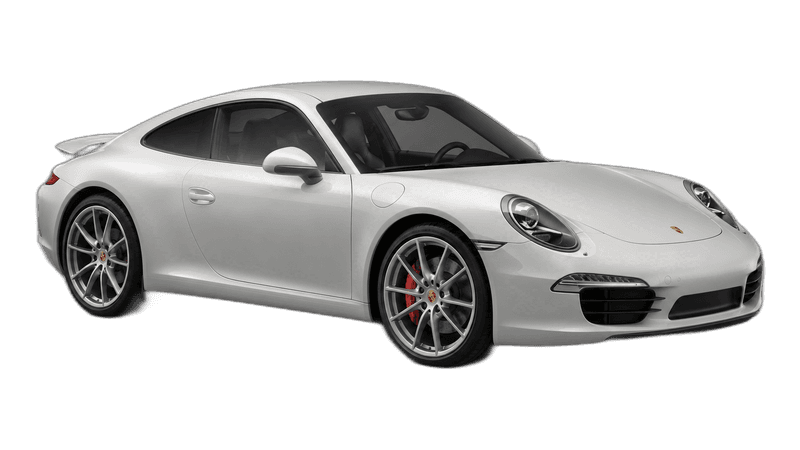
Porsche 911 Carrera S (991)
£60,000
usedIndicative market price, updated periodically.
395bhp
Power
304km/h
Top Speed
£60,000
Price Used
The Porsche 911 Carrera S (991) is a 2+2 coupe by Porsche, with 395 bhp, 440 Nm of torque and a top speed of 304 km/h. Indicative used value: approximately £60,000. Actual values vary with specification, condition and history.
Dream Car Garage Editorial · Last updated 25 October 2026
Overview
We have not driven this car. This review is based on published specifications and the sources listed below.
The naturally aspirated 991 Carrera S
The first-phase 991 Carrera S uses a naturally aspirated 3.8-litre flat-six. It should not be confused with the later 991.2 Carrera S, whose 3.0-litre engine is turbocharged. Both sit within the same broad generation name, so a registration-only comparison or a generic Carrera S description can conceal an important mechanical and ownership difference.
This is a desk-researched guide. We have not driven this model for this article. The reason to consider it is the particular combination of an unboosted Carrera engine, newer cabin architecture and a different platform from the 997. Published praise for its sound or handling is context, not our test result. Whether the actual car suits an owner still requires a drive, a fit assessment and a complete inspection.
A changed platform, not just updated styling
Porsche's launch material describes a wheelbase increase of 100 millimetres and electromechanical steering. It is therefore inaccurate to sell the 991.1 as the hydraulic-steering alternative to later 991s. A buyer interested in that earlier system should look at the appropriate older generation instead. The platform change also makes real parking and garage clearance worth testing rather than assuming every 911 occupies the same practical space.
Try the seats, rear access and luggage arrangement with intended passengers and items. A larger cabin does not turn the small rear seats into universal adult accommodation. Check visibility and approach clearance in normal use, not only on an open forecourt. A specification chosen mainly from an options list may prove less convenient than one assessed against actual journeys.
Manual, PDK and service evidence
The Carrera S offered a seven-speed manual or seven-speed PDK. The shared number of ratios does not make their controls or maintenance equivalent. On a manual, assess clutch engagement, selection and the operation of all gears. For PDK, test from cold and after warming, including reverse, gentle movement and ordinary acceleration, and investigate warnings rather than accepting that every unusual shift is normal.
Review servicing relevant to the actual transmission and vehicle history. A fluid change may form part of a plan without being a guaranteed cure for an unidentified fault. Ask about leaks, previous diagnosis and the scope of completed repairs. Published reports concerning cooler connections or warnings are prompts for inspection, not evidence that every gearbox requires the same replacement work.
Inspect the engine as an individual unit
Review oil servicing, cooling work, ignition repairs and any history of overheating or recurring messages. Have a qualified technician assess leaks and engine operation with suitable access and diagnostics. The engine is not the earlier Carrera installation for which certain IMS retrofits were designed; do not prescribe those automatically. Its different design still does not guarantee freedom from cylinder wear or other internal problems.
Ask how any previous engine or running fault was diagnosed. Ignition components, control valves and associated hardware should be investigated when symptoms or codes justify it rather than replaced as a universal checklist. A clean scan at sale does not explain earlier repeated faults, while a cold start alone cannot certify internal condition. Obtain a coherent account of the work and what remains uncertain.
PASM and optional chassis systems
PASM adaptive damping was part of the Carrera S's launch specification, while PDCC active roll control was an option. Establish whether PDCC is actually present before applying its inspection and repair requirements. A button photograph or a seller's description of full specification is not a complete build record. Modifications may also have changed the installed dampers or the car's ride height.
Inspect damper condition, suspension joints, alignment and any fitted dynamic mounts with appropriate diagnosis. Do not attribute every noise to a complex optional system or dismiss warnings because the car still drives. Rear-axle steering offered on the later 991.2 Carrera S should not be advertised as a normal factory option on this first-phase Carrera S. Equipment from a contemporary GT3 cannot simply be transferred to the Carrera specification.
Brakes, tyres and body condition
Identify conventional or optional PCCB brakes and obtain an appropriate condition assessment. Carbon-ceramic equipment changes how wear and damage are evaluated and priced; it should not be described as permanently maintenance-free. Inspect wheels, tyre fitment, age and matching, and investigate uneven wear.
Check the underside, panel fit and repair history, including damage around low front components. Ask for invoices and photographs after significant work. A clean history search cannot establish that no privately funded repair occurred. If circuit use is recorded, review preparation, consumables and incidents rather than treating low road mileage as a complete measure of the vehicle's workload.
Water, cabin systems and body choices
Inspect accessible carpets and drainage areas for moisture, and ask whether leaks have been repaired at their source. Test windows, door operation, climate control, seats, PCM and both keys. Older connectivity may have limitations that no longer match launch advertising. Demonstrate what currently works instead of assuming every connected feature remains available for the next owner or in a different market.
A Cabriolet needs a complete roof demonstration and checks of seals and drainage; a Targa is another body with different mechanisms. Identify which derivative is being bought rather than assigning every roof description to the coupe. Cabin and roof faults deserve separate estimates, even when most of the purchase discussion concerns the engine or the appeal of a naturally aspirated badge.
Costs and alternatives
Obtain written estimates for maintenance due, consumables and diagnosed repairs, separating optional equipment from routine service. Include insurance, tax and access to an appropriate workshop. The original price of an option does not establish its present value or justify ignoring its repair requirements on a used car.
Compare like-for-like body, transmission, equipment and history, distinguishing asking prices from transactions. The last naturally aspirated Carrera narrative does not guarantee returns or a resale floor. A 997 changes steering and dimensions; a 991.2 changes the engine proposition. Choose the inspected example whose configuration serves the intended use without requiring future appreciation to make it affordable.
How this review was compiled
Porsche's original launch description establishes the engine, platform and option distinctions, supported by published buying advice. No test drive, current cost survey, transaction study or measured failure-rate assessment was undertaken. The references are further reading, not a condition report. Have the actual engine, chassis systems and maintenance needs independently assessed before purchase.
Specifications
Engine
3.8L (3800 cc) naturally aspirated flat-6
Displacement
3.8L
Power
395 bhp
Torque
440 Nm
Top Speed
304 km/h
Drivetrain
RWD
Country
Germany
Body Style
2+2 coupe
Years
2011–2016
Price Used
£60,000
Specifications are manufacturer-published figures.
More from Porsche
Frequently Asked Questions
What are the specifications of the Porsche 911 Carrera S (991)?
The Porsche 911 Carrera S (991) is a 2+2 coupe by Porsche, with 395 bhp, 440 Nm of torque and a top speed of 304 km/h. Indicative used value: approximately £60,000. Actual values vary with specification, condition and history.
How much does a Porsche 911 Carrera S (991) cost?
Indicative used value: approximately £60,000. Actual values vary with specification, condition and history.
What drivetrain does the Porsche 911 Carrera S (991) use?
The Porsche 911 Carrera S (991) is configured with rear-wheel drive.
What type of car is the Porsche 911 Carrera S (991)?
The Porsche 911 Carrera S (991) is a sports cars manufactured by Porsche in Germany. Production ran from 2011 to 2016.