
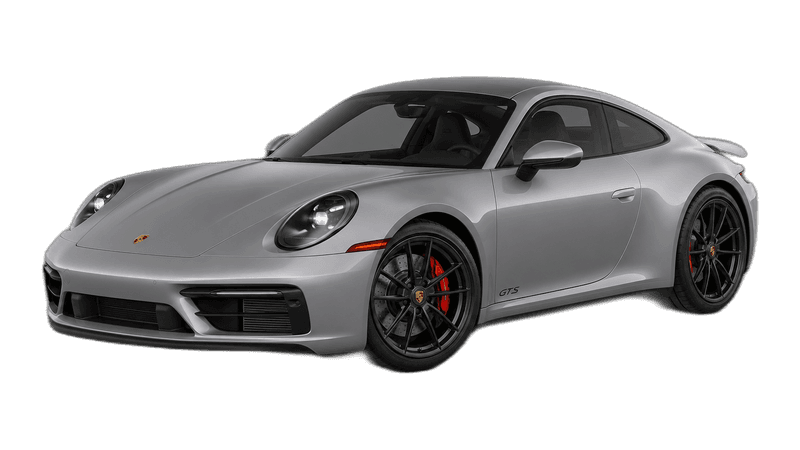
Porsche 911 Carrera GTS (992)
£135,000
usedIndicative market price, updated periodically.
473bhp
Power
3.3s
0-100 km/h
311km/h
Top Speed
£135,000
Price Used
How hard it pulls.
Peak g-force the instant you bury the throttle, estimated from the car's 0–100 time and drivetrain.
Porsche 911 Carrera GTS (992)Estimated peak launch g from the 0–100 time and drivetrain: an honest approximation, not a measured figure.
The Porsche 911 Carrera GTS (992) is a 2-door coupe by Porsche, with 473 bhp, 570 Nm of torque, a 0-100 km/h time of 3.3 seconds and a top speed of 311 km/h. Indicative used value: approximately £135,000. Actual values vary with specification, condition and history.
Dream Car Garage Editorial · Last updated 28 October 2026
Overview
We have not driven this car. This review is based on published specifications and the sources listed below.
The sharper rear-drive Carrera
The Porsche 911 Carrera GTS arrived in 2021 with a 3.0-litre twin-turbo flat-six producing 353 kW, or 480 PS and approximately 473 bhp, and 570 Nm. The rear-wheel-drive coupe was offered with an eight-speed PDK or a seven-speed manual. Porsche quoted 3.3 seconds to 100 km/h for the PDK and a 311 km/h top speed for the rear-drive GTS. It is a distinct model from the Carrera 4 GTS, whose all-wheel-drive launch figure is often quoted alongside it.
We have not driven this model for this article. This guide uses Porsche's launch release, the PistonHeads 992 buying guide and the official VIN recall service. No model-specific production total is established by those sources, so the catalogue count remains unset. The rear-drive coupe is treated separately from all-wheel-drive and cabriolet versions.
Verify the GTS chassis package
The GTS received PASM sports suspension lowered by 10 mm, 911 Turbo brakes, centre-lock 20-inch front and 21-inch rear wheels, a sports exhaust and Sport Chrono as standard. Confirm each item from the build record rather than assuming that every GTS carries the same specification. An optional lightweight package saved up to 25 kg with carbon-fibre bucket seats, no rear seats and rear-axle steering. It changes the car's character and should be identified explicitly.
Inspect the centre-lock wheels for correct torque procedure, thread condition and evidence of improper use. Ask who removed and refitted them and whether the correct tool accompanies the car. Record the tyre pressures after the car has cooled and confirm that the wheel-lock key is present. Check the tyre-pressure monitoring display and confirm that each sensor reports correctly. Check the brakes for measured disc and pad condition and review fluid history. The larger braking system is not a substitute for maintenance, and a track-focused specification can still hide worn consumables.
Engine, exhaust and gearbox
Observe the engine cold where practical and compare running condition after warming. Request diagnostic records before any warnings are cleared. The PistonHeads guide reports reduced-power warnings on some 992s traced to leaking active drivetrain mounts; that is a diagnostic prompt, not a GTS-wide defect claim. Ask what was found on this car and whether the symptom returned.
The sports exhaust is part of the GTS identity. Check its operation, mounting and any aftermarket changes. Confirm whether a warranty provider has accepted the modification and what original parts are included. Assess the PDK or manual gearbox according to the actual specification, including low-speed engagement and behaviour through the gears. Do not import clutch assumptions from an older transmission.
Tyres, geometry and road behaviour
Confirm tyre sizes, dates, condition and wear on all four wheels. The GTS's centre-lock wheels and wider rear tyres make correct fitment and torque especially important. Compare tread depth across each tyre and look for inner-edge wear. Ask for a geometry report after any suspension, wheel or steering work. A car that feels stable on a short drive has not necessarily been aligned correctly.
The buying guide notes faster rear tyre wear on the 992 and reports examples with substantial wear after low mileage. Treat that as a reason to measure the car in front of you, not as a claim that every GTS consumes tyres at the same rate. Check the adaptive dampers and steering, and confirm whether rear-axle steering is fitted. Record any calibration work.
Cabin and equipment checks
Try the seats, including the optional bucket seats if fitted. The lightweight package deletes the rear seats and changes entry, headroom and luggage use. Check that the deletion was delivered as described and that no trim or restraint components are missing. Test the PCM screen, camera, climate controls, windows, washers and audio. The buying guide's cabin complaints are prompts for demonstration, not evidence of a model-wide fault.
Listen for rattles from the sunroof, trim, seatbacks and door bins on a road test. Check the centre rear brake light and the rear spoiler's operation. Confirm that any carbon-fibre exterior parts are correctly fitted and free from damage. Cosmetic damage and structural repair are different findings; ask the inspector to identify which is present.
Service history and battery condition
Request dated invoices for the two-year or 20,000-mile schedule, brake fluid, tyres, diagnostics and any track-related work. Confirm battery condition and storage practice, since the 992 is sensitive to low voltage and a maintainer may not have been left connected. A car that starts easily after a jump does not necessarily have a healthy battery.
Verify remaining warranty and its exclusions, particularly with modified exhaust, suspension or wheels. Obtain current written estimates rather than relying on 2024 prices. Check that original wheels, seats and parts are included where the car has been changed from factory specification.
Recall lookup and inspection scope
Use the 17-character VIN in Porsche's recall service, which covers campaigns published on or after 1989, and retain dealer confirmation of completed work. A campaign affecting another 992 does not determine this car's status. Ask for campaign letters and repair invoices.
An independent inspection should cover the GTS chassis components, centre-lock wheels, brakes, tyres, adaptive suspension, drivetrain and electronics. Record anything that could not be demonstrated. Resolve significant gaps before relying on the report.
We have not driven this model for this article. No current transaction price, investment promise or universal failure rate is offered. The Carrera GTS is best judged through its build record, measured consumables and a model-familiar inspection rather than through an assumed production total.
Specifications
Engine
3.0L (2981 cc) twin-turbo flat-six
Displacement
3.0L
Power
473 bhp
Torque
570 Nm
0-100 km/h
3.3s
Top Speed
311 km/h
Drivetrain
RWD
Country
Germany
Body Style
2-door coupe
Years
2021–2024
Price Used
£135,000
Specifications are manufacturer-published figures.
More from Porsche
Frequently Asked Questions
What are the specifications of the Porsche 911 Carrera GTS (992)?
The Porsche 911 Carrera GTS (992) is a 2-door coupe by Porsche, with 473 bhp, 570 Nm of torque, a 0-100 km/h time of 3.3 seconds and a top speed of 311 km/h. Indicative used value: approximately £135,000. Actual values vary with specification, condition and history.
How much does a Porsche 911 Carrera GTS (992) cost?
Indicative used value: approximately £135,000. Actual values vary with specification, condition and history.
What drivetrain does the Porsche 911 Carrera GTS (992) use?
The Porsche 911 Carrera GTS (992) is configured with rear-wheel drive.
What type of car is the Porsche 911 Carrera GTS (992)?
The Porsche 911 Carrera GTS (992) is a gts manufactured by Porsche in Germany. Production ran from 2021 to 2024.