
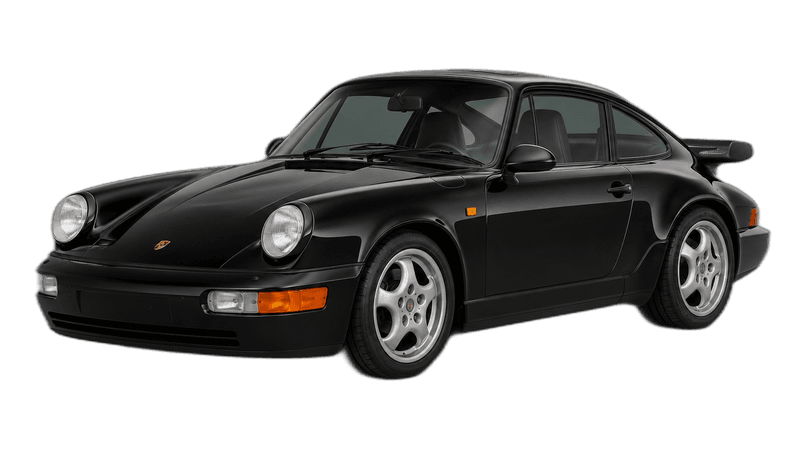
Porsche 911 964 Carrera 4
£70,000
usedIndicative market price, updated periodically.
247bhp
Power
5.7s
0-100 km/h
260km/h
Top Speed
£70,000
Price Used
How hard it pulls.
Peak g-force the instant you bury the throttle, estimated from the car's 0–100 time and drivetrain.
Porsche 911 964 Carrera 4Estimated peak launch g from the 0–100 time and drivetrain: an honest approximation, not a measured figure.
The Porsche 911 964 Carrera 4 is a 2 seater convertible/cabriolet by Porsche, producing 247 bhp, and 310 Nm of torque, with a 0-100 km/h time of 5.7 seconds, and a top speed of 260 km/h, Valued at approximately £70,000.
Dream Car Garage Editorial · Last updated 25 October 2026
Overview
We have not driven this car. This review is based on published specifications, owner reports and market listings.
Why the Carrera 4 needs its own guide
The 964 Carrera 4 brought all-wheel drive to the regular-production 911 line when the generation arrived in 1988. It combined that system with the 3.6-litre twin-plug air-cooled engine and broader 964 changes such as power steering, ABS and coil springs. A preceding Carrera 3.2 or later Carrera 4 should not be treated as mechanically identical because the silhouette or badge seems familiar.
We have not driven this model for this article. This is a desk-researched ownership guide rather than a measured account of traction or handling. The reason to consider the car is its specific place in 911 development and the configuration it offers. All-wheel drive does not eliminate the need for appropriate tyres, speed and maintenance, nor does it make every road or weather condition safe.
Authenticate the drivetrain and body
Confirm the VIN, original specification and installed drivetrain. Carrera 4 badges on a converted or repaired body do not establish the complete factory configuration. The original five-speed manual should not be confused with the Carrera 2's optional four-speed Tiptronic. If the vehicle is described otherwise, obtain the explanation and supporting documents before applying maintenance or valuation assumptions.
Identify coupe, Targa or Cabriolet equipment and inspect the relevant roof and seals. Cosmetic RS-style changes do not create an RS, and replacement engine or transmission work needs its own history. A documented alteration may suit an owner, but the advertisement and insurance description should accurately reflect it. Factory records establish original identity, not the condition of every component currently installed.
The additional system is an inspection priority
The Carrera 4's electrohydraulic drivetrain controls and additional front-drive hardware require knowledge beyond an ordinary rear-wheel-drive 911 inspection. Ask the workshop which components, pressures and control functions it can assess and what equipment it uses. A normal-feeling short drive cannot establish that every function operates correctly, especially if warning behaviour or a previous repair has not been investigated.
Inspect for leaks, damaged lines and unresolved dashboard warnings. Obtain records showing diagnosis and the scope of previous repairs. A replaced component does not certify the entire system, and clearing a warning is not evidence that its cause was fixed. Avoid authorising a speculative parts list simply because the drivetrain is unusual; an appropriate specialist should explain the fault found and the reasoning behind the proposal.
Tyres and road assessment
Check correct tyre fitment, matching, age, pressures and wear, and ask whether wheel or suspension changes remain suitable for this drivetrain. A broad statement that the car has four new tyres is not sufficient if their specification is wrong. Investigate vibration or uneven wear through chassis and driveline assessment rather than assuming the symptoms are normal all-wheel-drive character.
Arrange a representative drive conducted appropriately after basic safety checks. Assess clutch, selection, steering and braking without trying to provoke the car or prove a limit of adhesion. Four driven wheels do not improve every stopping situation. Personal preference between Carrera 2 and Carrera 4 cannot be settled by a desk-researched claim that one is universally more engaging or more secure.
Engine condition remains separate
Review oil servicing, leak history, head-sealing work and any internal engine repairs. Early sealing arrangements and later parts changes should be assessed against the actual engine, not solely a registration date. Ask for records identifying what was replaced and why. A car with drivetrain work completed may still require engine attention, while a rebuilt engine says little about the all-wheel-drive equipment.
The twin-ignition distributor arrangement merits maintenance evidence and an assessment of relevant updates. Investigate poor running or unusual noise with appropriate diagnosis. Compression or leak-down tests may help where justified, but no brief test proves every internal component sound. A detailed inspection should state its limits and distinguish preventive suggestions from repairs supported by present findings.
Body, chassis and braking
Inspect corrosion, structural mounting areas, floors, sills and screen surrounds. Request restoration photographs showing concealed repairs before finishing. Galvanised construction does not guarantee that repaired or damaged areas remained protected. Alignment and workmanship need assessment, and an attractive exterior should not substitute for understanding the shell beneath it.
Check springs, dampers, bushes, bearings, steering equipment and brakes. Investigate ABS faults and other warning messages rather than accepting them as harmless age-related quirks. An invoice for new brakes should describe what was done, not be treated as proof that every hydraulic or electronic function was inspected. Wheel impacts and suspension changes may also require alignment work beyond replacing visible parts.
Equipment and a workable ownership plan
Demonstrate climate control, ventilation, windows, locks, instruments and any powered spoiler. Assess water entry and roof operation for the body fitted. The Carrera 4's extra mechanical interest should not distract from everyday features that need repair. Try the seating and luggage arrangement personally, especially if touring or shared driving is part of the intended use.
Identify a workshop willing and equipped to maintain the particular drivetrain before purchase. Ask about diagnostic support, parts supply and transport if the vehicle cannot be driven. General Porsche familiarity is useful but does not establish access to every specialist process. A practical support route can matter more than a seller's broad claim that the model is either bulletproof or too complicated to own.
Budget and comparison limits
Request written estimates separating routine servicing, engine work, drivetrain repairs and cosmetic improvements. This guide contains no current invoice survey establishing one annual cost or a fixed Carrera 4 premium over a Carrera 2. Include insurance, storage, tyres and recovery. Remaining uncertainty should stay visible in the budget rather than be replaced with the cheapest possible repair scenario.
Compare equivalent bodies, specification and documented condition, distinguishing asking prices from sales. No appreciation or resale floor is established here. A Carrera 2 reduces some drivetrain complexity but changes the configuration; a 993 Carrera 4 introduces another system rather than curing every 964 issue. Published history and buying advice inform these questions, not a test drive or certification of an individual car.
Specifications
Engine
3.6L naturally aspirated flat-six petrol
Displacement
3.6L
Power
247 bhp
Torque
310 Nm
0-100 km/h
5.7s
Top Speed
260 km/h
Drivetrain
AWD
Country
Germany
Body Style
2 seater convertible/cabriolet
Years
1988–1994
Price Used
£70,000
Specifications are manufacturer-published figures.
More from Porsche
Featured in Carpedia
Frequently Asked Questions
What are the specifications of the Porsche 911 964 Carrera 4?
The Porsche 911 964 Carrera 4 is a 2 seater convertible/cabriolet by Porsche, producing 247 bhp, and 310 Nm of torque, with a 0-100 km/h time of 5.7 seconds, and a top speed of 260 km/h, Valued at approximately £70,000.
How much does a Porsche 911 964 Carrera 4 cost?
The Porsche 911 964 Carrera 4 has a used market value of approximately £70,000.
Is the Porsche 911 964 Carrera 4 AWD or RWD?
The Porsche 911 964 Carrera 4 uses a AWD drivetrain configuration in a 2 seater convertible/cabriolet body style.
What type of car is the Porsche 911 964 Carrera 4?
The Porsche 911 964 Carrera 4 is a sports cars manufactured by Porsche in Germany. Production ran from 1988 to 1994.