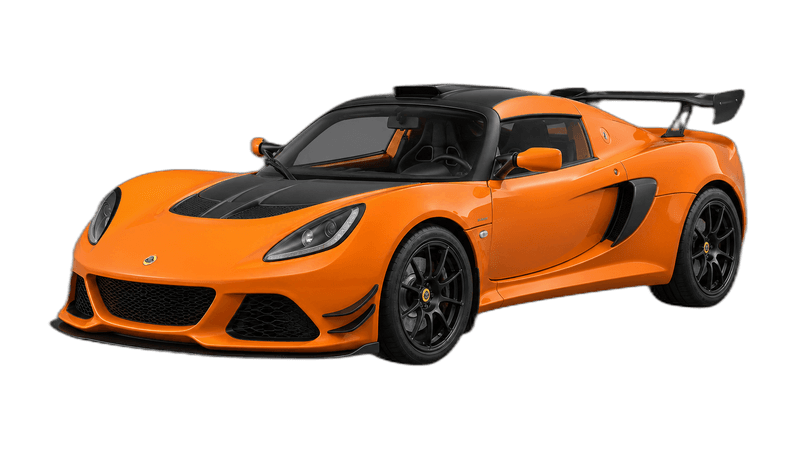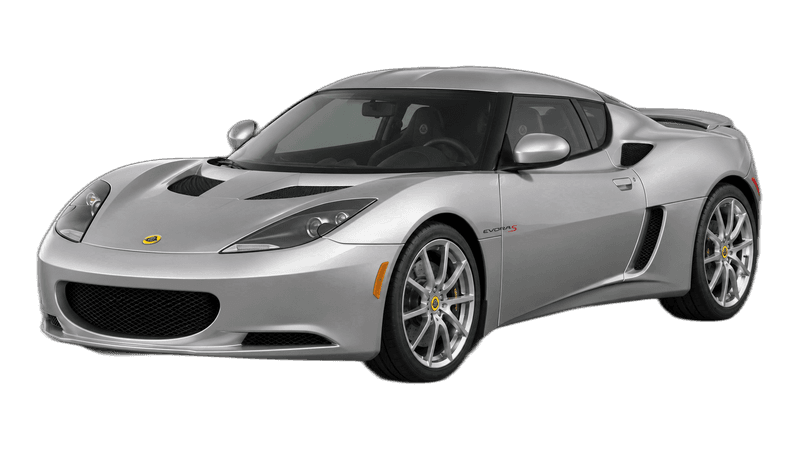
Lotus Evora S
£38,000
usedIndicative market price, updated periodically.
345bhp
Power
4.8s
0-100 km/h
277km/h
Top Speed
£38,000
Price Used
The Lotus Evora S produces 345 bhp, reaches 100 km/h in 4.8 seconds and has a top speed of 277 km/h. A representative example is worth about £38,000.
How hard it pulls.
Peak g-force the instant you bury the throttle, estimated from the car's 0–100 time and drivetrain.
Lotus Evora SEstimated peak launch g from the 0–100 time and drivetrain: an honest approximation, not a measured figure.
Dream Car Garage Editorial · Edited by José Teo Lorente Vallecillos · Last updated 2 November 2026
Overview
We have not driven this car. This review is based on published specifications and the sources listed below.
Scope of this guide
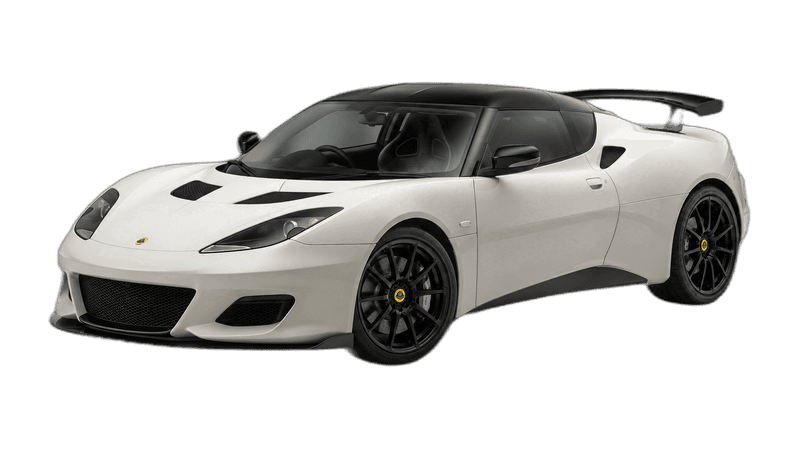
The Lotus Evora S is a mid-engined, rear-wheel-drive sports coupe built by Lotus at Hethel, and it is the supercharged version of the Evora. Our catalogue lists it from 2011 to 2015 with a 3.5L supercharged V6 petrol engine of 3,456 cc producing 345 bhp and 400 Nm, with 0 to 100 km/h in 4.8 seconds and a top speed of 277 km/h. This guide is scoped to the supercharged Evora S with the six-speed manual gearbox or the IPS automatic, sold before the Evora 400 replaced it in 2015. It is not about the naturally aspirated Evora or the later Evora 400, and we explain below how they differ so that you do not mix up an advert.
We have not driven this model for this article. This is a desk-researched ownership guide built from two sources we could read in full: the official Lotus Cars Evora model history page and a PistonHeads Evora buying guide, plus the government recall checker. The PistonHeads guide covers the Evora range, with the S set out beside the naturally aspirated car, and it is not a guide to the S alone. We also read two further PistonHeads Evora buying guide pages dated 2015, the SELOC Evora model wiki (SELOC is an owners club and says it is independent of Lotus) and a reproduction of Lotus's August 2010 announcement. Anything that rests only on those copies is secondhand, and we say so where it matters.
The figures at a glance
- Engine: 3.5L supercharged V6 petrol, 3,456 cc, a Toyota-sourced V6 with an Eaton Roots-type supercharger.
- Power: 345 bhp, which is 350 PS at 7,000 rpm.
- Torque: 400 Nm, which is 295 lb ft.
- Gearbox: six-speed manual, or the IPS automatic with paddles from the 2011 model year.
- Drive: rear-wheel drive, with the engine behind the seats.
- 0 to 100 km/h: 4.8 seconds in our catalogue.
- Top speed: 277 km/h, which is 172 mph.
- Weight: 1,437 kg according to Lotus.
- Body: two-door coupe, usually a 2+2 but also sold as a 2+0.
Why the quoted power and torque vary
The Lotus history page lists the Evora S at 345 bhp. The 2010 announcement gives 350 PS, and PS is metric horsepower. Multiply 350 PS by 0.9863 and you get 345 bhp, so the two describe the same engine and an advert quoting 350 is probably using PS. PistonHeads prints 350hp, which is the same rating labelled differently. The SELOC wiki table gives both, 345hp and 350PS, at 7,000 rpm.
Neither the Lotus history page nor PistonHeads prints a torque figure in newton metres. PistonHeads gives 295 lb ft, which converts to 400 Nm, and the SELOC wiki table and the reproduced 2010 announcement give 400 Nm directly. PistonHeads is not consistent on where the peak arrives: its pocket guide says 4,000 rpm while its powertrain page says 4,500 rpm, and the wiki table agrees with 4,500 rpm. We use 400 Nm throughout and treat the peak speed as approximate.
The Lotus page also quotes the later Evora 400 at 410 Nm, so a 400 Nm advert for a supercharged Evora points to the S and not to the newer car.
Performance claims and what they mean
Two sets of performance numbers circulate, and they do not agree. The 2010 announcement, as reproduced by SELOC, AutoGuide and a New Zealand motoring site, gives 4.6 seconds to 60 mph, 4.8 seconds to 100 km/h and 172 mph. PistonHeads agrees with 4.6 seconds to 62 mph, 172 mph and calls the time claimed, not measured. The wiki table gives 172 mph as 277 km/h. That is where our 4.8 seconds and 277 km/h come from.
The Lotus history page instead says the Evora S reached 286 km/h and 4.4 seconds to 100 km/h. We could not reconcile that with the 2010 figures, and 286 km/h would be about 178 mph, faster than any contemporary source we read. We have not used it. The same page lists the S as made from 2010 to 2021, which cannot be right for a car replaced in 2015, so treat that table with care. We think 4.8 seconds and 277 km/h are the better catalogue values, but they are manufacturer claims, not tests we have run.
Model years and how long it was built
Lotus says it introduced the supercharged Evora in 2010, and the SELOC wiki says the Evora S and the first IPS automatic were unveiled together at the Paris Motor Show on 30 September 2010. The S IPS, combining the supercharged engine with the automatic, followed at Frankfurt in 2011. We start the catalogue entry in 2011, the first full year of sales, but we could not confirm the date of the first customer cars.
The Evora 400 was introduced at the Geneva Motor Show in February 2015 and replaced both the Evora and the Evora S, according to the SELOC wiki. We therefore end the S in 2015. A final build date was not found, so some cars first registered in 2015 may be early Evora 400 or late stock, and the chassis plate and registration documents are the way to tell.
What changed during the run
Lotus launched the S with a Sport button that sharpens throttle response, raises the rev limit and opens an exhaust bypass valve, plus cross-drilled brakes and a new active exhaust, according to the reproduced announcement. PistonHeads says the Sport Pack is standard on the S, and the short-ratio gearbox is also standard.
Lotus brought in model year 2012 changes at Frankfurt in 2011. The SELOC wiki lists a close-ratio gearbox across the range, bi-xenon headlights, body-coloured door handles, revised gear linkage and gear stick, a new exhaust design, redesigned door seals and latches, and a revised interior with a Premium Sport option. PistonHeads says cars built after September 2011 have an improved gearshift and a low-inertia flywheel. A Sports Racer edition followed in December 2012, with black detailing and the option packs fitted as standard.
How it differs from the naturally aspirated Evora
The naturally aspirated Evora uses the same 3,456 cc V6 without the supercharger. The Lotus page gives 276 bhp, and the wiki table gives 276hp, which is 280 PS, with 350 Nm. PistonHeads quotes 280hp and 258 lb ft. The S is about 70 hp and 37 lb ft stronger on PistonHeads' numbers, roughly 0.3 seconds quicker to 60 mph and about 10 mph faster flat out. PistonHeads also notes the S has larger wheels, 19 inch at the front and 20 inch at the rear being offered, and a bolder rear spoiler according to Lotus.
The naturally aspirated cars can look similar, so do not trust the shape alone. Check the Evora S badge and the supercharger itself when the engine cover is off, and ask for the vehicle identification number so the car can be matched to the build record. The S is also about 55 kg heavier than the basic car, going by the wiki table, although the Lotus page quotes a different weight for the basic car, so the gap is only roughly known.
How it differs from the Evora 400
The Evora 400 raised power from 345 bhp to 400 bhp at 7,000 rpm, according to Lotus. The Lotus page says the 400 makes 410 Nm and adds a larger supercharger with a charge-cooler, a new aluminium chassis and revised composite body panels. The wiki says it has a limited-slip differential as standard on manual cars and different styling, interior, wheels and sills. The two sources disagree on how much lighter it is: the Lotus page says 42 kg and the wiki says 22 kg. We have not resolved this. Our Evora 400 guide on this site covers that car, and none of its figures should be applied to an Evora S.
What to check before buying
PistonHeads calls the V6 very reliable and says owners report no faults with the engine or gearboxes, and it describes the supercharger as strong and reliable since launch. Use that as a general view and not as a guarantee, because it is not a count of failures.
- Manual gearshift: early cable-operated shifts could be hesitant or tight, and most cars should have been updated with new gear cables in 2012. PistonHeads says a poorly working shift is expensive to cure because much of the interior comes out.
- Clutch: PistonHeads says clutches last well, expecting around 50,000 miles, although another contributor warns that the labour can be heavy.
- Cam drive: the PistonHeads pocket guide says the V6 uses a timing belt and tells buyers to check when it was last changed. We could not confirm this against Lotus, so ask a Lotus specialist what applies to your car and ask for the service evidence.
- Servicing: 9,000 miles or annually is the interval PistonHeads gives, and it says to keep the history complete.
- Air conditioning: early condensers were troublesome and a red dot shows a warranty replacement. Misrouted condenser pipes can drain water into the passenger footwell, so look for damp.
- Door handles and seals: early door handle parts were weak, and poorly fitted door seals can let water in.
- Tyres and alignment: PistonHeads recommends Pirelli P Zero or Goodyear Eagle F1 tyres, says a set of Pirellis may last about 10,000 miles, and says uneven wear can point to kerbed wheels or poorly repaired crash damage.
- Brakes: AP Racing discs and calipers, 350 mm at the front and 332 mm at the rear on the standard car, with cross-drilled discs on the Sport Pack.
IPS automatic or manual
The IPS automatic is a six-speed torque-converter automatic with Lotus-developed electronics, according to the SELOC wiki, which says it uses Toyota's U660E unit. The Lotus history page says an automatic was optional but describes it as a four-speed, so our sources disagree and we have not settled it. The wiki says the Evora S IPS keeps the same 345 bhp and 400 Nm as the manual car, and PistonHeads agrees that the figures are the same.
PistonHeads says the IPS is not as attractive as the dual-clutch gearboxes of rival cars, while SELOC's driving report calls it much better than expected but says the author would still take the manual. Both views come from reviewers and not from owner surveys, so try both and ask whether the paddles and Sport mode behave as you expect.
Ride, steering and interior
PistonHeads describes the ride as comfortable and composed and the steering as full of feel. Lotus fits a hydraulic steering rack with about 2.8 turns lock to lock, according to PistonHeads, and the cabin is spacious and well finished although rear headroom is limited. Early cars had less convincing build quality, and PistonHeads says the leather on 2012 and later cars is better and wears less. The Evora has a 160-litre boot, and the 2+0 version has a luggage deck instead of rear seats. PistonHeads warns that there is not much room in the rear seats of a 2+2, so try them if you plan to carry passengers.
Recalls and the DVSA check
We did not find a recall list for the Evora S in the sources we could read. A PistonHeads owner says his Evora S demonstrator had an oil pipe upgrade as part of a recall, but that is one owner's comment and not a list. Always run the vehicle through the DVSA vehicle recall check on GOV.UK using the registration number or VIN, and ask the seller for the dealer paperwork showing that any open recall has been closed.
Verdict
The Evora S is a fast, comfortable and usable mid-engined coupe with a well-regarded V6, and you should choose the gearbox, year and condition carefully. If you want the strongest of the original Evoras, check the gear cable and flywheel history, the air-conditioning condenser and the damp footwell, and be clear whether you are looking at an S or a naturally aspirated car. Treat the 345 bhp, 400 Nm, 4.8 seconds and 277 km/h figures as published claims, with the caveats above. We have not driven it, so use these sources and a proper inspection to decide.
Specifications
| Engine | 3.5L supercharged V6 petrol |
|---|---|
| Displacement | 3.5L |
| Power | 345 bhp |
| Torque | 400 Nm |
| 0-100 km/h | 4.8s |
| Top Speed | 277 km/h |
| Drivetrain | RWD |
| Country | United Kingdom |
| Body Style | 2-door coupe |
| Years | 2011–2015 |
| Price Used | £38,000 |
Specifications are manufacturer-published figures.
Frequently Asked Questions
What is a Lotus Evora S worth?
A representative example is worth about £38,000. Actual values vary with specification, condition and history.
How much power does the Lotus Evora S have?
The Lotus Evora S produces 345 bhp and 400 Nm of torque.
How fast is the Lotus Evora S from 0 to 100 km/h?
The Lotus Evora S accelerates from 0 to 100 km/h in 4.8 seconds.
What is the top speed of the Lotus Evora S?
The Lotus Evora S has a top speed of 277 km/h.
What engine does the Lotus Evora S have?
The Lotus Evora S uses a 3.5L supercharged V6 petrol.
When was the Lotus Evora S built?
The Lotus Evora S was built from 2011 to 2015.
Is the Lotus Evora S all-wheel drive?
No. The Lotus Evora S is configured with rear-wheel drive.