
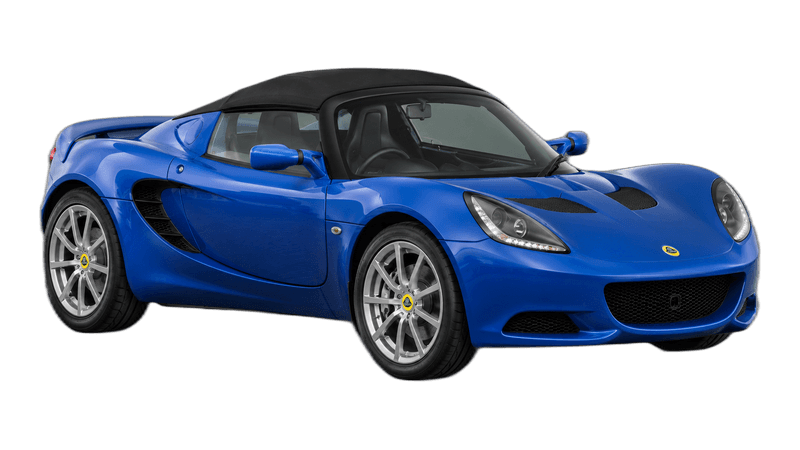
Lotus Elise S3
134bhp
Power
6.5s
0-100 km/h
204km/h
Top Speed
How hard it pulls.
Peak g-force the instant you bury the throttle, estimated from the car's 0–100 time and drivetrain.
Lotus Elise S3Estimated peak launch g from the 0–100 time and drivetrain: an honest approximation, not a measured figure.
The Lotus Elise S3 is a 2-door roadster by Lotus, with 134 bhp, 160 Nm of torque, a 0-100 km/h time of 6.5 seconds and a top speed of 204 km/h.
Dream Car Garage Editorial · Last updated 3 November 2026
Overview
We have not driven this car. This review is based on published specifications and the sources listed below.
Scope of this guide
This guide is scoped to the Lotus Elise S3, meaning the entry-level Series 3 Elise with the naturally aspirated 1.6-litre Toyota engine, the 1ZR-FAE. It is a mid-engine, rear-wheel drive, two-seat roadster with a six-speed manual gearbox, a bonded aluminium chassis and a fibreglass body. It is not a guide to the supercharged 1.8-litre Series 3 cars (Sport 220, Cup 220, Cup 250, Cup 260, Sport 240 and the Final Editions), which have far more power and different prices, and it does not cover the earlier Series 1 and Series 2 cars.
We have not driven this model for this article. We are an editorial desk that reads sources, and everything below comes from pages we opened: two PistonHeads articles (a 2010 first drive and a used buying guide), an Evo report on the 2010 unveiling, Wikipedia's Lotus Elise article, three specification databases (Auto-Data, Zeperfs and CarExpert Australia), and a CarExpert news report on the end of Elise production. We did not read a Lotus brochure or owner's handbook, so the performance numbers below are mostly press and database figures, not a maker document. This page is for research, not a buying recommendation, and it cannot replace an inspection by a Lotus specialist.
The figures at a glance
- Engine: 1.6L naturally aspirated inline-four, the Toyota 1ZR-FAE. The displacement is 1,598 cc in every source that gives one (CarExpert and Zeperfs). CarExpert describes it as having double overhead cams and four valves per cylinder.
- Power: 134 bhp. PistonHeads and Evo both print 134bhp at 6,800rpm. Wikipedia prints 134 bhp (136 PS). Auto-Data and Zeperfs list 136 PS or 136 Hp. These are the same output in different units: 136 PS multiplied by 0.98632 is about 134 bhp, so we use 134 bhp everywhere.
- Torque: 160 Nm. Wikipedia, Auto-Data, Zeperfs and CarExpert all give 160 Nm. PistonHeads and Evo print the same thing as 118 lb ft at 4,400rpm.
- 0-100 km/h: 6.5 seconds. CarExpert Australia lists 6.5 seconds to 100 km/h, and Auto-Data lists 6.5 seconds for 0-100 km/h as well. Wikipedia gives 6.5 seconds to 62 mph for the 2015 Sport. This is a database and press figure, not a figure we measured.
- Top speed: 204 km/h. CarExpert lists 204 km/h, Auto-Data lists 204 km/h (127 mph), and Zeperfs lists 204 km/h as the manufacturer claim.
- Drive: rear-wheel drive through a six-speed manual gearbox. The 2010 PistonHeads first drive says the entry-level car got a new six-speed gearbox.
- Weight: 876 kg claimed DIN weight (PistonHeads 2010, Auto-Data, Zeperfs). Zeperfs also lists 951 kg to the EU standard. Wikipedia lists 866 kg for the 2015 Sport.
- Fuel economy and emissions: PistonHeads 2010 prints 45.0mpg combined and 149g/km CO2. Auto-Data and CarExpert give 6.3 L/100 km combined, and Auto-Data gives 149 g/km.
- Size: Auto-Data lists 3,824 mm long, 1,719 mm wide and 1,117 mm high on a 2,300 mm wheelbase.
Where the sources disagree
The headline figures agree more than they usually do, but there are several places where they do not, and we say which we chose.
Acceleration is the main one. We chose 6.5 seconds to 100 km/h because two databases list it against 100 km/h and Wikipedia gives the same time against 62 mph. The PistonHeads 2010 first drive and Evo give 6.0 seconds to 60 mph, which is a different measurement from 0-100 km/h and a different time, so we have not relabelled it. The PistonHeads used guide prints 6.0 seconds but labels it 0-62 mph, which conflicts with the other pages; we treat it as a rounded press figure and did not use it. Auto-Data also calculates a 6.2 second 0-60 mph figure of its own. In short, the 0-60 mph numbers we found run from 6.0 to 6.2 seconds and the 0-100 km/h and 0-62 mph numbers are 6.5 seconds. Evo adds 0-100 mph in 18.3 seconds.
Top speed differs slightly. Most sources give 127 mph, which is 204 km/h. Evo, in its February 2010 pre-launch report, gave 124 mph. Zeperfs notes that one test measured 197 km/h. We kept 204 km/h because it is the claimed figure in three separate sources and matches the 127 mph in PistonHeads and Wikipedia.
Weight differs by source and by standard. PistonHeads 2010 says 876 kg in basic trim, and its used guide prints 856 kg while warning that weight and power figures are approximate. Zeperfs gives 876 kg claimed and 951 kg to the EU standard. We treat 876 kg as the launch figure and do not put a weight in the catalogue.
Price at launch also differs. PistonHeads 2010 gives 27,450 pounds sterling, and the used guide says the car started from 27,500 pounds in 2010. We found no rival figure from Lotus itself. Zeperfs lists an indicative base price of about 38,400 euros, which we assume is for a continental market.
History and what changed
Evo reported on 16 February 2010 that the updated Elise would be unveiled at the Geneva Motor Show on 2 March 2010, and PistonHeads says the Series 3 has been on sale since April 2010. Wikipedia says the facelifted car was unveiled in February 2010 under the codename Anglesey. Auto-Data gives 2011 as the start of production for this engine, and Wikipedia's Series 3 entry is headed 2011 to 2021, so the sources disagree on whether to start the clock in 2010 or 2011. We think the 2010 date is better supported because three of the pages we read describe the 2010 unveiling or sale, but we note that Auto-Data and Wikipedia headings use 2011 and that the PistonHeads first drive calls the car a 2011 model year.
According to the 2010 PistonHeads first drive, the facelift affected the Elise R, the supercharged SC and a new entry-level model, and Lotus Design handled it in-house. The front clamshell, inspection panels and bumper were revised, the rear got a new engine cover, bumper and diffuser, and LED headlights with daytime running lights were the most visible change. Evo says drag was reduced by about 4 per cent and PistonHeads repeats the aerodynamic claim. Cruise control and rear parking sensors became options.
The new entry-level car was the first Elise without a 1.8-litre engine. PistonHeads says the 1.6 came from the Toyota Auris and was built at Deeside; Wikipedia says Lotus adopted it to meet Euro 5 rules. PistonHeads 2010 says Lotus added its own engine management and exhaust, and that Toyota's Valvematic system sat alongside the existing dual VVT-i. The headline was that the 1.6 made the same 134 bhp as the 1.8 it replaced, with torque down from 127 lb ft to 118 lb ft and a 0-60 mph time of 6.0 seconds against 5.8 seconds.
Variants and the end of the 1.6
Wikipedia says that in 2015 the Sport and Sport 220 replaced the Elise and Elise S, with weight cut by 10 kg. PistonHeads dates the same change to 2016. We do not know why those dates differ, and one of them may reflect the model year against the calendar year. Wikipedia lists the Sport at 866 kg with 134 bhp (136 PS), 160 Nm and 127 mph, and says a 1.6-litre Sprint followed in 2017, cutting about 40 kg with carbon parts, a polycarbonate rear window, a lithium-ion battery and forged wheels, with a 0-60 mph time of 5.9 seconds for the 1.6 Sprint.
The 1.6 left the range before the Elise did. Wikipedia says the engine was discontinued in 2018, and PistonHeads says the 1.6 was dropped from the range in 2018, leaving the 217 bhp Sport 220 as the entry-level Series 3. Zeperfs lists the 136 PS car as 2010 to 2018 and Auto-Data lists 2011 to August 2017. So the 1.6 car was a roughly eight-year model inside a Series 3 that, according to Wikipedia and CarExpert, ran until 2021. Wikipedia reports the Final Edition models were announced on 9 February 2021, and CarExpert says the Elise was introduced in 1996 and production ended in 2021 with 35,124 Elises built over the whole run. That total covers all generations, so it is not a count of 1.6 cars.
Running costs
PistonHeads' used guide is the only source we read that gives running costs. It says the service interval is every 9,000 miles or 12 months, that a service costs from under 300 pounds to around 750 pounds, that brake fluid is due every two years or 18,000 miles (about 55 pounds if done separately), and that coolant is due every four years or 36,000 miles (150 pounds if done separately). It gives a full set of Yokohama tyres as under 400 pounds. These are the guide's numbers at the time we read it, they are British, and prices will have moved. Lotus claimed roughly 500 miles per tank with a light right foot, according to the same guide.
On economy, the figures above are official combined numbers: 6.3 L/100 km and 149 g/km. We would not call that remarkable by itself. It is economical for a sports car mainly because the car is light, and the sources we read describe a car that needs to be worked hard to go quickly.
What to check before buying
The PistonHeads used guide is the source for most of this list, and it reads as general Elise guidance, not 1.6-only advice.
- Chassis corrosion. The extruded aluminium chassis is light but fragile, and galvanic corrosion occurs where aluminium meets steel bobbins, especially after salted winter roads. The guide says corrosion can turn the aluminium to powder and repairs are difficult. It suggests checking the front wheelarches on full lock for bent or split edges.
- Suspension. Front wishbones can rot, poorly repaired galvanised rear subframes can fail, and rear toe-links can loosen or break. The guide says a replacement clamshell is a prompt to renew suspension parts too.
- Accident signs. Light kerbing can disturb tracking, and a difference of a couple of millimetres in corner heights can indicate a shunt. Odd panel gaps, incorrect jacking marks, loose undertray bolts and rusty or aftermarket towing posts can suggest accident repair or track use.
- Bodywork. Check the fibreglass clamshells for stress cracks and stone chips. The guide says S3 clamshells are scarce and costly, paint can bubble on cars kept outdoors, and roofs leak.
- Engine and gearbox. The guide says the 1.6 shows less synchro wear than the supercharged 1.8, which typically crunches on the 2-3 change, and that some high-mileage cars have had engine wiring harness failures. Modified cars need the quality of work checked.
- Electrics. Electric windows are known to fail, and water can damage electronics. The guide mentions radio and dash lights staying on after the engine is off, which can drain the battery and lock out central locking.
- Fit and wear. Door cards and seats wear quickly, and the guide says to make sure you fit the car.
Recalls and safety
PistonHeads' used guide lists two recalls that touch the Series 3 period. In November 2014, loose oil cooler pipes affected Elises built from May 2007 to November 2011, which overlaps the first Series 3 cars (that overlap is our reading, not a statement in the guide). In February 2020, a potential fuel leak affected 762 Elises built from May 2012 to June 2019. We read these only as summaries in a magazine guide, so we cannot say which cars in your area were affected or whether work was done. Check any car's identification number with the maker or the relevant national authority. We found no crash-test data in the pages we read, and the guide itself says crash damage and age are major risks for a lightweight car.
Market and value notes
The PistonHeads guide says S3 prices are tightly compressed and that a 1.6 can cost about the same as a supercharged 1.8. At the time of the guide it quoted used listings of 29,000 pounds for a 2014 1.6 with a wrap and 28,000 miles, 30,250 pounds for a Chrome Orange 1.6 with 11,000 miles and full dealer history, and 33,995 pounds for a 2014 Club Racer with air conditioning. It also lists the 1.6 Sport as 27,500 pounds new in 2010 and "now from 29,000 pounds", a line we cannot square with the 1.6 having been dropped in 2018, so we do not rely on it. The guide appears to have been updated in or after October 2021, but we could not confirm its exact date. These are asking prices from one article, not sale prices, and we found no auction results for this variant.
What we could not find
We found no production count for the 1.6-litre Series 3 alone: the only total we read is 35,124 Elises across 1996 to 2021, so the catalogue shows no production count for this model and we give none. We found no Lotus brochure, owner's manual or press release with maker performance numbers. The Lotus media page we tried redirected to a general news page, and the Express and Star and Car Showroom pages returned an access error, so we did not use them and relied on other pages. We found no long-term reliability survey and no auction records for this variant. Wikipedia gave no Series 3 launch date beyond February 2010, and the sources disagree on 2010 versus 2011 for the start. Zeperfs was the only page to give a measured top speed and its timing table was unreadable to us, so we ignored it for 0-100 km/h.
About the photograph
The page uses the catalogue photograph. Its credit is listed on the credits page.
Verdict
The base Series 3 Elise is, on paper, a light roadster with modest power: 134 bhp from a 1.6L naturally aspirated inline-four, 160 Nm, 6.5 seconds to 100 km/h and 204 km/h flat out. The 2010 PistonHeads reviewer liked the chassis and found the engine lazy below about 4,000rpm, and the used guide spends most of its checklist on the aluminium chassis, the suspension and accident history. If you are researching one, the useful questions are how it was stored, whether the chassis and wishbones have been inspected for corrosion, and what service history it has. We would treat the 1.6 as a car to buy on condition and documentation, not on the badge, and we repeat that this page is not a substitute for a specialist inspection.
Sources
- PistonHeads: Lotus Elise S3 used buying guide
- PistonHeads: Driven, new Lotus Elise 1.6 (April 2010)
- Evo: New Lotus Elise (February 2010)
- Wikipedia: Lotus Elise
- Auto-Data: Lotus Elise (Series 3) 1.6 (136 Hp)
- CarExpert Australia: Lotus Elise S 2011 powertrain and performance
- Zeperfs: Lotus Elise S3 136 PS (2010-2018)
- CarExpert: Lotus Elise, Exige and Evora production ends
Specifications
Engine
1.6L naturally aspirated inline-four
Displacement
1.6L
Power
134 bhp
Torque
160 Nm
0-100 km/h
6.5s
Top Speed
204 km/h
Drivetrain
RWD
Country
United Kingdom
Body Style
2-door roadster
Years
2010–2018
Specifications are manufacturer-published figures.
More from Lotus
Frequently Asked Questions
What are the specifications of the Lotus Elise S3?
The Lotus Elise S3 is a 2-door roadster by Lotus, with 134 bhp, 160 Nm of torque, a 0-100 km/h time of 6.5 seconds and a top speed of 204 km/h.
What drivetrain does the Lotus Elise S3 use?
The Lotus Elise S3 is configured with rear-wheel drive.
What type of car is the Lotus Elise S3?
The Lotus Elise S3 is a sports cars manufactured by Lotus in United Kingdom. Production ran from 2010 to 2018.