

Lamborghini Huracan Tecnica
£230,000
usedIndicative market price, updated periodically.
631bhp
Power
3.2s
0-100 km/h
325km/h
Top Speed
£230,000
Price Used
How hard it pulls.
Peak g-force the instant you bury the throttle, estimated from the car's 0–100 time and drivetrain.
Lamborghini Huracan TecnicaEstimated peak launch g from the 0–100 time and drivetrain: an honest approximation, not a measured figure.
The Lamborghini Huracan Tecnica is a 2-door coupe by Lamborghini, with 631 bhp, 565 Nm of torque, a 0-100 km/h time of 3.2 seconds and a top speed of 325 km/h. Indicative used value: approximately £230,000. Actual values vary with specification, condition and history.
Dream Car Garage Editorial · Last updated 28 October 2026
Overview
We have not driven this car. This review is based on published specifications and the sources listed below.
A distinct rear-drive Huracán
The Huracán Tecnica combines a naturally aspirated 5,204 cc V10 with rear-wheel drive and a seven-speed LDF dual-clutch gearbox. Its 640 CV is approximately 631 bhp, with 565 Nm. Lamborghini quotes 3.2 seconds to 100 km/h and 325 km/h. The shared engine output does not make it an AWD EVO or an STO: drivetrain, aerodynamic package and chassis calibration need their own identification.
We have not driven this model for this article. Manufacturer specifications come from the official Tecnica page. The PistonHeads Huracán guide was published in 2020 and concerns earlier cars, so it cannot establish a Tecnica-specific failure history. Lamborghini's recall service provides the campaign-check process. No model-specific production total is established by those sources; the catalogue count remains unset rather than substituting a family milestone.
Rear-wheel steering and integrated control
The Tecnica uses rear-wheel steering, direct steering and Lamborghini Dinamica Veicolo Integrata, or LDVI. Its P-TCS traction-control calibration belongs to this rear-drive specification. Ask a model-familiar specialist to include the steering, sensors and control systems in diagnostics. A warning-free dashboard is useful observation but does not demonstrate that every associated system has been examined or that stored faults have been explained.
Relate the steering assessment to geometry, tyres and physical suspension condition. The official specification includes magnetorheological dampers and electric power steering. Record any calibration, alignment or replacement work and ask for measurements after setup changes. Rear-wheel drive does not justify an improvised handling-limit test at a viewing. A planned specialist assessment in suitable conditions provides better evidence without creating unnecessary risk or borrowing assumptions from another Huracán.
Brake cooling and carbon-ceramic condition
Lamborghini identifies dedicated brake cooling as part of the Tecnica package. Inspect the ducts and surrounding bodywork for obstruction, contact or poor repairs. Their presence alone does not establish that the braking system is in good condition. Obtain measured carbon-ceramic disc and pad condition and a brake-fluid history. The official table lists 380 mm front and 356 mm rear discs, distinct from the STO's CCM-R arrangement.
Ask how the car has been used and connect that history with invoices. Circuit driving is neither proof of damage nor a substitute for maintenance. Request post-use inspections, tyre changes and fluid work where relevant. Early-Huracán brake-heat reports in the older buying guide are not evidence of a Tecnica defect. A specialist should assess the fitted system and your intended use rather than present a borrowed family anecdote as an expected failure.
Fixed aero is not Performante ALA
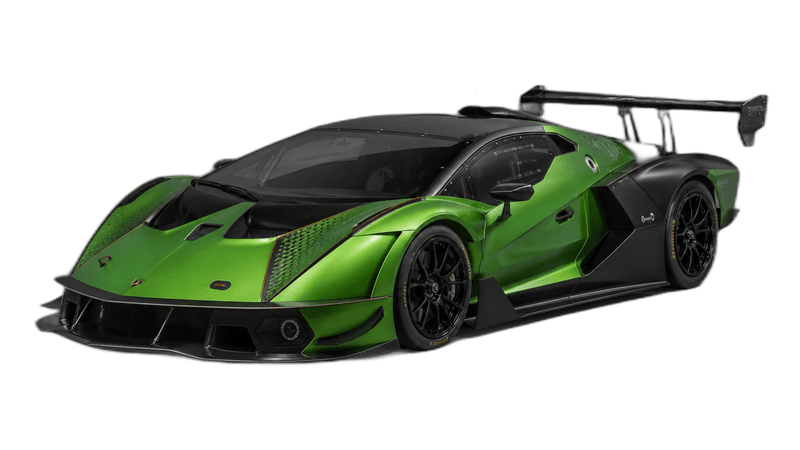
The Tecnica's front splitter, underbody deflectors and rear spoiler form its own aerodynamic package. Do not identify it by the Performante's ALA equipment or expect the STO's three-position wing. Inspect the installed panels, ducts, attachment areas and underbody against the factory specification. Modified bodywork or replaced components should be supported by invoices and a clear explanation of the work.
Assess repair quality rather than treating every replacement as either automatically acceptable or automatically disqualifying. Ask the inspector to distinguish a cosmetic concern from a finding requiring further investigation. Glossy photographs cannot establish the condition of the underside or hidden mountings. Where access was restricted, the written report should identify the limitation and explain what further examination would be useful before drawing a final conclusion.
V10, dual-clutch gearbox and warnings
Observe the engine genuinely cold where practical and compare running condition after warming. Inspect fluids and request diagnostic records before any warnings are cleared. The earlier buying guide's reports of misfires or reduced-power episodes should be framed as background questions, not a Tecnica failure pattern. If this car has displayed a warning, ask what caused it, what work was done and whether it returned.
The seven-speed LDF is a dual-clutch gearbox rather than an automated manual. Evaluate its normal operation and stored information without importing Gallardo clutch assumptions or Aventador ISR behaviour. Document exhaust and software changes and verify any warranty claim directly with its provider. An advertisement or a seller's opinion does not establish how a modification will be treated under the individual contract. Itemise original parts supplied with the car.
Tyres, wheels and practical inspection
The official table specifies 20-inch wheels and Bridgestone Potenza Sport tyres. Confirm the actual car's approved fitment, dates, wear and wheel condition. A different tyre or wheel setup needs an explanation appropriate to this chassis and intended use, not automatic approval because it appears on a related variant. Compare an alignment report with wear across the tyres and the suspension inspection.
Check the splitter, front underside and parking equipment. If front lift is fitted, demonstrate its operation and investigate leaks or settling. A working lift does not establish that the car has never contacted the ground. Test the windows, washers, camera and fitted cabin controls; these are sensible demonstrations rather than claims of Tecnica-specific faults. Record any equipment that could not be shown and arrange follow-up where it materially affects the assessment.
Seats, build record and service continuity
Try the actual seating position, adjustment and headroom before relying on the option list. Check access, bolsters, switches and the visibility available to the intended driver. If a helmet forms part of your plans, test the fit with the chosen seating position. Exterior equipment and paint choices cannot establish whether the cabin suits an individual owner. Match personalisation and supplied accessories to the build record.
Dated annual-service invoices, diagnostic visits, repairs and storage history should form a coherent file. Ask what recommissioning occurred after inactivity and obtain present quotations for identified work rather than importing historic article tariffs. Confirm warranty dates and transfer terms. Use the VIN in Lamborghini's recall tool, which covers applicable campaigns from the last 15 years, and retain dealer confirmation of completed work. Another Huracán's campaign does not determine this chassis's status.
Method and remaining uncertainty
An independent Tecnica assessment should cover the later steering and control systems, brake cooling, fixed aero, measured consumables and the underbody, not simply repeat an original LP610-4 checklist. Ask the inspector to separate confirmed findings, owner accounts and inaccessible areas. Resolve important omissions before treating the report as complete.
We have not driven this model for this article. The sources below separate official technical identity from dated ownership background. No present transaction price, future-value assurance or universal reliability claim is offered. Keeping an unsupported production count unset and later-model fault claims bounded produces a more useful guide than a precise-looking number or an inherited list of problems.
Specifications
Engine
5.2L (5204 cc) naturally aspirated V10
Displacement
5.2L
Power
631 bhp
Torque
565 Nm
0-100 km/h
3.2s
Top Speed
325 km/h
Drivetrain
RWD
Country
Italy
Body Style
2-door coupe
Years
2022–present
Price Used
£230,000
Specifications are manufacturer-published figures.
More from Lamborghini

Frequently Asked Questions
What are the specifications of the Lamborghini Huracan Tecnica?
The Lamborghini Huracan Tecnica is a 2-door coupe by Lamborghini, with 631 bhp, 565 Nm of torque, a 0-100 km/h time of 3.2 seconds and a top speed of 325 km/h. Indicative used value: approximately £230,000. Actual values vary with specification, condition and history.
How much does a Lamborghini Huracan Tecnica cost?
Indicative used value: approximately £230,000. Actual values vary with specification, condition and history.
What drivetrain does the Lamborghini Huracan Tecnica use?
The Lamborghini Huracan Tecnica is configured with rear-wheel drive.
What type of car is the Lamborghini Huracan Tecnica?
The Lamborghini Huracan Tecnica is a supercars manufactured by Lamborghini in Italy. Production started in 2022.