
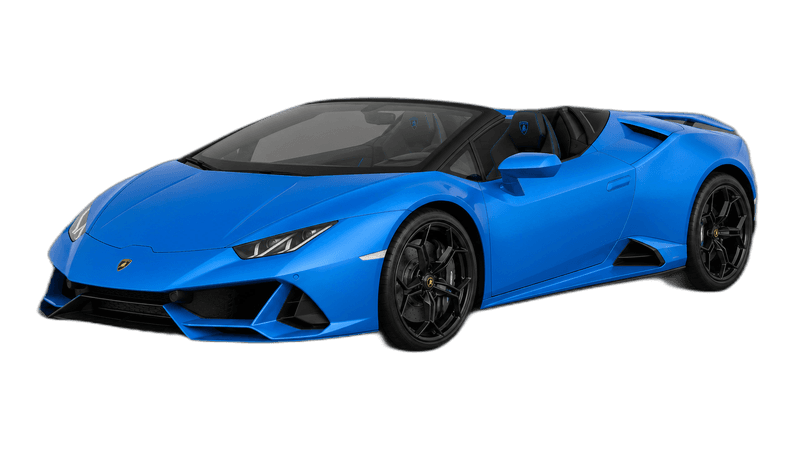
Lamborghini Huracan EVO Spyder
£220,000
usedIndicative market price, updated periodically.
631bhp
Power
3.1s
0-100 km/h
325km/h
Top Speed
£220,000
Price Used
How hard it pulls.
Peak g-force the instant you bury the throttle, estimated from the car's 0–100 time and drivetrain.
Lamborghini Huracan EVO SpyderEstimated peak launch g from the 0–100 time and drivetrain: an honest approximation, not a measured figure.
The Lamborghini Huracan EVO Spyder is a 2-door convertible by Lamborghini, with 631 bhp, 600 Nm of torque, a 0-100 km/h time of 3.1 seconds and a top speed of 325 km/h. Indicative used value: approximately £220,000. Actual values vary with specification, condition and history.
Dream Car Garage Editorial · Last updated 28 October 2026
Overview
We have not driven this car. This review is based on published specifications and the sources listed below.
Identify the AWD EVO Spyder
The Huracán EVO Spyder introduced in 2019 combines a 5,204 cc naturally aspirated V10 with all-wheel drive and a seven-speed LDF dual-clutch gearbox. Its 640 CV equates to approximately 631 bhp, with 600 Nm. Lamborghini quotes 3.1 seconds to 100 km/h and 325 km/h. This is not the less powerful EVO RWD Spyder, and the drivetrain distinction belongs in both the catalogue and the inspection.
We have not driven this model for this article. This guide uses the official EVO Spyder specification, Lamborghini's recall service and a dated PistonHeads guide. The latter primarily concerns earlier Huracáns; it is not evidence of an EVO-specific failure pattern. No model-specific production total is established by the cited sources, so the count remains unset.
Electric soft top and evidence of adjustment
The official specification identifies an electrically foldable soft top. Demonstrate the complete sequence with the seller's permission and inspect the fabric, seals, visible latches and surrounding trim. Watch for even movement and correct alignment in the closed position. Any hesitation or warning should be recorded for diagnosis rather than dismissed as normal behaviour for an open car.
Ask for roof adjustment, seal and mechanism invoices. Check accessible drainage areas and the cabin for water marks or dampness, distinguishing a reason to investigate from a confirmed leak. These are inspection recommendations, not claims of a documented EVO Spyder roof defect. If operation cannot be shown because of weather or battery condition, arrange another demonstration rather than treating a historical video as completion of the check.
LDVI and steering are part of the identity
Lamborghini Dinamica Veicolo Integrata, or LDVI, coordinates vehicle behaviour across the all-wheel-drive system, torque vectoring, traction and four-wheel steering. The EVO Spyder combines electric assistance and Dynamic Steering with rear-wheel steering. A dashboard without warnings does not by itself establish that every associated sensor or actuator has been assessed. Include model-appropriate diagnostics in the inspection plan.
Have the specialist relate steering response to geometry, tyre condition and the physical suspension inspection. Magnetorheological dampers belong to the official specification and should be checked as installed equipment. Do not substitute a generic early-Huracán assessment that omits the later steering systems. Record any calibration or suspension work and ask for alignment measurements after parts were changed, rather than relying on the seller's impression that the car drives straight.
Tyre pairing and the all-wheel-drive system
Check the approved sizes, tyre type, age and wear on all four corners. Rolling circumference is an important early-Huracán ownership topic in the PistonHeads guide and a sensible configuration check for this AWD car. It is not proof that an EVO differential is defective. Non-standard wheel and tyre combinations should be assessed against the actual car's requirements, not accepted because another variant uses a similar diameter.
Inspect wheel repairs and compare tyre wear with geometry records. A recently replaced set can conceal an older wear pattern without explaining its cause. Ask for the reason behind replacements, whether a matching configuration was retained and what the specialist recommends for your intended use. Keep those recommendations separate from an unsupported claim that there is only one suitable tyre for every climate or driving pattern.
Engine and LDF diagnosis without inherited myths
Observe the V10 cold and warm with a fluid and diagnostic inspection. PistonHeads reports intermittent misfire or reduced-power experiences on earlier cars. Those reports justify asking about this car's history but do not establish an EVO-wide problem. Request records of any warning, the diagnosis, work completed and whether it returned. Clearing a display or restarting cannot supply that missing explanation.
The seven-speed LDF is a dual-clutch transmission, not Gallardo E-Gear or Aventador ISR. Assess it on its own operating behaviour and records. Document exhaust or software changes and confirm any claimed warranty with the provider. Do not use an alleged launch allowance or a borrowed clutch-wear rule as a substitute for diagnosis. Ask the specialist to distinguish stored information from evidence of a current fault.
Brakes, underside and front lift
The official specification lists carbon-ceramic brakes. Obtain disc and pad measurements and a fluid history rather than a visual assurance about remaining life. Ask how use and storage relate to recent maintenance. If circuit use is part of the history, request subsequent inspection records without treating the fact alone as proof of mistreatment. Historic service tariffs are not current estimates for this individual car.
Inspect the splitter, undertrays and rear bodywork for contact and repair. Demonstrate front lift where fitted and investigate leaks, settling or interrupted operation. A correct lift cycle does not erase prior underside damage. Identify any replaced panels, confirm the repair method and make sure the inspector states where trays could not be removed. Photographs of a polished upper body cannot answer those questions.
Touchscreen, seats and ownership records
The EVO's 8.4-inch touchscreen changes the cabin inspection compared with an original LP610-4. Demonstrate the fitted controls, camera and connections. Check window and washer operation and seating adjustment. The earlier guide's equipment anecdotes are prompts for demonstration, not evidence that the later touchscreen shares the same faults. Try headroom and entry with the actual seats and roof position rather than relying on an option description.
Match leather, Alcantara, CarbonSkin and other equipment to the build record. Dated annual-service invoices, diagnostic visits, tyre changes and roof work should form a coherent account. Verify warranty dates, modification acceptance and ownership-transfer conditions directly. Use the VIN in Lamborghini's recall service and retain dealer confirmation of completed campaigns; a related car's recall does not establish applicability here.
Method and limits
An independent Lamborghini assessment should include roof operation, LDVI and steering diagnostics, tyres, measured brakes and underbody access. Record missing demonstrations and arrange follow-up where necessary. The recall tool covers campaigns from the last 15 years and complements, rather than replaces, the service file.
We have not driven this model for this article. No current transaction prices, future-value assurances or universal reliability claims are made. Manufacturer specifications are separated from earlier-car reports, and an uncertain production total stays unset. That distinction makes the guide useful without turning the EVO's technical complexity into an unsupported list of expected failures.
Specifications
Engine
5.2L (5204 cc) naturally aspirated V10
Displacement
5.2L
Power
631 bhp
Torque
600 Nm
0-100 km/h
3.1s
Top Speed
325 km/h
Drivetrain
AWD
Country
Italy
Body Style
2-door convertible
Years
2019–present
Price Used
£220,000
Specifications are manufacturer-published figures.
More from Lamborghini
Frequently Asked Questions
What are the specifications of the Lamborghini Huracan EVO Spyder?
The Lamborghini Huracan EVO Spyder is a 2-door convertible by Lamborghini, with 631 bhp, 600 Nm of torque, a 0-100 km/h time of 3.1 seconds and a top speed of 325 km/h. Indicative used value: approximately £220,000. Actual values vary with specification, condition and history.
How much does a Lamborghini Huracan EVO Spyder cost?
Indicative used value: approximately £220,000. Actual values vary with specification, condition and history.
What drivetrain does the Lamborghini Huracan EVO Spyder use?
The Lamborghini Huracan EVO Spyder is configured with all-wheel drive.
What type of car is the Lamborghini Huracan EVO Spyder?
The Lamborghini Huracan EVO Spyder is a supercars manufactured by Lamborghini in Italy. Production started in 2019.