
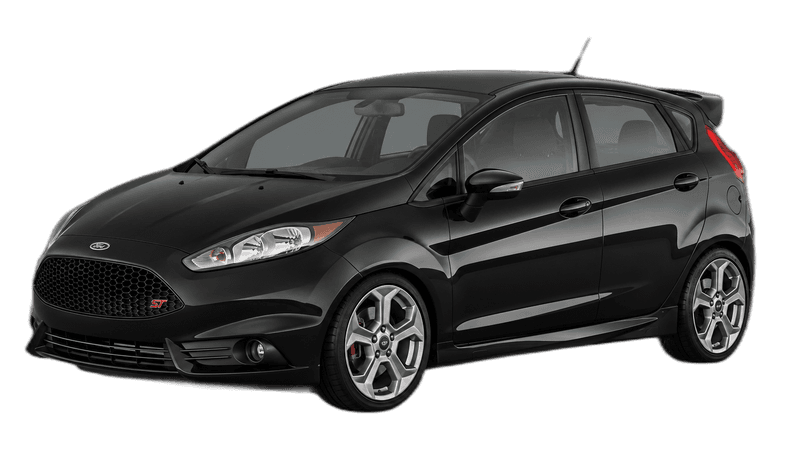
Ford Fiesta ST (Mk7)
£12,000
usedIndicative market price, updated periodically.
182bhp
Power
6.9s
0-100 km/h
220km/h
Top Speed
£12,000
Price Used
How hard it pulls.
Peak g-force the instant you bury the throttle, estimated from the car's 0–100 time and drivetrain.
Ford Fiesta ST (Mk7)Estimated peak launch g from the 0–100 time and drivetrain: an honest approximation, not a measured figure.
The Ford Fiesta ST (Mk7) is a 4/5 seater hatchback by Ford, with 182 bhp, 240 Nm of torque, a 0-100 km/h time of 6.9 seconds and a top speed of 220 km/h. Indicative used value: approximately £12,000. Actual values vary with specification, condition and history.
Dream Car Garage Editorial · Last updated 30 October 2026
Overview
We have not driven this car. This review is based on published specifications and the sources listed below.
The Fiesta ST Mk7 made the small hot hatch feel serious
The Ford Fiesta ST Mk7 is a compact front-wheel-drive hot hatch with enough performance to be fun without becoming difficult to place. Our catalogue uses the 2013–2017 production window: a 1596 cc 1.6-litre turbo inline-4 with 182 bhp, 240 Nm, 0 to 100 km/h in 6.9 seconds and a 220 km/h maximum. We have not driven this model for this article. This is a desk-researched ownership guide using a Ford production release mirrored by San Diego State University, the PistonHeads Fiesta ST used buying guide and the DVSA recall service. Their evidence should shape an inspection, not replace one.
Ford's launch material gives the mechanical context: Cologne production, 182 PS, 240 Nm, 0 to 62 mph in 6.9 seconds, a 137 mph maximum, torque vectoring control, three-mode electronic stability control and standard Recaro seats. PistonHeads confirms the same basic output while showing how the model changed across ST1, ST2 and ST3 equipment levels, 2015 suspension revisions, the late ST200 and the move from three-door to five-door availability during 2016. Those changes matter because a base early car and a late ST200 should not be valued as identical.
Start with the cooling and recall file
The Mk7 Fiesta ST is mechanically engaging, but its ownership case begins with evidence. PistonHeads highlights a 2018 recall for cylinder-head cracking and overheating on cars built to the end of 2014. Ask whether the recall or relevant inspection work has been completed and recorded. Check the coolant level, hoses, expansion tank, radiator, fan operation and any signs of past overheating. The engine should warm normally, hold temperature in traffic and show no creamy residue under the oil cap or around the coolant bottle.
The 1.6-litre EcoBoost engine should feel responsive from low speed and pull cleanly to the redline. Listen for turbo whistle that becomes harsh, boost leaks, misfire and idle instability. Ask for oil-change proof and use the correct oil specification. A neglected turbocharged engine can still run well enough for a short test, so invoices matter. Look for signs of track use: heat-marked brakes, worn tyres, missing underbody covers, toe-out settings and repeated suspension work. Mountune upgrades were common and can be well documented; undocumented remaps, hybrid turbos or deleted emissions hardware require specialist diagnosis.
Mounts, clutch hydraulics and gearbox feel are daily-use checkpoints
PistonHeads identifies the upper engine mount and clutch slave cylinder or bleed pipe as practical ownership points. On the test drive, the engine should not rock excessively under load, and the gear lever should move cleanly into each gear without vague or rubbery feel. The clutch should bite without slip, judder or a pedal that stays near the floor. If the pedal feels inconsistent, ask whether the slave cylinder, master cylinder, fluid or clutch has been replaced.
The six-speed manual gearbox is part of the car's appeal. It should not crunch into second when warm, jump out of gear or whine excessively in top gear. Check the shift cables or linkage adjustment, fluid history and any evidence of hard launches. The ST's performance is accessible enough to attract enthusiastic owners, so maintenance evidence is more useful than mileage alone. A car with many short journeys and no fluid history may need more work than a higher-mileage car with annual service invoices.
Suspension, steering and tyres reveal the specification
The Mk7 changed during its life, and the suspension settings are part of that story. PistonHeads notes the 2015 changes and the later ST200. The car should turn in without excessive torque steer, track straight under braking and settle cleanly after bumps. Check tyre wear across the inner edge, particularly on the front axle, because aggressive geometry and hard use can consume tyres quickly. Listen for knocks from top mounts, anti-roll-bar links and bushes. The steering should be alert without feeling nervous at speed.
Wheels, brakes and trim help verify the claimed version. Recaro seats are standard in the cited launch material, but equipment changed by trim. Check that the wheels, headlights, daytime running lights, audio, climate controls, door seals and badges match the claimed ST level. PistonHeads mentions paint chips and door-seal issues, which are small on their own but useful negotiation points. The infotainment and DAB system should work as intended, because electrical faults can become tedious even when the mechanical package is sound.
A careful test drive should include a cold start, a warm restart and a route with traffic, rough surfacing and a steady motorway-style run. The engine should pull without hesitation, the gearbox should be precise when warm, and the suspension should feel controlled rather than crashy. If the car has modified engine mounts, a short-shift kit or upgraded intercooler, ask for invoices and a diagnostic scan. Small changes can transform the daily character, so they should be treated as part of the car's identity rather than free extras.
Buy the car with the clearest evidence file
The right Fiesta ST Mk7 should have a clean recall history, cooling-system evidence, a strong gearbox and clutch feel, healthy engine mounts and no unresolved boost or misfire issues. Its trim and wheels should match the seller's description, and the service book should agree with the invoices. Use the DVSA recall service and Ford documentation to confirm open actions, then compare the car against the guide's mechanical checks. This guide combines Ford launch specifications, PistonHeads ownership evidence and DVSA recall data. It assigns no exact production count to the derivative.
Specifications
Engine
1.6-litre (1596 cc) EcoBoost turbo inline-4 petrol
Displacement
1.6L
Power
182 bhp
Torque
240 Nm
0-100 km/h
6.9s
Top Speed
220 km/h
Drivetrain
FWD
Country
UK
Body Style
4/5 seater hatchback
Years
2013–2017
Price Used
£12,000
Specifications are manufacturer-published figures.
More from Ford
Frequently Asked Questions
What are the specifications of the Ford Fiesta ST (Mk7)?
The Ford Fiesta ST (Mk7) is a 4/5 seater hatchback by Ford, with 182 bhp, 240 Nm of torque, a 0-100 km/h time of 6.9 seconds and a top speed of 220 km/h. Indicative used value: approximately £12,000. Actual values vary with specification, condition and history.
How much does a Ford Fiesta ST (Mk7) cost?
Indicative used value: approximately £12,000. Actual values vary with specification, condition and history.
What drivetrain does the Ford Fiesta ST (Mk7) use?
The Ford Fiesta ST (Mk7) is configured with front-wheel drive.
What type of car is the Ford Fiesta ST (Mk7)?
The Ford Fiesta ST (Mk7) is a hot hatches manufactured by Ford in UK. Production ran from 2013 to 2017.