
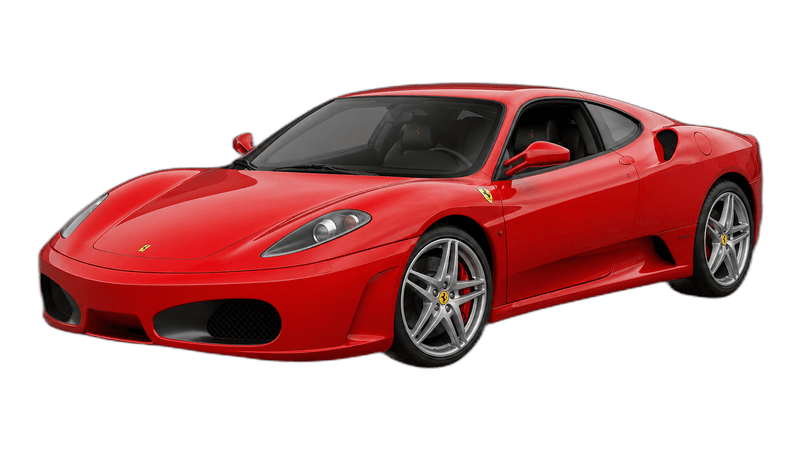
Ferrari F430
£135,000
usedIndicative market price, updated periodically.
483bhp
Power
4.1s
0-100 km/h
311km/h
Top Speed
£135,000
Price Used
How hard it pulls.
Peak g-force the instant you bury the throttle, estimated from the car's 0–100 time and drivetrain.
Ferrari F430Estimated peak launch g from the 0–100 time and drivetrain: an honest approximation, not a measured figure.
The Ferrari F430 is a 2 seater convertible/cabriolet by Ferrari, producing 483 bhp, and 465 Nm of torque, with a 0-100 km/h time of 4.1 seconds, and a top speed of 311 km/h, Valued at approximately £135,000.
Dream Car Garage Editorial · Last updated 24 October 2026
Overview
We have not driven this car. This review is based on published specifications, owner reports and market listings.
The case for the F430
The Ferrari F430 arrived in 2004 as the replacement for the 360 Modena. It uses a 4.3-litre naturally aspirated V8 producing 483 bhp, a 6-speed manual or a 6-speed F1 automated manual, and rear-wheel drive. It was the last Ferrari V8 to offer a manual gearbox, and the last before the 458's dual-clutch revolution. That makes it a significant car.
The F430 is more usable than its predecessors. The cabin is comfortable, the visibility is good and the ride is more compliant than expected. The engine revs to 8,500 rpm and makes a wonderful noise. The F1 gearbox is not as smooth as a modern dual-clutch, but it is part of the character. The manual cars are rare and much more valuable.
The F430 is also a proper supercar. It is fast, dramatic and beautiful. It is not a daily driver, but it is comfortable enough for a long trip. The challenge is finding a good one. Many cars have been neglected, modified or crashed, and the cost of putting one right can be high.
What it costs to run
A minor service at a Ferrari specialist is £800 to £1,200, and a major service is £2,000 to £3,500. The F430 uses a timing chain, but the engine still needs regular oil changes and belt-driven accessories. Ferrari's service interval is annual or every 6,250 miles, whichever comes first, and a full inspection with a diagnostic scan adds £300 to £500. The F1 gearbox needs a fluid and filter change, and the clutch wear should be checked with a diagnostic tool. A clutch replacement is £2,500 to £4,000.
Tyres are £1,000 to £1,400 for a set of 19-inch rubber. Replace them every five to six years regardless of tread, because the rubber ages. Brake discs and pads are £2,500 to £4,000 for the carbon-ceramic system. Fuel consumption is 15 to 20 mpg on a run and the low teens in town. Insurance and road tax are both expensive. A Ferrari warranty or a comprehensive specialist warranty is worth having.
Known weak points
The F430 has several known weak points. The F1 hydraulic pump can fail, leaving the gearbox unable to select gears. The clutch wears, especially on cars used in traffic. The gearbox actuator and the F1 sensors can fail. The exhaust manifolds can crack, and the catalytic converters can fail. The suspension ball joints and bushes wear, and the adaptive dampers can leak.
A standing car can drain its battery, and electrical gremlins are not unusual. The interior has sticky buttons and switches, a common Ferrari issue. Expect stone chips on the front bumper; the paint is soft. The F1 system uses a hydraulic pump and a relay that can fail; many owners carry a spare relay. The gearbox actuator and the clutch position sensor can also fail. The exhaust manifolds are a known weakness, and an aftermarket set of headers is a common upgrade, but it can affect emissions and originality. The suspension ball joints and track rod ends wear, and the adaptive dampers can leak.
The F430 is also sensitive to kerb damage and poorly repaired bodywork. The aluminium chassis is expensive to repair.
What to check before buying
The paperwork should show consistent servicing. A full Ferrari dealer or specialist history is essential. Check that the major services have been done on time and that the clutch wear has been measured. Ask for a fault-code scan and a report from a Ferrari specialist.
Inspect the F1 hydraulic system for leaks and check that the gearbox selects gears smoothly. Check the clutch wear reading; a car with more than 50 per cent wear will need a clutch soon. Check the exhaust manifolds for cracks and the catalytic converters for damage. Check the F1 pump and relay, the clutch wear and the gearbox actuator. A car that has been standing may have a weak battery and dried seals. Inspect the suspension for leaks and the brakes for disc wear.
A cold and hot listen will reveal different noises. Check for exhaust leaks, oil leaks and coolant residue. Drive it properly and check the gearbox when cold and warm. Check the steering, brakes and suspension. Inspect the paint and the body panels for accident damage. Check the infotainment, climate control and driver aids for faults or warning messages.
Market and depreciation
The F430 market has been strong. At the time of writing, a good F1 car with 20,000 to 40,000 miles was £90,000 to £130,000. A manual car was £150,000 to £200,000, and a Scuderia was £150,000 to £180,000. Low-mileage, high-spec cars were at the top of those ranges.
The market has cooled from its peak, but the F430 remains desirable. The last manual V8 Ferrari is a significant car, and the supply is limited. The Scuderia is the track-focused version, with more power and less weight. The 16M Spider is the open-top collector car. The standard F430 is the value pick, but it is still expensive to run. A well-documented, low-mileage car with the right spec will hold value best.
Who it suits
The F430 suits the collector who wants an analogue supercar with a great engine and a manual gearbox option. It is comfortable enough for a long drive, fast enough for a track day and special enough for a Sunday morning. It does not suit someone who wants a cheap car to run or a car they can maintain at any garage. It also does not suit someone who needs four seats.
If you want a more modern car, the 458 is the obvious alternative. If you want a more extreme car, the Scuderia is the one to have. If you want a cheaper V8 Ferrari, the 360 Modena is worth a look.
Alternatives
The Ferrari 458 is the next generation, with a dual-clutch gearbox and more power, but it is less analogue. The Lamborghini Gallardo is the F430's closest rival, with a V10 and all-wheel drive, but it is less comfortable. The Porsche 911 Turbo is more usable and more affordable, but it lacks the Ferrari's drama. The Audi R8 V8 is a more reliable alternative, but it is not a Ferrari.
The F430 is a modern classic. It is not the fastest car in its class, but it is one of the most rewarding.
How this review was compiled
This review is based on Ferrari's published technical and service information, owner reports from FerrariChat and the Ferrari Owners' Club, UK Ferrari specialist servicing guides and current Auto Trader listings. Prices depend on condition, specification and where the car is sold.
Specifications
Engine
4.3 litre4308 cc(262.89 cu in) V 8 in 90° vee naturally aspirated petrol
Displacement
4.3L
Power
483 bhp
Torque
465 Nm
0-100 km/h
4.1s
Top Speed
311 km/h
Drivetrain
RWD
Country
Italy
Body Style
2 seater convertible/cabriolet
Years
2004–2009
Price Used
£135,000
Specifications are manufacturer-published figures.
More from Ferrari
Frequently Asked Questions
What are the specifications of the Ferrari F430?
The Ferrari F430 is a 2 seater convertible/cabriolet by Ferrari, producing 483 bhp, and 465 Nm of torque, with a 0-100 km/h time of 4.1 seconds, and a top speed of 311 km/h, Valued at approximately £135,000.
How much does a Ferrari F430 cost?
The Ferrari F430 has a used market value of approximately £135,000.
Is the Ferrari F430 AWD or RWD?
The Ferrari F430 uses a RWD drivetrain configuration in a 2 seater convertible/cabriolet body style.
What type of car is the Ferrari F430?
The Ferrari F430 is a supercars manufactured by Ferrari in Italy. Production ran from 2004 to 2009.