
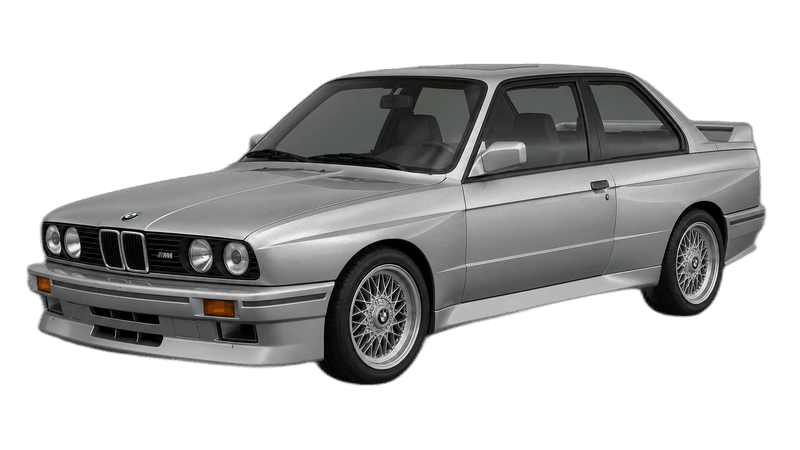
BMW M3 (E46)
£30,000
usedIndicative market price, updated periodically.
338bhp
Power
5.2s
0-100 km/h
250km/h
Top Speed
£30,000
Price Used
How hard it pulls.
Peak g-force the instant you bury the throttle, estimated from the car's 0–100 time and drivetrain.
BMW M3 (E46)Estimated peak launch g from the 0–100 time and drivetrain: an honest approximation, not a measured figure.
The BMW M3 (E46) is a 2-door coupé by BMW, with 338 bhp, 365 Nm of torque, a 0-100 km/h time of 5.2 seconds and a top speed of 250 km/h. Indicative used value: approximately £30,000. Actual values vary with specification, condition and history.
Dream Car Garage Editorial · Last updated 24 October 2026
Overview
We have not driven this car. This review is based on published specifications and the sources listed below.
A six-cylinder M3 with important buying choices
The E46 M3 pairs a naturally aspirated S54 straight-six with rear-wheel drive and either a six-speed manual or SMG automated manual transmission. Coupe and convertible bodies offer different practical experiences. The CSL is a separate derivative and should not be used to imply that every standard M3 has the same lightweight equipment, brakes or specification.
This is a desk-researched ownership guide. We have not driven this model for this article. The combination of engine layout, dimensions and usability explains why it is worth considering, but published enthusiasm cannot establish how a particular car behaves after years of maintenance, modifications or storage. Decide which configuration suits your use before discussing prices.
Rear axle-carrier panel inspection
The rear axle-carrier panel and its mounting areas deserve an inspection by an E46-experienced specialist. Structural cracking should not be assumed absent because a car was never tracked or has low mileage. Ask what areas were examined, whether further access is necessary and how the findings were documented. A general underbody glance is not the same as a model-specific assessment.
If repairs or reinforcement have been completed, obtain invoices, photographs and an explanation of the method. The word reinforced does not describe workmanship or prove that all damage was found. Ask whether the surrounding structure and alignment were checked. A documented repair can be meaningful evidence, but it should not be treated as a lifetime guarantee about the entire body.
S54 maintenance and uncertainty
Review oil servicing, relevant campaigns, valve-clearance maintenance and work involving VANOS or bearings. Those subjects deserve informed discussion rather than a declaration that every responsible owner must already have replaced the same parts. Ask the inspecting technician to assess the records and advise on the actual engine, with a clear distinction between diagnosis and elective preventive work.
A cold start, diagnostic scan and appropriate tests can reveal useful information without proving internal bearing condition. Investigate unusual noise, poor running, leaks and temperature problems. An engine that sounds healthy during a viewing is not certified free of future risk. Likewise, an invoice for bearing work should identify its scope, parts and workshop rather than act as an all-purpose reliability assurance.
Manual and SMG need different checks
SMG is an automated single-clutch manual system, not a conventional automatic or dual-clutch gearbox. Test its operation with someone who understands the expected behaviour, both cold and fully warm. Assess the clutch, hydraulic system and recorded faults. Do not dismiss every hesitation as normal or diagnose an expensive pump solely from one symptom.
A manual requires assessment of clutch engagement, gear selection and driveline condition too. For a converted example, establish the original specification, conversion work and approval or insurance implications. Choose according to the interaction you want, but compare cars honestly: a conversion should not be represented as a factory-manual car, and no transmission choice guarantees future resale value.
Cooling, brakes and suspension
Inspect cooling-system condition and investigate any previous overheating or repeated topping up. The history of a replacement radiator matters alongside the part itself. Examine hoses, leaks and installation quality, then observe operating temperatures on an appropriate inspection. A list of new components does not prove the cause of an earlier problem was resolved.
Check dampers, bushes, joints, wheel alignment, tyres and brake condition. Track use can increase consumable demand without adding much mileage, so ask for preparation and event records where available. A documented track-used car can be preferable to one whose use is concealed. Do not value old spare tyres as fresh consumables simply because a second wheel set is included.
Body and cabin checks
Inspect corrosion, accident repairs, paint consistency, panel fit and structural mounting areas. A model-specific structural inspection remains necessary even if the exterior presents beautifully. On a convertible, demonstrate the roof completely and check seals, drains and cabin moisture. Confirm what has been repaired and whether photographs exist from before cosmetic work was completed.
Test climate control, displays, windows, locks and seat adjustment. Check seat fit and rear access for actual passengers rather than assuming the coupe is a universally practical family car. Missing trim and damaged original equipment may matter if authenticity is central to the purchase. Obtain availability and repair estimates instead of treating every cosmetic detail as inexpensive.
Budget from written estimates
There is no workshop-price survey here supporting a universal annual budget. Ask for defined quotations for servicing due now, unresolved faults and optional refurbishment. Separate structural repairs from routine maintenance and include tyres, insurance and storage. The gap between two asking prices may be smaller than the cost of the work needed on the cheaper vehicle.
Identify the specialist who will maintain it and discuss access to relevant parts and diagnosis. Modifications require a coherent record of engine software, exhaust, suspension and brake changes. Check insurer acceptance before payment. Returning visible parts to standard does not establish that the engine calibration or the vehicle's earlier operating history is also standard.
Market evidence and alternatives
Compare equivalent body, transmission, history and condition. This guide does not establish a current price band, appreciation trend or resale floor. Asking prices are not transactions, and restoration expenditure does not automatically return at resale. Choose an example whose ownership case works without a prediction that the CSL's reputation will lift every related model.
The E36 M3 offers an earlier six-cylinder interpretation, while the E92 coupe uses a V8. If considering an Audi RS4, identify its generation: the B7 uses a naturally aspirated V8 and should not be described as another turbocharged alternative. Each introduces different practical and maintenance demands. The E46 suits someone who wants its specific engine and packaging and can fund inspection-led care.
How this review was compiled
Published buying advice and model history inform these checks. No test drive, current transaction sample or reliability study was undertaken. The links are further reading, not proof that a particular car has received every necessary repair. Have the structure and powertrain assessed independently and obtain written explanations of unresolved risks.
Specifications
Engine
3.2L naturally aspirated inline-6 petrol (S54)
Displacement
3.2L
Power
338 bhp
Torque
365 Nm
0-100 km/h
5.2s
Top Speed
250 km/h
Drivetrain
RWD
Country
Germany
Body Style
2-door coupé
Years
2000–2006
Price Used
£30,000
Specifications are manufacturer-published figures.
More from BMW
Frequently Asked Questions
What are the specifications of the BMW M3 (E46)?
The BMW M3 (E46) is a 2-door coupé by BMW, with 338 bhp, 365 Nm of torque, a 0-100 km/h time of 5.2 seconds and a top speed of 250 km/h. Indicative used value: approximately £30,000. Actual values vary with specification, condition and history.
How much does a BMW M3 (E46) cost?
Indicative used value: approximately £30,000. Actual values vary with specification, condition and history.
What drivetrain does the BMW M3 (E46) use?
The BMW M3 (E46) is configured with rear-wheel drive.
What type of car is the BMW M3 (E46)?
The BMW M3 (E46) is a super saloons manufactured by BMW in Germany. Production ran from 2000 to 2006.