
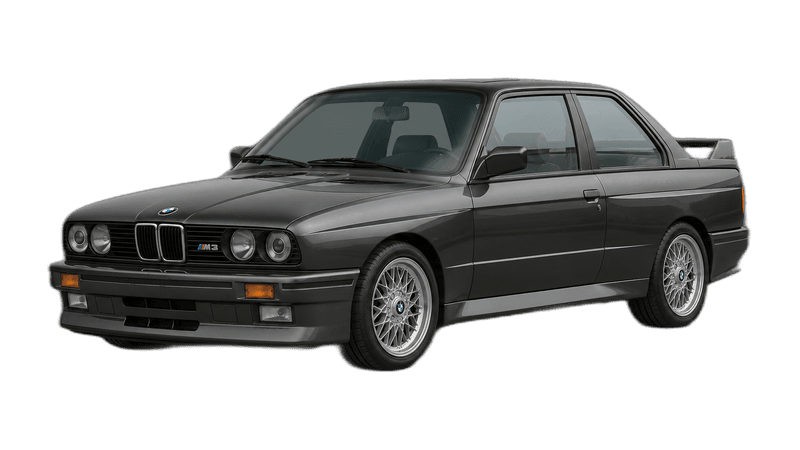
BMW M3 (E36)
£25,000
usedIndicative market price, updated periodically.
282bhp
Power
6s
0-100 km/h
250km/h
Top Speed
£25,000
Price Used
How hard it pulls.
Peak g-force the instant you bury the throttle, estimated from the car's 0–100 time and drivetrain.
BMW M3 (E36)Estimated peak launch g from the 0–100 time and drivetrain: an honest approximation, not a measured figure.
The BMW M3 (E36) is a 2-door coupé by BMW, with 282 bhp, 320 Nm of torque, a 0-100 km/h time of 6 seconds and a top speed of 250 km/h. Indicative used value: approximately £25,000. Actual values vary with specification, condition and history.
Dream Car Garage Editorial · Last updated 24 October 2026
Overview
We have not driven this car. This review is based on published specifications and the sources listed below.
Identify the engine before judging the car
The E36 M3 replaced the E30's four-cylinder formula with a straight-six and a less overtly specialised body. European cars began with the 3.0-litre S50 and later received the 3.2-litre Evolution engine. American-market cars used different engine specifications. A review of a European Evo therefore cannot establish the performance, equipment or servicing requirements of an imported US example.
This is a desk-researched guide. We have not driven this model for this article. Its attraction is the combination of a six-cylinder engine, comparatively compact dimensions and ordinary-car usability. Whether that combination still works on a particular example depends on its structure, maintenance and installed components, not the reputation of the model when new.
Specification changes the inspection
The early European engine and later Evo do not have identical VANOS arrangements. Ask the inspecting specialist to identify the installed engine and assess the relevant system rather than ordering a generic dual-VANOS repair for every E36. Engine swaps and replacement units also need documentation: matching a badge or engine cover is not enough to authenticate the car.
Body styles and transmission options differ too. A coupe, saloon and convertible offer different access and storage, and the roof mechanism adds checks on an open car. Establish the original specification and any conversion before comparing advertisements. A manual conversion can be a legitimate modification, but it should not be represented as an original factory-manual example without supporting evidence.
Corrosion deserves the first appointment
Inspect sills, wheelarches, jacking points, floors and structural mounting areas. Ask for restoration photographs and invoices where repairs have occurred. Fresh underseal or paint does not establish what lies beneath it. A general inspection that cannot access important areas should state that limitation rather than giving the entire shell an unqualified clean bill of health.
Check suspension and rear axle-carrier attachment areas for damage or repairs, especially after competition use or extensive modification. Do not infer structural soundness from a straight steering wheel. Alignment measurements, physical inspection and the history of any reinforcement need to tell a consistent story. Repair methods matter as much as whether a seller says the work was done.
Cooling and engine condition
The cooling system merits close attention on an ageing performance car. Examine the radiator, expansion tank, hoses, pump and thermostat installation, and investigate previous overheating. A new radiator alone does not prove that the cause of a past overheating episode was found or that the engine escaped damage. Obtain diagnosis and records rather than a reassuring list of recently replaced parts.
Observe a cold start and a complete warm-up with an appropriate technician. Investigate leaks, unstable temperatures, poor running and unusual noise. These observations frame further diagnosis; they do not establish internal condition or prove that a silent engine needs no work. Review oil-service history and any engine repair with the specialist who will maintain the car.
Chassis condition shapes the experience
Worn bushes, dampers, joints and tyres can obscure the qualities that attract people to the E36. Obtain an assessment of the installed suspension and alignment rather than assuming every tired car needs the same replacement package. A coherent refresh using suitable parts is different from lowering a car on unknown components to improve its appearance.
Test the brakes, clutch and transmission under appropriate conditions. Check tyre matching and age, not just tread depth. Ask whether differential noise or vibration has been investigated and what a repair would involve. A car used on track is not automatically unsuitable, but event use should prompt a conversation about preparation, impacts and maintenance rather than an assumption that low road mileage means light use.
Cabin, equipment and ordinary usability
Test climate control, windows, locks, seat adjustment and the equipment important to daily use. Inspect cabin moisture and the condition of seals. A special engine does not make a persistent water leak or failed ventilation pleasant to live with. On a convertible, demonstrate the roof through a complete cycle and inspect drains, fabric and storage areas.
Try access, visibility and seating for the people who will use the car. Desirable optional seats are not automatically comfortable for every driver. Establish whether missing interior parts can actually be sourced before assuming they are a minor finishing job. Trim availability can differ considerably from routine engine-consumable availability.
Build a quotation around this example
There is no current invoice survey here supporting one routine-service price or annual ownership budget. Ask for separate estimates for maintenance due now, structural work and optional cosmetic improvement. Include tyres, insurance and storage. A specialist should explain the scope and exclusions rather than quote an appealing figure that omits expensive age-related work.
Insurance also depends on the driver, use, storage and modifications. Agreed-value cover is something to investigate, not an automatic entitlement or a promise that any chosen valuation will be accepted. Send the insurer the complete specification before payment, particularly if engine, transmission, suspension or brakes have changed from the original configuration.
Market perspective and alternatives
Compare the same market specification, body, transmission and condition. An asking price is not a completed sale, and this guide does not establish a price trend or future return. Restoration costs and selling costs remain real even if collector interest grows. Buy a car whose condition and use case make sense without needing appreciation to justify the expenditure.
An E46 M3 offers a later interpretation of the six-cylinder formula. Period Mercedes alternatives need accurate identification: a C36 AMG is a six-cylinder car, while the C43 uses a V8. Compare their maintenance and practical requirements separately. The E36 suits someone who wants its particular balance of age, dimensions and mechanical character and can support an ongoing specialist relationship.
How this review was compiled
Published model history and the linked buying guide inform the specification and inspection questions. No test drive, transaction-price survey, workshop-quotation survey or measured reliability study was undertaken. The references are further reading, not certification of a used example. Commission an independent inspection and obtain written estimates for unresolved work.
Specifications
Engine
3.0L naturally aspirated inline-6 petrol (S50)
Displacement
3.0L
Power
282 bhp
Torque
320 Nm
0-100 km/h
6s
Top Speed
250 km/h
Drivetrain
RWD
Country
Germany
Body Style
2-door coupé
Years
1992–1999
Production
1,986
Price Used
£25,000
Specifications are manufacturer-published figures.
More from BMW
Frequently Asked Questions
What are the specifications of the BMW M3 (E36)?
The BMW M3 (E36) is a 2-door coupé by BMW, with 282 bhp, 320 Nm of torque, a 0-100 km/h time of 6 seconds and a top speed of 250 km/h. Indicative used value: approximately £25,000. Actual values vary with specification, condition and history.
How much does a BMW M3 (E36) cost?
Indicative used value: approximately £25,000. Actual values vary with specification, condition and history.
How many BMW M3 (E36) were made?
BMW produced 1,986 units of the BMW M3 (E36).
What drivetrain does the BMW M3 (E36) use?
The BMW M3 (E36) is configured with rear-wheel drive.
What type of car is the BMW M3 (E36)?
The BMW M3 (E36) is a super saloons manufactured by BMW in Germany. Production ran from 1992 to 1999.