
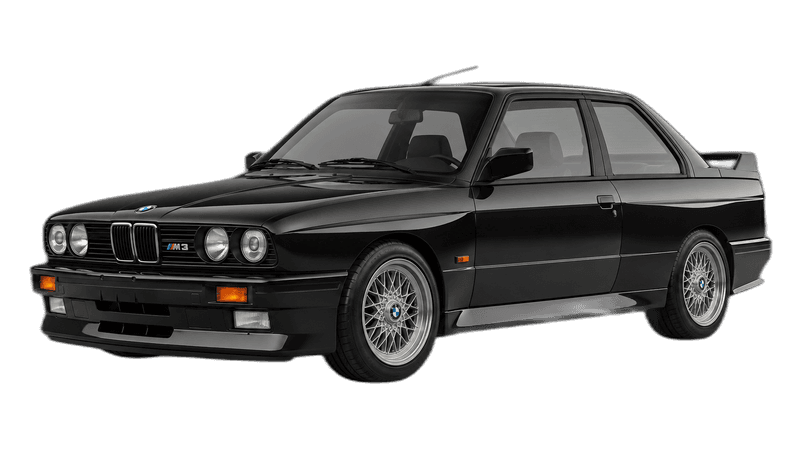
BMW M3 Competition (F80)
£42,000
usedIndicative market price, updated periodically.
444bhp
Power
4s
0-100 km/h
250km/h
Top Speed
£42,000
Price Used
How hard it pulls.
Peak g-force the instant you bury the throttle, estimated from the car's 0–100 time and drivetrain.
BMW M3 Competition (F80)Estimated peak launch g from the 0–100 time and drivetrain: an honest approximation, not a measured figure.
The BMW M3 Competition (F80) is a 4-door saloon by BMW, producing 444 bhp, and 550 Nm of torque, with a 0-100 km/h time of 4 seconds, and a top speed of 250 km/h, Valued at approximately £42,000.
Dream Car Garage Editorial · Last updated 24 October 2026
Overview
We have not driven this car. This review is based on published specifications, owner reports and market listings.
A turbocharged M3 saloon
This catalogue entry is the F80 M3 Competition, not the earlier standard M3. Its Competition package changes output and chassis specification, so authenticate it through the factory build record rather than badges. The wider F80 family introduced the S55 twin-turbocharged straight-six after the naturally aspirated E9x M3. Its four-door body offers a different practical proposition from the related F82 M4 coupe, but shared engineering does not establish the condition of a used example.
This is a desk-researched guide. We have not driven this model for this article. The case for considering it is the combination of manual or dual-clutch transmission choices, rear-wheel drive and a usable saloon body. Decide which of those features matters before comparing power figures or paying for a special derivative whose equipment you may not actually want.
Establish the installed specification
Standard, Competition and CS cars should be identified through factory records, not wheels or replacement badges. Equipment and output vary, and owners can retrofit visible parts. Record the engine, transmission, brakes, seats and suspension fitted. Ask which items are original and which were added later, then check that the documentation and insurance description match the present car.
The F80 uses electrically assisted steering. A buyer seeking the older hydraulic arrangement needs a different generation rather than an inaccurate description of this one. Similarly, do not use a review of an E92 V8 to establish the F80's engine response or sound. A representative drive in the actual car is needed to decide whether its controls, seating and ride meet personal expectations.
S55 inspection without blanket prescriptions
Review oil servicing, cooling-system work, spark-plug replacement and any recorded overheating. Have an M-experienced technician investigate coolant loss or fault codes. A recently topped-up expansion tank is not evidence that the cause of a leak has been resolved. Request invoices and diagnosis rather than accepting a general statement that a common issue has already been addressed.
Crank-hub failures are discussed in specialist coverage and owner communities. Those accounts do not supply a dependable failure probability for every specification or prove that all standard cars require an aftermarket hub. Ask an appropriate specialist to explain the evidence, tuning history and risks for the particular vehicle. A modified hub is not certification of the engine's overall condition, nor does its absence alone diagnose a fault.
Transmission and modification history
The six-speed manual and seven-speed M DCT need different assessments. On a manual, check clutch engagement, gear selection and evidence of slipping under an appropriate test. On DCT, test cold and warm behaviour, reverse and slow manoeuvres, and investigate unusual warnings or harsh engagement. Do not prescribe one universal service interval from an unrelated dual-clutch gearbox.
Ask about engine software, exhaust changes, fuelling and previous power upgrades. Replacing visible hardware with standard parts does not prove that the calibration is original. Obtain the installer's details and records of changes. A dyno printout is not evidence of emissions compliance, long-term durability or acceptance by an insurer, and a higher claimed output does not automatically increase the car's value to the next owner.
Body and chassis inspection
Inspect the underside, suspension attachment areas and evidence of accident repairs. Check alignment, tyre matching, wheel damage and brake condition. An uneven wear pattern deserves investigation rather than an assumption that all powerful rear-wheel-drive cars consume tyres that way. For a track-used example, ask for preparation and post-event inspection records as well as ordinary service stamps.
Identify whether the car has conventional or carbon-ceramic brakes and obtain a condition assessment suited to the installed system. Colour alone is not sufficient identification after years of modifications. Request estimates for the components actually needing replacement. The price of ordinary discs from a related BMW is not a useful budget for a different brake installation.
Everyday equipment still matters
Test climate control, infotainment, cameras, windows, locks and every supplied key. Check the seating position and rear access with the people who will use the car. A four-door layout helps practicality, but the actual seats, ride height and wheel choice can change whether it works as family transport. Try ordinary roads rather than relying only on a short demonstration of acceleration.
Obtain current VIN-based recall and campaign information. Service-history screens are useful, but invoices can show the work's scope and the parts used. Reconcile gaps and ask about storage, particularly on a low-mileage car. Tyres, fluids and rubber components still age when distance is limited, and recommissioning may require more than an oil change.
Budget and market evidence
Request a written inspection-led estimate separating routine maintenance, wear items and unresolved faults. Include insurance, tax, fuel and any transport to a suitable workshop. This guide has not sampled current workshop invoices and therefore does not quote a universal annual budget. Circuit use needs an additional allowance for preparation, consumables and recovery rather than being hidden inside a routine service figure.
Compare advertisements only after matching year, specification, transmission, condition and history. Asking prices are not completed sales. The sources here do not establish that the market has reached a floor, that manuals must appreciate or that a particular derivative cannot become collectible. A purchase should remain affordable without relying on a future buyer to absorb its running and repair costs.
Alternatives and research limits
The F82 M4 is worth considering when rear-door access is unnecessary. An E9x M3 offers a different engine and steering formula, while a Giulia Quadrifoglio or contemporary C63 provides a different drivetrain and support calculation. Compare real cars and ownership arrangements rather than declaring one universally more engaging from desk research.
The linked buying guide provides generation-specific context, not a warranty on every example. There is no independently measured reliability rate, current transaction survey or claimed road test here. The useful purchase is an accurately identified car whose condition, modifications and next maintenance steps have been assessed before payment.
Specifications
Engine
3.0L twin-turbo inline-6 petrol (S55)
Displacement
3.0L
Power
444 bhp
Torque
550 Nm
0-100 km/h
4s
Top Speed
250 km/h
Drivetrain
RWD
Country
Germany
Body Style
4-door saloon
Years
2016–2018
Production
1,986
Price Used
£42,000
Specifications are manufacturer-published figures.
More from BMW
Frequently Asked Questions
What are the specifications of the BMW M3 Competition (F80)?
The BMW M3 Competition (F80) is a 4-door saloon by BMW, producing 444 bhp, and 550 Nm of torque, with a 0-100 km/h time of 4 seconds, and a top speed of 250 km/h, Valued at approximately £42,000.
How much does a BMW M3 Competition (F80) cost?
The BMW M3 Competition (F80) has a used market value of approximately £42,000.
How many BMW M3 Competition (F80) were made?
BMW produced 1,986 units of the BMW M3 Competition (F80).
Is the BMW M3 Competition (F80) AWD or RWD?
The BMW M3 Competition (F80) uses a RWD drivetrain configuration in a 4-door saloon body style.
What type of car is the BMW M3 Competition (F80)?
The BMW M3 Competition (F80) is a super saloons manufactured by BMW in Germany. Production ran from 2016 to 2018.