
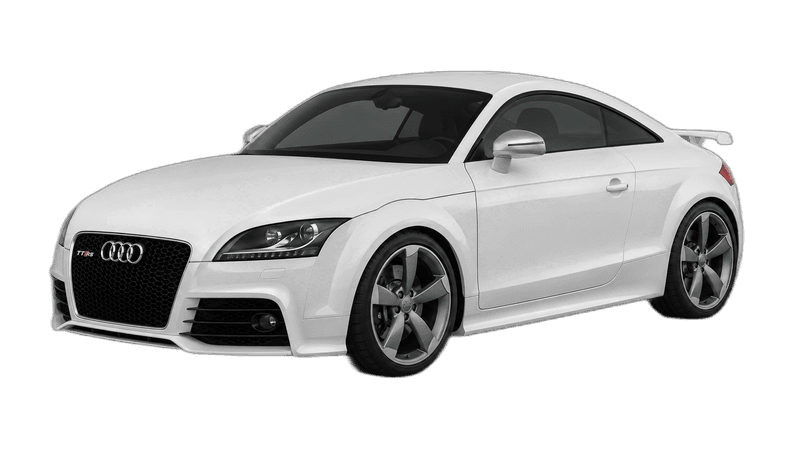
Audi TT RS (8J)
£22,000
usedIndicative market price, updated periodically.
335bhp
Power
4.6s
0-100 km/h
250km/h
Top Speed
£22,000
Price Used
How hard it pulls.
Peak g-force the instant you bury the throttle, estimated from the car's 0–100 time and drivetrain.
Audi TT RS (8J)Estimated peak launch g from the 0–100 time and drivetrain: an honest approximation, not a measured figure.
The Audi TT RS (8J) is a 2-door coupe by Audi, with 335 bhp, 450 Nm of torque, a 0-100 km/h time of 4.6 seconds and a top speed of 250 km/h. Indicative used value: approximately £22,000. Actual values vary with specification, condition and history.
Dream Car Garage Editorial · Last updated 31 October 2026
Overview
We have not driven this car. This review is based on published specifications and the sources listed below.
The first modern TT RS
The Audi TT RS 8J put the five-cylinder engine at the centre of Audi's small performance lineup. Our catalogue covers the 2009 to 2014 phase with a 2.5L turbocharged inline-5, 335 bhp, 450 Nm, 0 to 100 km/h in 4.6 seconds and a 250 km/h maximum, driving all four wheels. We have not driven this model for this article. This desk-researched guide uses Audi's five-cylinder history, the PistonHeads general TT MkII buying guide and the DVSA recall service. The PistonHeads guide covers several engines and transmissions, not just the RS. Its general TT fault reports are therefore inspection prompts, not proof that the same fault or campaign applies to this five-cylinder model.
Audi's history records 250 kW for the original TT RS and 265 kW for the later TT RS plus. Those correspond to approximately 335 bhp and 355 bhp respectively, or 340 PS and 360 PS in metric horsepower. The catalogue's 335 bhp describes the original output, not a midpoint between versions. Identify a claimed plus from its build record rather than badges or a remap. The original transmission was a six-speed manual; the RS-specific S tronic option introduced in 2010 was a seven-speed unit. Do not transfer specifications or repair prices from a regular TT's six-speed dual-clutch gearbox to it.
Ignition checks and campaign applicability
The general TT guide discusses coil-pack failures and misfires, but it does not establish a failure rate for the RS engine. Treat ignition condition as something to inspect rather than a prediction of an inevitable repair. Ask whether the coils and spark plugs have been changed, and scan for stored misfire codes. Observe a cold start and have a qualified specialist investigate hesitation under load on a safe, legal test drive. An unexplained warning light needs diagnosis; replacing coils without investigating the cause is not a substitute for understanding the fault.
The general MkII TT guide mentions 2009 campaigns, including one involving a dual-clutch gearbox. That is not evidence of applicability to a TT RS, whose S tronic option arrived later. We have not verified RS-specific applicability for those campaigns and do not present them as RS defects. Use the DVSA registration check and ask Audi for a VIN-specific campaign printout. Record the campaign number, affected build period and completion evidence for anything that actually applies. The absence of a warning light or the car's age cannot establish that recall work was completed.
Identify the gearbox before assessing it
Confirm the gearbox code before using any maintenance or repair advice. The general TT guide's mechatronic discussion and historical repair prices cannot be assumed to describe the RS's seven-speed transmission. For an S tronic car, request its own service schedule and dated invoices, and have a specialist check stored faults. Test engagement and shifts both cold and warm. A warning, refusal to select a gear or unexplained delay warrants diagnosis and a quotation for this exact unit, not a budget based on a different TT variant.
Ask what any previous gearbox repair involved and retain the invoice, part numbers and warranty terms. A specialist scan can provide more useful evidence than a generic code reader, but readings still need interpretation for the correct transmission. A manual car has a different inspection brief: clutch take-up, gear selection and any flywheel noise deserve attention. Neither transmission makes a car automatically the better purchase. Compare condition, history and the intended use, and ask a TT RS specialist to explain any symptoms before agreeing a price.
Magnetic ride, steering and suspension
Establish the fitted suspension from the build record and the hardware now on the car. Where magnetic ride is fitted, inspect the dampers for leaks, check for warnings and confirm that the adjustment functions. Do not assume every market specification or modified example retains the same equipment. If conventional dampers or coilovers have replaced the original system, request installation and alignment invoices and confirm that the modification is declared to the insurer. A suspension conversion is a change to assess, not proof that the car is better or worse than standard.
The 8J's steering and suspension are generally robust, but worn rack mounts and track-control arms can cause rattles and vague steering. PistonHeads notes that the aluminium bonnet and wings are light and dent-prone, and that paint matching can be difficult. Check the panel gaps and look for ripples under bright light. The car should track straight, turn in cleanly and ride without crashing over broken surfaces. A geometry check after purchase is sensible, especially if the tyres are worn unevenly.
Brakes, wheels and tyres
The TT RS uses large steel brakes, with 370 mm discs at the front on many cars. PistonHeads notes that the brakes can squeal and that the discs are expensive to replace. Measure the disc thickness, check the pad life and inspect the calipers for corrosion. A car that has been used on track may have cracked discs or boiled fluid, even if the pads look healthy. Fresh fluid and a careful bed-in procedure are worthwhile after purchase.
The original 19-inch wheels are prone to kerb damage, and the tyres are a significant running cost. Check for matching brands, even wear and a date code consistent with the mileage. These cars can wear the inner edges of the rear tyres, so look beyond the visible tread. A set of winter tyres is a bonus, but it should not hide a bent wheel or a worn suspension component. The space-saver spare and tool kit should be present if the car was supplied with them.
Aluminium body, cabin and provenance
The 8J's aluminium bonnet and wings save weight, but they are easily damaged and expensive to repair. Inspect the front end for stone chips, dents and previous paintwork, and check the panel gaps around the doors and hatch. The cabin is holding up well for its age, but the leather can wear on the bolsters, the steering wheel can shine and the infotainment can feel dated. Test every button, the air conditioning, the heated seats and the Bose or Bang and Olufsen audio if fitted.
Service history is the deciding factor. Look for invoices covering ignition work, the exact gearbox and the fitted suspension, alongside a consistent mileage trail. Check outstanding safety campaigns with DVSA and Audi against the individual car rather than applying a general TT recall list. A documented engine file, sound transmission and dry, properly repaired body matter more than a preferred gearbox badge. Make the purchase conditional on an independent inspection where records are incomplete. That keeps the decision grounded in this TT RS, not assumptions borrowed from another engine or transmission.
Specifications
Engine
2.5L turbocharged inline-5 petrol (TFSI)
Displacement
2.5L
Power
335 bhp
Torque
450 Nm
0-100 km/h
4.6s
Top Speed
250 km/h
Drivetrain
AWD
Country
Germany
Body Style
2-door coupe
Years
2009–2014
Price Used
£22,000
Specifications are manufacturer-published figures.
More from Audi
Frequently Asked Questions
What are the specifications of the Audi TT RS (8J)?
The Audi TT RS (8J) is a 2-door coupe by Audi, with 335 bhp, 450 Nm of torque, a 0-100 km/h time of 4.6 seconds and a top speed of 250 km/h. Indicative used value: approximately £22,000. Actual values vary with specification, condition and history.
How much does a Audi TT RS (8J) cost?
Indicative used value: approximately £22,000. Actual values vary with specification, condition and history.
What drivetrain does the Audi TT RS (8J) use?
The Audi TT RS (8J) is configured with all-wheel drive.
What type of car is the Audi TT RS (8J)?
The Audi TT RS (8J) is a sports cars manufactured by Audi in Germany. Production ran from 2009 to 2014.