
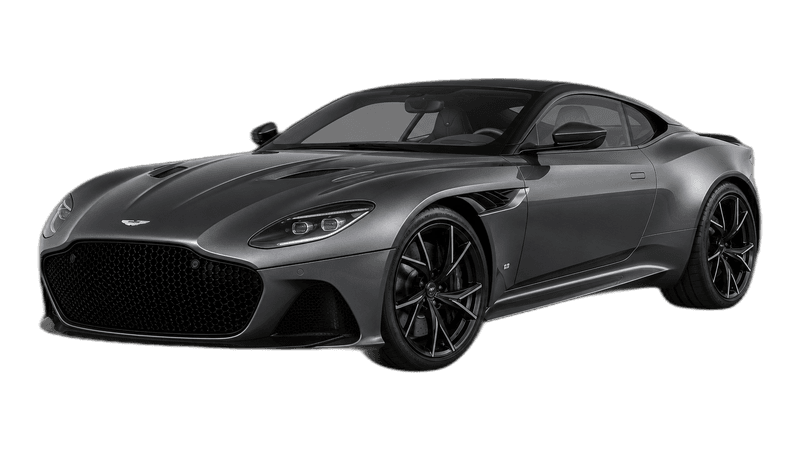
Aston Martin DBS Superleggera
£185,000
usedIndicative market price, updated periodically.
725bhp
Power
3.6s
0-100 km/h
340km/h
Top Speed
£185,000
Price Used
How hard it pulls.
Peak g-force the instant you bury the throttle, estimated from the car's 0–100 time and drivetrain.
Aston Martin DBS SuperleggeraEstimated peak launch g from the 0–100 time and drivetrain: an honest approximation, not a measured figure.
The Aston Martin DBS Superleggera is a 2-door coupé |2-door convertible by Aston Martin, producing 725 bhp, and 900 Nm of torque, with a 0-100 km/h time of 3.6 seconds, and a top speed of 340 km/h, Valued at approximately £185,000.
Dream Car Garage Editorial · Last updated 24 October 2026
Overview
We have not driven this car. This review is based on published specifications, owner reports and market listings.
The case for the DBS Superleggera
The DBS Superleggera took the DB11's platform and turned everything up: 715 bhp from a revised 5.2-litre twin-turbo V12, aggressive aerodynamic bodywork, and chassis tuning to match. The result is one of the fastest front-engined GTs ever built, with 0-62 mph in 3.4 seconds and a 211 mph top speed.
What makes the DBS special is that it remains a usable GT: comfortable, refined at a cruise and genuinely long-legged. It is a DB11 that has been to the gym, and for many buyers it is the more charismatic car. Used values have now fallen well below the original £225,000-plus list price.
What it costs to run
This is a 715 bhp flagship, so costs are significant. Annual specialist servicing runs £1,200 to £2,000. Carbon-ceramic brakes are standard and extremely expensive to replace when worn, though they last well in road use. Tyres are substantial items. Fuel economy is 15 to 20 mpg. Insurance is premium.
The V12 has proved robust, and the car shares its fundamental structure and electronics with the DB11, which helps. But everything is priced at flagship level.
Known weak points
The DBS shares the DB11's electrical and infotainment quirks, now dated. Check that all software updates have been applied. The carbon-ceramic brakes should be inspected for disc condition; replacement is a five-figure job. Body panels include extensive carbon-fibre, which is expensive to repair. Front splitter and underbody scrapes are common on a low car. Battery condition and storage practices matter, as with all modern Astons.
What to check before buying
Full Aston Martin history is essential. Inspect the carbon bodywork and splitter carefully, check the carbon-ceramic discs for wear and damage, and verify all electrical systems. Confirm recall and campaign completion. Check tyre age and condition, and look for evidence of hard use. A specialist inspection is strongly recommended, with particular attention to the brakes and carbon panels.
Market and depreciation
DBS Superleggera values have fallen substantially, with early coupes now available from around £130,000 to £160,000 against original list prices well above £225,000. Depreciation has been steep but is likely slowing as the car approaches modern-classic status. The Volante carries a premium. This is currently a lot of performance for the money in the context of the original price.
Who it suits
The buyer who wants one of the fastest and most dramatic front-engined GTs ever made and can budget for flagship running costs. It is more usable than its performance suggests, but it is not a cheap car to own.
Alternatives
Ferrari 812 Superfast, Bentley Continental GT Speed, McLaren 720S, or a DB11 AMR at much lower cost.
The DBS Superleggera, launched in 2018, sits at the top of the DB11-derived range with 715hp from its uprated twin-turbo V12, extensive carbon-fibre bodywork and standard carbon-ceramic brakes. The torque figure, 664lb ft, demanded careful traction management, and the car delivers its pace with an effortlessness that borders on surreal for a front-engined grand tourer. Aerodynamic additions, including the F1-inspired double-diffuser arrangement, are functional rather than decorative.
Despite the supercar numbers, the DBS remains usable: the ride is firm but controlled, the cabin is well trimmed, and the boot will take luggage for a weekend away. It is a car that can credibly play both continent-crosser and back-road entertainer, which is exactly its intended role. The carbon-ceramic brakes provide enormous stopping power but inspect discs carefully, as replacement is a very significant expense.
Running costs reflect the flagship status: tyres, insurance and servicing all sit at the upper end of the Aston range. Check for evidence of hard use, particularly clutch-smoothed launches and track days, and verify the carbon bodywork has not suffered stone or parking damage. Values have followed the expected luxury-flagship depreciation curve, making early cars increasingly tempting; a well-documented 2018 or 2019 car with a clean file represents the value point.
The aerodynamic work is a significant part of the DBS package: the F1-derived double diffuser, the carbon-fibre body panels and the careful management of airflow all contribute to genuine high-speed stability. This is a car designed to cover ground at serious pace with complete composure, and it delivers that capability with remarkable refinement.
Against rivals such as the Ferrari 812 Superfast, the DBS offers a distinctly British take on the front-engined super-GT formula: less frenetic than the Ferrari, more relaxed in its delivery, but with comparable real-world pace and a character all its own. Depreciation has followed the expected pattern for a flagship, and early cars now offer tremendous value for the performance on offer. The buying priorities remain documentation, carbon bodywork condition and evidence of careful use. A well-maintained DBS Superleggera is one of the most capable and charismatic grand tourers of its era.
Model-year updates were incremental, with detail refinements rather than major changes. The key inspection priorities are the carbon-ceramic brakes, the carbon bodywork and the service history. Verify the car has been maintained by a dealer or recognised specialist, and check for evidence of track use. The DBS Superleggera's values have followed the expected depreciation curve, making early cars increasingly attractive. For the buyer seeking Aston Martin's flagship performance in a usable grand touring package, the DBS Superleggera delivers in full.
How this review was compiled
Research-based ownership review using Aston Martin specifications, independent buying guides and owner reports. We have not driven this car. Verify condition, service history and brake condition for any individual car before purchase.
Specifications
Engine
5.2L twin-turbocharged V12 petrol
Displacement
5.2L
Power
725 bhp
Torque
900 Nm
0-100 km/h
3.6s
Top Speed
340 km/h
Drivetrain
RWD
Country
UK
Body Style
2-door coupé |2-door convertible
Years
2018–2024
Production
2,018
Price Used
£185,000
Specifications are manufacturer-published figures.
More from Aston Martin
Featured in Carpedia
Best Supercars 2026
The supercar class of 2026 spans from a 875bhp hybrid Porsche to Lamborghini's fire-breathing V12. These are the ten machines that deliver the most visceral driving experiences this side of a hypercar.
Best Supercars Under €500,000 in 2026
Eight supercars between €200,000 and €500,000 that represent the pinnacle of attainable performance, from the McLaren 720S to a Ferrari 458 Italia at its depreciation floor.
Frequently Asked Questions
What are the specifications of the Aston Martin DBS Superleggera?
The Aston Martin DBS Superleggera is a 2-door coupé |2-door convertible by Aston Martin, producing 725 bhp, and 900 Nm of torque, with a 0-100 km/h time of 3.6 seconds, and a top speed of 340 km/h, Valued at approximately £185,000.
How much does a Aston Martin DBS Superleggera cost?
The Aston Martin DBS Superleggera has a used market value of approximately £185,000.
How many Aston Martin DBS Superleggera were made?
Aston Martin produced 2,018 units of the Aston Martin DBS Superleggera.
Is the Aston Martin DBS Superleggera AWD or RWD?
The Aston Martin DBS Superleggera uses a RWD drivetrain configuration in a 2-door coupé |2-door convertible body style.
What type of car is the Aston Martin DBS Superleggera?
The Aston Martin DBS Superleggera is a supercars manufactured by Aston Martin in UK. Production ran from 2018 to 2024.