
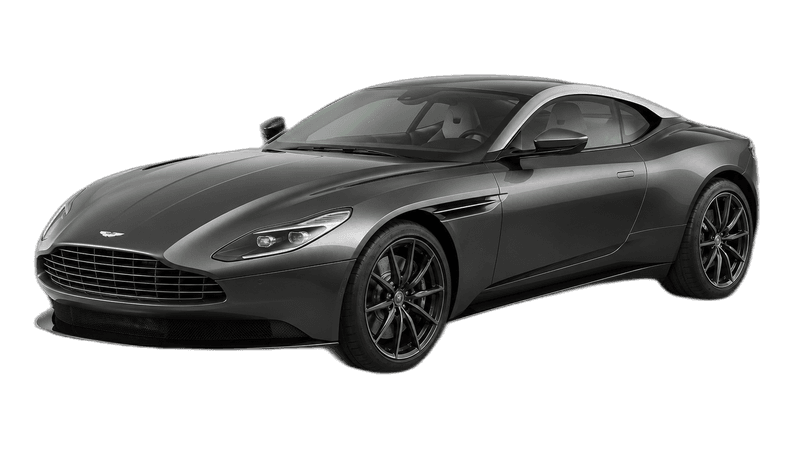
Aston Martin DB11 V12
£115,000
usedIndicative market price, updated periodically.
600bhp
Power
3.7s
0-100 km/h
322km/h
Top Speed
£115,000
Price Used
How hard it pulls.
Peak g-force the instant you bury the throttle, estimated from the car's 0–100 time and drivetrain.
Aston Martin DB11 V12Estimated peak launch g from the 0–100 time and drivetrain: an honest approximation, not a measured figure.
The Aston Martin DB11 V12 is a 2+2 seater fixed-head coupé by Aston Martin, producing 600 bhp, and 700 Nm of torque, with a 0-100 km/h time of 3.7 seconds, and a top speed of 322 km/h, Valued at approximately £115,000.
Dream Car Garage Editorial · Last updated 24 October 2026
Overview
We have not driven this car. This review is based on published specifications, owner reports and market listings.
The case for the DB11 V12
The DB11 arrived in 2016 as the first all-new Aston Martin of the modern era, carrying a new bonded-and-riveted aluminium structure and a clean-sheet 5.2-litre twin-turbocharged V12 producing around 600 bhp. It replaced the ageing DB9 and proved the company could still build a genuinely handsome grand tourer with proper pace: 0-62 mph in about 3.9 seconds and a 200 mph top speed.
As a used buy it now undercuts a new Bentley Continental GT by a significant margin while offering more rarity and, many would argue, more elegance. It is a long-distance car first: quiet enough at a cruise, quick enough when asked, and special enough to make an occasion of an ordinary journey.
What it costs to run
This is a hand-built V12 GT, so budget accordingly. An annual service at a main dealer or respected independent runs roughly £1,000 to £1,500, with major services higher. Tyres are around £1,200 a set for the correct Bridgestone or Pirelli fitments. Insurance reflects the value and performance. Fuel economy in the real world is 18 to 25 mpg.
The good news is that the twin-turbo V12 has so far proved fundamentally robust, and the ZF eight-speed automatic is a well-proven unit shared with many other manufacturers.
Known weak points
Early 2016-2017 cars suffered teething troubles: software glitches across the infotainment and instrument systems, sticky interior switchgear, and occasional trim fit issues. Most were addressed under warranty or through software updates, but check the history carefully on an early car.
Other reported issues include the Mercedes-sourced infotainment (now dated), occasional coolant hose and water pump attention, and brake disc corrosion on lightly used cars. The alarm and battery drain can be an issue if the car sits; a smart charger is essential. Check that all recalls and service campaigns have been completed.
What to check before buying
A full Aston Martin or specialist service history is effectively mandatory. Look for evidence of software updates, check every electrical function from seats to tailgate, inspect the leather and veneers for premature wear, and examine wheels for kerb damage. Confirm the paint and panel gaps are consistent; accident repair quality varies. Verify recall completion by VIN with a dealer.
Market and depreciation
DB11 V12 values fell hard from the £160,000-plus list price, with early cars now available from around £65,000 to £80,000. Depreciation has slowed but has not stopped. Higher-spec, later cars in good colours hold value better. Buy on condition and history rather than chasing the cheapest example.
Who it suits
A driver who wants a beautiful, fast, genuinely usable GT and accepts premium running costs. It works as a daily or a long-distance tourer in a way more exotic machinery does not.
Alternatives
Bentley Continental GT W12, Ferrari GTC4Lusso, and the DB11's own V8 sibling, which many consider the sweeter-handling car.
On the road, the 5.2-litre twin-turbo V12 is defined by torque rather than drama. With 600hp and 516lb ft arriving low in the rev range, overtaking requires little more than a squeeze of throttle, and the ZF eight-speed automatic shifts smoothly enough that the car feels effortless rather than aggressive. Compared with the naturally aspirated DB9 it replaced, the DB11 trades some soundtrack for real-world pace and refinement; on a long motorway run it can return mid-twenties economy, while town driving will see high teens. The chassis balance is genuinely good for a car of its size, and the steering is accurate, though the weight never disappears entirely.
The service schedule is annual or 10,000 miles, and a full main-dealer or respected independent history matters more here than mileage alone. An established independent Aston specialist will typically charge meaningfully less than a franchised dealer for the same schedule items, and the best independents know these cars intimately. Budget around £600 to £900 for a routine independent service, more for major items such as spark plugs or transmission fluid. Twenty-inch tyres are a regular consumable, and uneven wear is an early indicator of alignment or suspension wear.
Model-year changes were incremental rather than transformative, with the AMR arriving for 2018 and detail updates following. The earliest 2016 and 2017 cars are the cheapest way into the shape, but condition and history should take priority over a slightly newer registration. Colour and interior specification influence desirability more than buyers sometimes expect; a well-specced early car with a strong file is usually a better purchase than a neglected later one.
The cabin is trimmed to a high standard and the Mercedes-sourced infotainment of these years is well understood and supported, which is a genuine ownership advantage over some earlier Astons. When inspecting, check every function: seat adjustment and memory, climate control, parking sensors and cameras, and the audio system. Leather and interior trim wear well, but bolster wear on high-mileage cars is worth noting. A well-optioned car with premium audio, heated and ventilated seats and the right colour combination will always be easier to live with and to sell on.
Depreciation has been significant from the original list price, which is what makes the DB11 V12 such compelling value as a used purchase. Early cars now sit at a fraction of their new cost, yet the fundamental car, its performance and its presence are undiminished. The sensible buying strategy is to let the first owner absorb the steepest depreciation, then buy a well-documented car with a strong specialist or dealer history. Prioritise condition and provenance over a marginal saving on a neglected example.
How this review was compiled
Research-based ownership review using Aston Martin specifications, independent buying guides and owner reports. We have not driven this car. Verify condition, service history and campaign completion for any individual car before purchase.
Specifications
Engine
5.2 litre5204 cc(317.568 cu in) V 12 in 60° vee turbocharged petrol
Displacement
5.2L
Power
600 bhp
Torque
700 Nm
0-100 km/h
3.7s
Top Speed
322 km/h
Drivetrain
RWD
Country
UK
Body Style
2+2 seater fixed-head coupé
Years
2016–2018
Price Used
£115,000
Specifications are manufacturer-published figures.
More from Aston Martin
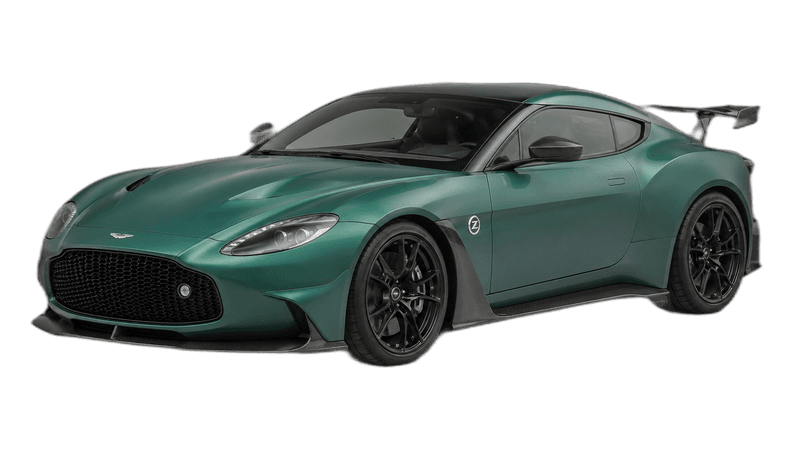


Featured in Carpedia
Frequently Asked Questions
What are the specifications of the Aston Martin DB11 V12?
The Aston Martin DB11 V12 is a 2+2 seater fixed-head coupé by Aston Martin, producing 600 bhp, and 700 Nm of torque, with a 0-100 km/h time of 3.7 seconds, and a top speed of 322 km/h, Valued at approximately £115,000.
How much does a Aston Martin DB11 V12 cost?
The Aston Martin DB11 V12 has a used market value of approximately £115,000.
Is the Aston Martin DB11 V12 AWD or RWD?
The Aston Martin DB11 V12 uses a RWD drivetrain configuration in a 2+2 seater fixed-head coupé body style.
What type of car is the Aston Martin DB11 V12?
The Aston Martin DB11 V12 is a hyper gts manufactured by Aston Martin in UK. Production ran from 2016 to 2018.