The 300 mph Question
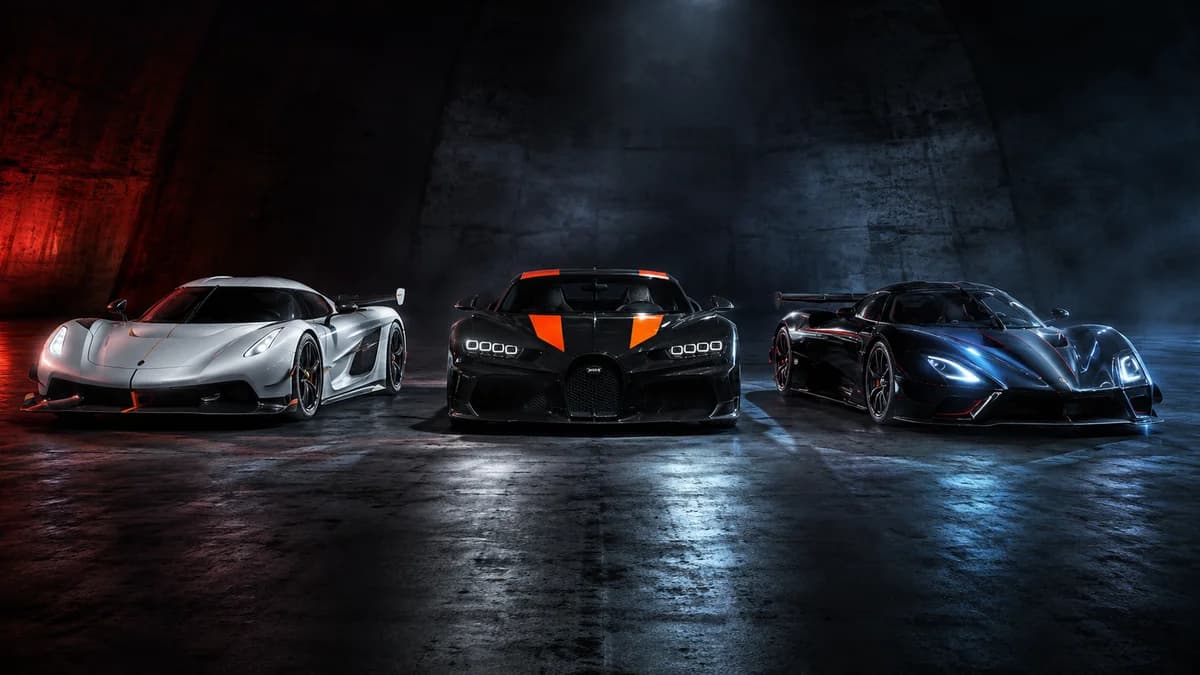
For most of the twentieth century, the production car top speed record was a civilised competition, increments of ten or twenty kilometres per hour, contested by cars that were extraordinary but not incomprehensible. The Ferrari F40, the McLaren F1, the Bugatti Veyron: each one advanced the record with technologies that seemed, at the time, to represent an absolute ceiling. Then the 2020s arrived with three cars that did not merely advance the record but moved it to a different category of achievement: three hundred miles per hour, or close enough to make the distinction academic.
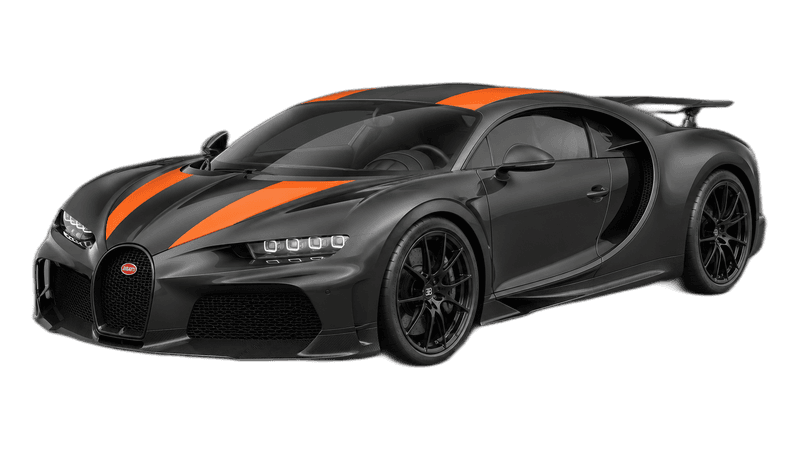
The Bugatti Chiron Super Sport 300+ holds the only independently verified claim to this territory: on 2 August 2019, at Volkswagen's Ehra-Lessien test track, a modified Chiron driven by works driver Andy Wallace covered 490.484 metres per second: 304.773 mph, 490.484 km/h, the first production-derived car to exceed 300 mph in a timed run. The car was a pre-production prototype, not a customer vehicle, and the run was made in one direction only, meaning it does not qualify under Guinness records regulations as an official two-way average.
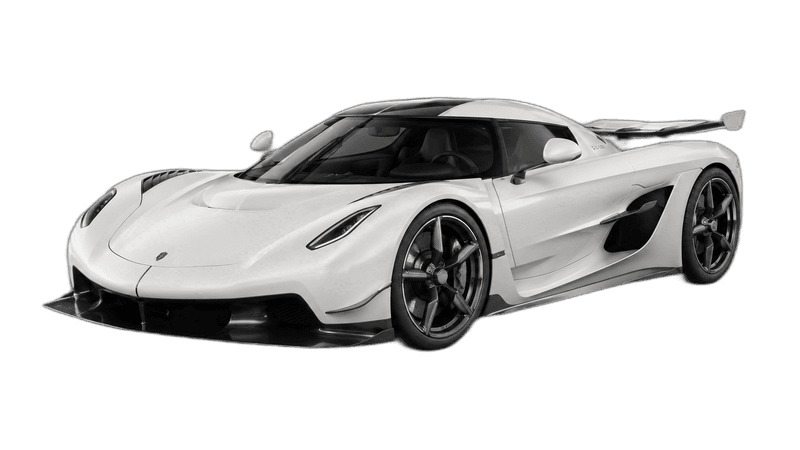
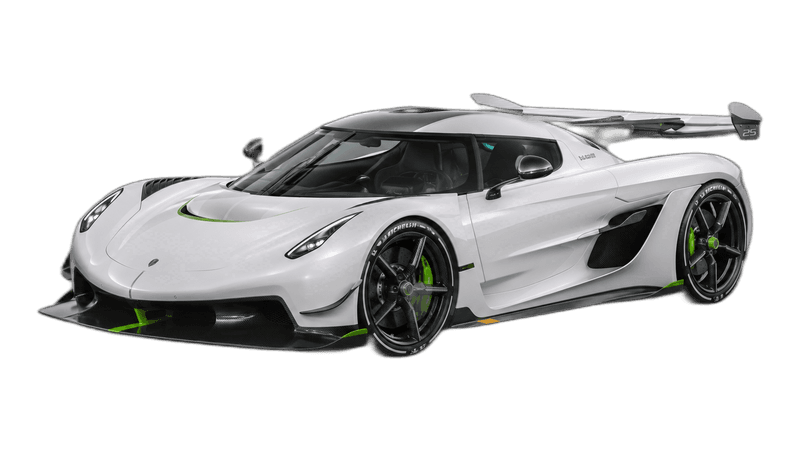
Bugatti did not claim the record on those grounds; they noted the achievement and moved on. The Koenigsegg Jesko Absolut has not yet made a record attempt. Its theoretical top speed of 330 mph (531 km/h), derived from aerodynamic modelling at zero downforce, remains a calculation rather than a measurement, but Koenigsegg's track record of delivering on calculated performance makes the claim credible.
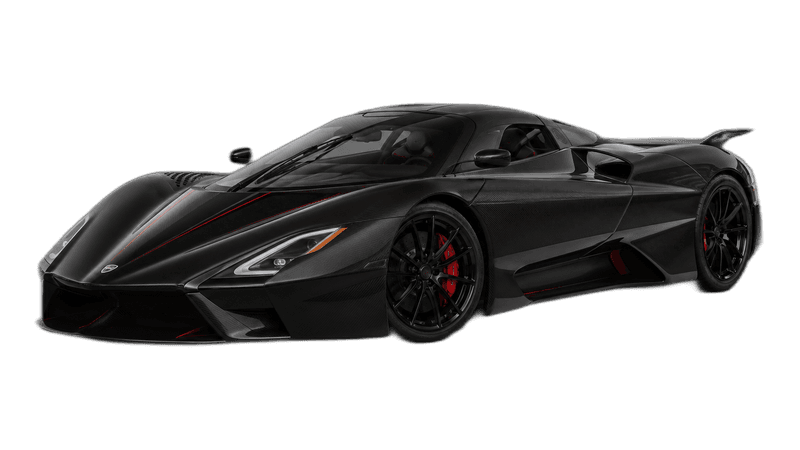
The SSC Tuatara achieved a verified two-direction average of 282.9 mph (455.3 km/h) in Nevada in 2020, a figure independently confirmed and recognised as the official two-direction production car record at the time of its achievement. Each manufacturer believes its car is fastest. The argument is irresolvable until all three attempt the same course under the same conditions, which has not happened and may never happen.
What this comparison reveals, ultimately, is that top speed above 400 km/h is less a performance specification than a philosophical statement. These cars are built not because anyone needs to travel at 490 km/h but because someone needed to prove it was possible, and that the will to make it possible tells you something important about the humans who built them.
By the Numbers
Koenigsegg Jesko Absolut: The Calculated Absolute
The Jesko Absolut is the track-focused Jesko variant stripped of the Attack's 1,000 kg of downforce in favour of minimal aerodynamic drag. Its 5.0-litre twin-turbocharged V8, running on E85 biofuel, produces 1,600 bhp, a figure that Koenigsegg achieved through a combination of a nine-injector-per-cylinder direct and port injection system, a flat-plane crankshaft, and a dry-sump lubrication system that allows the engine to be mounted 45 mm lower than conventional architecture permits.
The nine-speed Light Speed Transmission, developed in-house, can shift between any gear in a single operation, not sequential, with a response time measured in milliseconds. Koenigsegg's aerodynamic modelling suggests a theoretical maximum speed of 330 mph at sea level on a suitable surface. The Absolut is limited to 330 units globally; it is the most ambitious speed machine the Swedish manufacturer has ever produced.
Bugatti Chiron Super Sport 300+: The Proven Claim
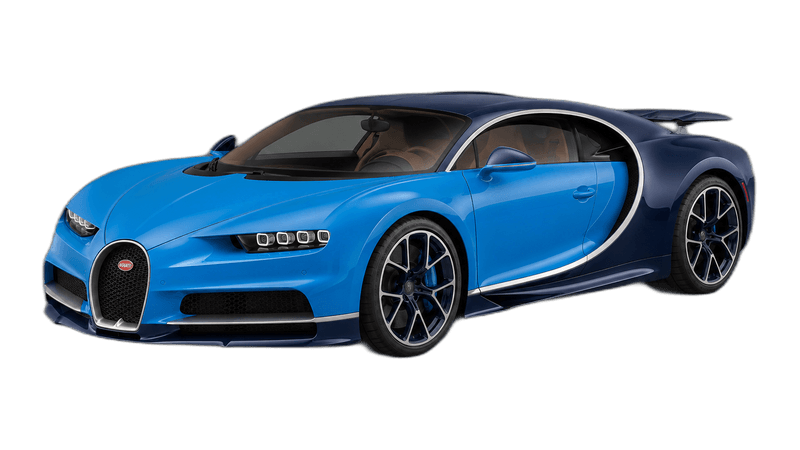
The Chiron Super Sport 300+ is the production variant built to celebrate the modified prototype's 304 mph achievement. Its 8.0-litre quad-turbocharged W16 produces 1,578 bhp, the highest output in Chiron history for a production model, supplemented by a longer tail section that reduces drag by 23% compared to the standard Chiron.
The bodywork was extended by 25 cm, the diffuser was redesigned, and the engine oil cooling and transmission systems were upgraded to sustain maximum power output for the duration required to reach and maintain 300 mph. Production is limited to 30 units, each delivered in a bespoke two-tone livery referencing the speed record run. In the Chiron range, the Super Sport 300+ represents the definitive statement of purpose: not just fast, but demonstrably the fastest, in the most controlled and verified setting the industry can provide.
SSC Tuatara: The Independent Record
The SSC Tuatara's claim to 282.9 mph as a two-way average is the most formally verified in this group under conventional world record criteria. Its 5.9-litre twin-turbocharged flat-plane V8 produces 1,750 bhp on E85, a figure achieved through careful attention to thermal management, which typically limits turbocharged engines at maximum power.
The Tuatara's seven-speed automated manual transmission, supplied by CIMA, was developed to sustain full-power gear changes at terminal velocity without the thermal stress that has ended other manufacturers' record attempts. The Nevada record run, conducted on a closed 11-mile section of Nevada State Route 160, used GPS verification and two Racelogic VBOX instruments for independent confirmation. The SSC Tuatara is the least well-known of the three by brand recognition; it is the most formally documented by record criteria.
Verdict
The Bugatti Chiron Super Sport 300+ has the most credible high-speed achievement in this group: a one-direction run past 300 mph, on a known test facility, with independent verification, by a works driver in a pre-production car. That it falls short of official record criteria on the two-direction requirement does not diminish the engineering achievement: it contextualises it. The SSC Tuatara holds the conventional two-direction record and represents the most formally documented claim. The Koenigsegg Jesko Absolut has made no public record attempt and its 330 mph figure remains theoretical. Until Koenigsegg runs the Jesko Absolut on a suitable closed track under verified conditions, the argument cannot be resolved.
What this comparison ultimately illustrates is that the world's fastest production car competition is not a sporting contest: it is a series of extraordinary engineering demonstrations, each conducted under slightly different conditions, each valid on its own terms. The Chiron Super Sport 300+ is the most expensive ($3.9 million), the most proven in one direction, and the most baroque in engineering concept, a W16 in an era of V8s and V12s. The Tuatara is the most affordable (relatively) and the most formally documented. The Jesko Absolut is the most ambitious. All three are ludicrous, irreplaceable, and essential.