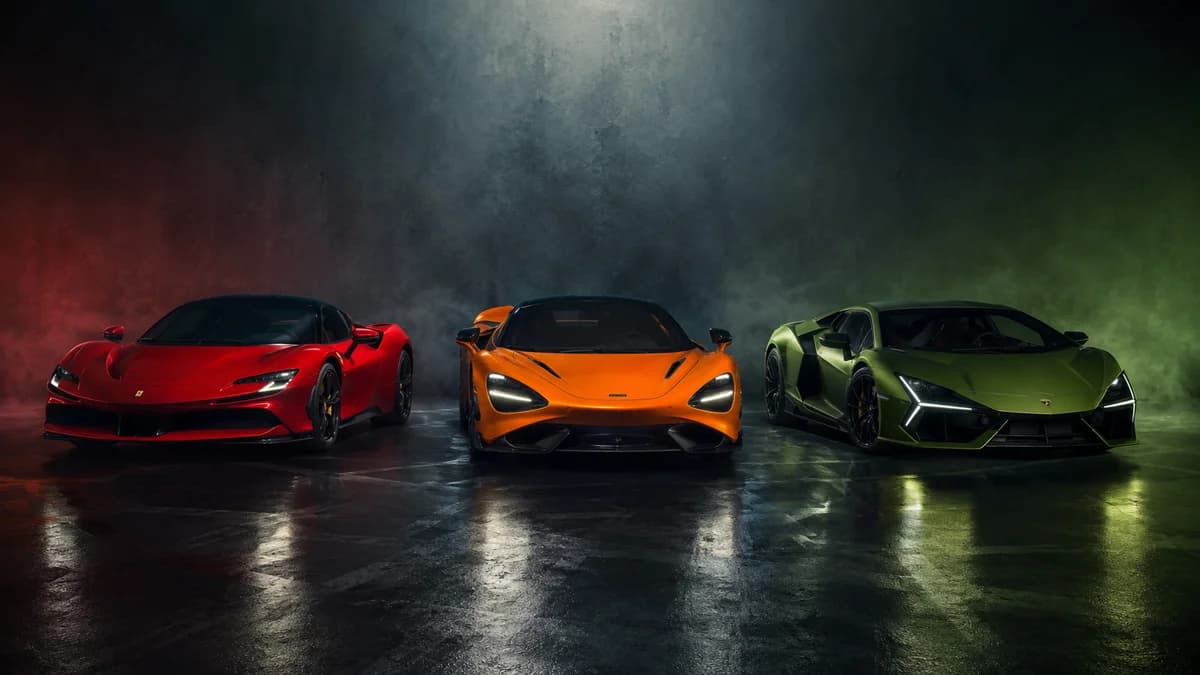
Three Different Absolutes
Ask a room of enthusiasts which car represents the pinnacle of the current supercar era and you will not get a consensus: you will get an argument. The Ferrari SF90 Stradale, the McLaren 765LT, and the Lamborghini Revuelto are not competing for the same crown because they do not occupy the same philosophical territory.
Ferrari's response to the age of electrification was to add three motors and produce an internal combustion car that accelerates like an electric one. McLaren's response was the opposite: remove everything that was not essential until the driver and the road were separated by as little mass as possible. Lamborghini's response was to refuse the premise entirely, retaining a V12 so spectacular that it renders the debate academic.
What makes this matchup uniquely revealing is that the performance numbers converge while the characters diverge. All three cars reach 100 km/h in around 2.5 seconds; all three exceed 330 km/h; all three cost more than most houses. Yet the SF90 achieves its velocity through computational elegance, four-wheel drive, hybrid energy deployment, torque vectoring that operates faster than the driver's nervous system.
The 765LT achieves it through purity: at 1,229 kg, it has a power-to-weight ratio that puts it in the company of cars costing twice as much. The Revuelto achieves it through a naturally aspirated 6.5-litre V12 spinning to 9,500 rpm, supplemented by three electric motors that exist not to replace the engine's character but to amplify it.
This is a generation-defining confrontation. Each car signals what its manufacturer believes a supercar should prioritise in the 2020s: intelligence, lightness, or irreplaceable mechanical theatre. The answer you agree with reveals more about you than about the cars.
By the Numbers
Ferrari SF90 Stradale: The Intelligent Weapon
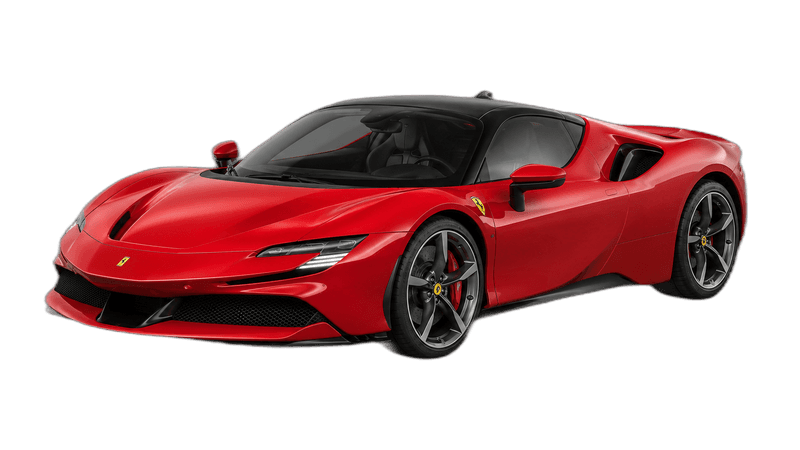
The SF90 Stradale is Ferrari's most technically complex road car in history. Its 4.0-litre twin-turbocharged V8 is supplemented by three electric motors, one between the engine and gearbox, two driving the front axle, producing a combined output of 1,000 bhp. The system is managed by a central control unit that distributes torque across all four wheels in real time, with response times measured in milliseconds.
In electric-only mode the SF90 can cover up to 25 km at speeds below 135 km/h. In Qualifying mode, with all systems at maximum attack, it covers 0-100 km/h in 2.5 seconds and reaches 340 km/h. The Stradale designation indicates the fixed aerodynamic package; the Assetto Fiorano option adds carbon fibre components and Michelin Pilot Sport Cup 2R tyres for track-focused buyers. It is a masterwork of integration: nothing about its performance feels hybrid, because nothing about its character feels compromised.
McLaren 765LT: The Purist's Answer
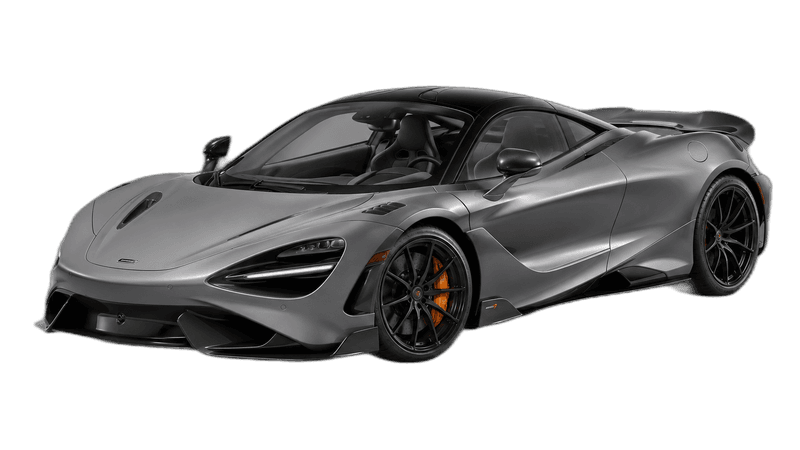
The 765LT makes its argument through omission. At 1,229 kg, it is 80 kg lighter than the standard 720S from which it derives, a reduction achieved through titanium exhaust, carbon fibre seats, deleted sound deadening, and a relentless audit of every component against the question: is this necessary? Its 4.0-litre twin-turbocharged V8 produces 765 bhp and 800 Nm, channelled through a seven-speed dual-clutch gearbox to the rear wheels only.
There are no electric motors, no torque vectors, no active aerodynamics beyond what the fixed rear wing provides. What the 765LT offers instead is a directness of communication between driver and road that electrified all-wheel-drive cars cannot replicate: every imperfection in the surface, every degree of yaw, transmitted through the steering and chassis with forensic accuracy. Its 0-100 km/h time of 2.8 seconds is the slowest of the three, a fact that becomes entirely irrelevant the first time you drive it near its limit.
Lamborghini Revuelto: The V12 Lives
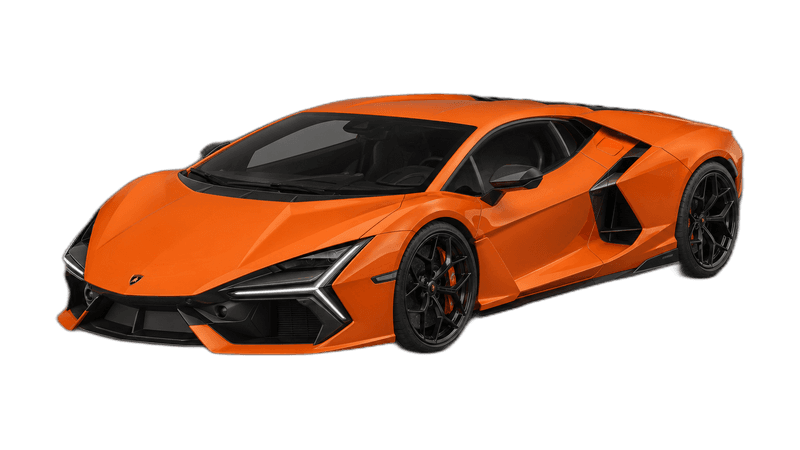
The Revuelto is Lamborghini's definitive statement that the naturally aspirated V12 is not merely preserved but elevated for the hybrid era. Its 6.5-litre V12 produces 814 bhp and revs to 9,500 rpm; three electric motors contribute an additional 187 bhp, bringing the combined system output to 1,001 bhp. Unlike Ferrari's approach, where the hybrid system is architecturally integrated, Lamborghini treats the electric motors as amplifiers, each one positioned to enhance the V12's characteristics rather than substitute for them.
Two motors on the front axle provide torque vectoring; one on the gearbox provides launch torque. The result is a car that accelerates at the speed of a hybrid but sounds like nothing else currently in production. At 9,500 rpm the Revuelto's V12 produces a sound that has no automotive equivalent, a mechanical frequency that bypasses rational evaluation entirely.
Verdict
If this were purely a performance competition, the SF90 would win. Its computational advantage, the ability to deploy exactly the right torque at each wheel at any given moment, produces a level of objective capability that neither the 765LT nor the Revuelto can match on paper. In the dry, on a circuit, with a competent driver, the SF90 will be fastest.
But supercars are not bought on spreadsheets. The McLaren 765LT is the choice for those who believe that the relationship between driver and machine should be unmediated, that the best supercar is the one that communicates most honestly, even if that honesty occasionally includes oversteer. The Revuelto is the choice for those who believe that a V12 at nine thousand rpm is an irreplaceable human experience, that performance without ceremony is merely velocity. The SF90 is the choice for those who want the future now. All three are correct. That is what makes this generation of supercar so extraordinary.