The Great Race's Measure
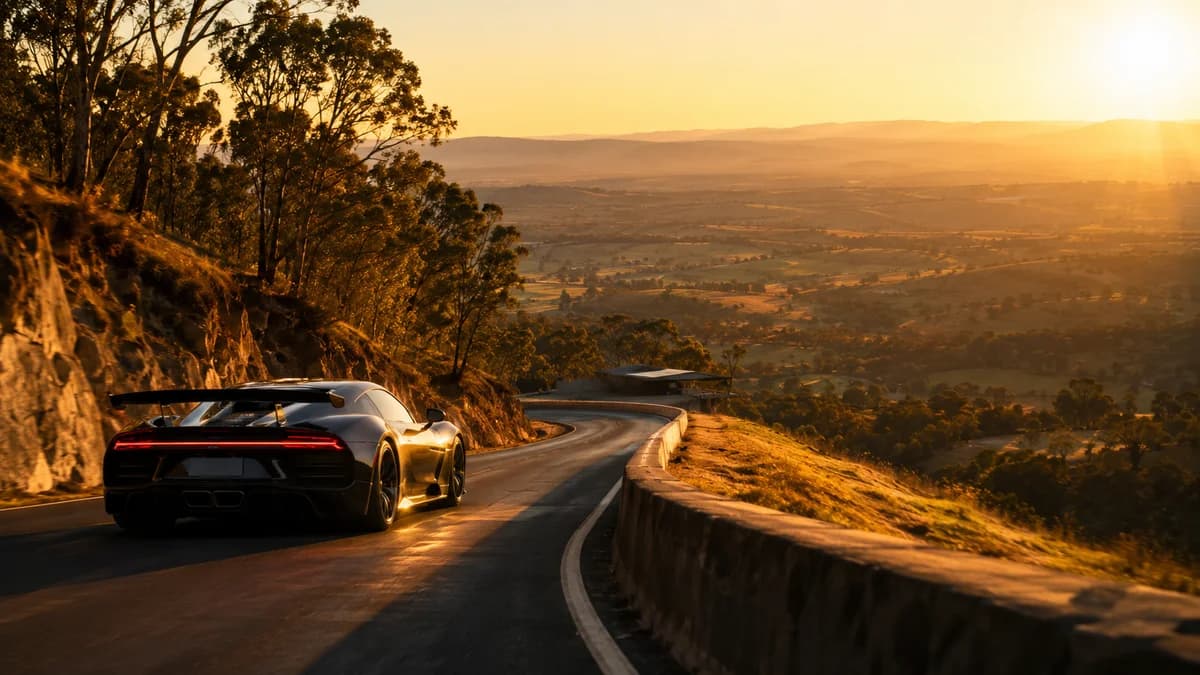
Mount Panorama Circuit at Bathurst, New South Wales, is the most demanding road racing circuit in the southern hemisphere and one of the most distinctive on earth. At 6.213 kilometres with 174 metres of elevation change, it is not merely a circuit in the conventional sense: it is a mountain road closed for racing, with all the treachery and beauty that description implies. The track ascends sharply through Hell Corner and up Conrod Straight to Skyline, before plunging through the Dipper, Forrest's Elbow, and the terrifying Mountain Straight descent to the Chase, where drivers arrive at speeds that challenge the limits of carbon-ceramic braking systems.
The Bathurst 1000 has been contested on Mount Panorama since 1963, evolving from a touring car endurance race into Australia's most celebrated motorsport event and one of the most-watched motor races anywhere in the world. But the circuit's character is defined not by the 1000, an endurance contest fought in V8 Supercar machinery, but by the GT and production car sessions that have used it as a benchmark. The Bathurst 12 Hour, which brings GT3, GT4, and production-derived cars to the mountain each February, has generated some of the most impressive production car lap records outside the European circuit canon.
What makes Bathurst unique among the world's great circuits is the asymmetry of its demands. The uphill sections require raw engine torque and traction; the downhill sections require absolute confidence in braking and the nerve to carry speed past the point of rational comfort. A car that excels on flat circuits may find the mountain's geometry alien. The cars at the top of this list have conquered both the climb and the descent, and that comprehensive capability is what defines the Bathurst benchmark.
The Mountain's Fastest
1. Ferrari 488 GT3 Evo (production-derived): 2:03.x (Bathurst 12 Hour class records)
The 488 GT3 Evo, while a racing-prepared GT3 car rather than a production road car, represents the closest connection between Ferrari's range and the Bathurst benchmark, and sets the context for the production car times below. Its sub-2:04 laps define the reference point for what the mountain allows in terms of absolute speed. Road cars are measured against this baseline, and the gap is a precise measure of how much the GT3 regulations, roll cage, racing suspension, slick tyres, add to what the road car's architecture can achieve.
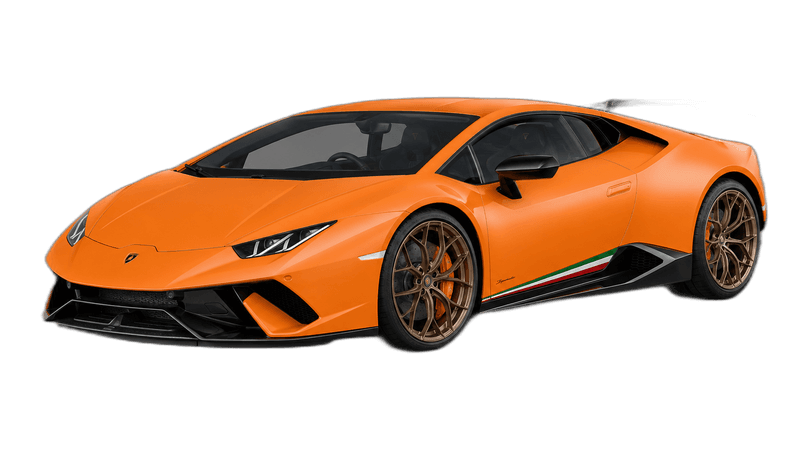
2. Lamborghini Huracán Performante: approximately 2:11.5 (2018 hot lap)
Lamborghini conducted official Bathurst hot lap sessions with the Huracán Performante as part of the car's Asia-Pacific launch programme. The ALA active aerodynamics, combined with the Performante's Pirelli P Zero Corsa tyres, produced a time that remains competitive with any production car subsequently timed at Mount Panorama. The lap was filmed for Lamborghini's marketing materials, with the Dipper corner, where the car loaded and unloaded its aerodynamics simultaneously, being the sequence that received most subsequent attention from engineers and enthusiasts alike.
3. Porsche 911 GT2 RS (991): approximately 2:12.0 (2019 development)
Porsche Australia used Mount Panorama as part of the GT2 RS's regional validation programme, with Lars Kern completing laps that demonstrated the car's composure on the mountain's demanding gradient changes. The GT2 RS's rear-engine weight distribution, which generates traction on the uphill sections that mid-engine competitors must manage with all-wheel drive, proved advantageous on Bathurst's specific topology. Its time placed it immediately behind the Performante in the unofficial production car rankings.
4. Mercedes-AMG GT Black Series: approximately 2:12.8 (2021)
AMG's Black Series completed Bathurst validation laps as part of the Australia-New Zealand launch sequence, a market where the circuit holds particular cultural resonance. The Black Series's adjustable aerodynamics, dialled to a specific Bathurst configuration for the mountain's blend of high-speed sections and tight corners, produced a lap time that confirmed its position among the fastest production cars in the world on any circuit. The Conrod Straight descent, where the Black Series reached its highest recorded road-test speed in Australia, was particularly noted.
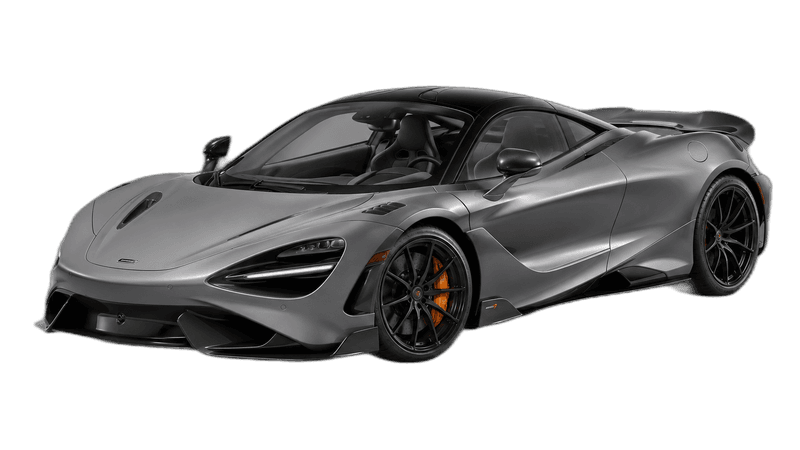
5. McLaren 765LT: approximately 2:13.5 (2021 hot lap)
McLaren's Australian distributor arranged a Bathurst hot lap programme for the 765LT during its regional launch, and the car's combination of 765 bhp, 1,229 kg dry weight, and Pirelli P Zero Trofeo R tyres produced a time that surprised observers expecting the mountain's technical demands to favour more aerodynamically focussed cars. The LT's rear-wheel steering system, active in its second generation, contributed measurably to the car's stability through the Cutting and Mountain Straight sections.
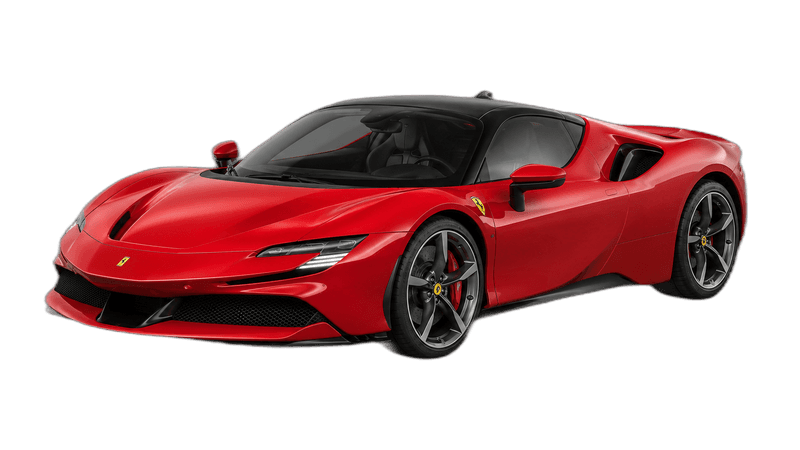
6. Ferrari SF90 Stradale: approximately 2:13.0 (2022 media programme)
Ferrari's SF90 Stradale was brought to Bathurst for a regional media programme that included timed hot laps, contributing to one of the most impressive demonstrations of all-wheel drive hybrid performance on a mountain circuit. The SF90's ability to deploy electric torque on the acceleration zones out of Hell Corner and McPhillamy Park, while managing hybrid energy regeneration on the downhill sections, produced a lap time that demonstrated the potential of the hybridised hypercar format at circuits with significant elevation change.
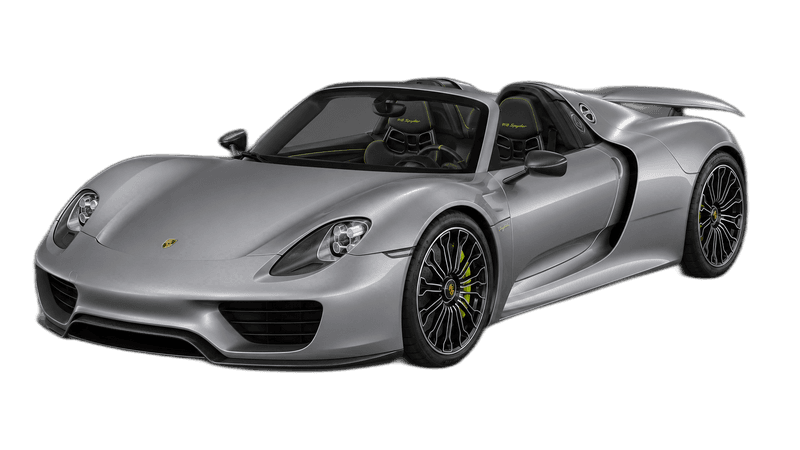
7. Porsche 918 Spyder: approximately 2:15.0 (2013 world tour)
The 918 Spyder's global record-setting tour included Australian dates that encompassed Mount Panorama. The hybrid hypercar's four-wheel drive system proved particularly effective at Bathurst's compression and decompression zones, where the ability to distribute torque precisely between axles translated into traction that rear-wheel drive cars could not match on the mountain's demanding gradient transitions. The lap was completed by Marc Lieb as part of the same programme that produced the Nordschleife and Laguna Seca records.
8. Nissan GT-R R35: approximately 2:17.5 (2012 promotional)
The standard GT-R R35's Bathurst promotional laps, completed as part of Nissan's NISMO Day event, demonstrated the car's all-wheel drive competence on the mountain. While not an official production car record attempt in the formal sense, the times were consistent and observed, and the GT-R's reputation for mechanical tenacity in demanding conditions made it a credible Bathurst performer. The car's twin-turbocharged V6 delivered its characteristic flat torque curve precisely where the mountain demanded it most: on the uphill sections where low-rpm response separates fast cars from very fast ones.
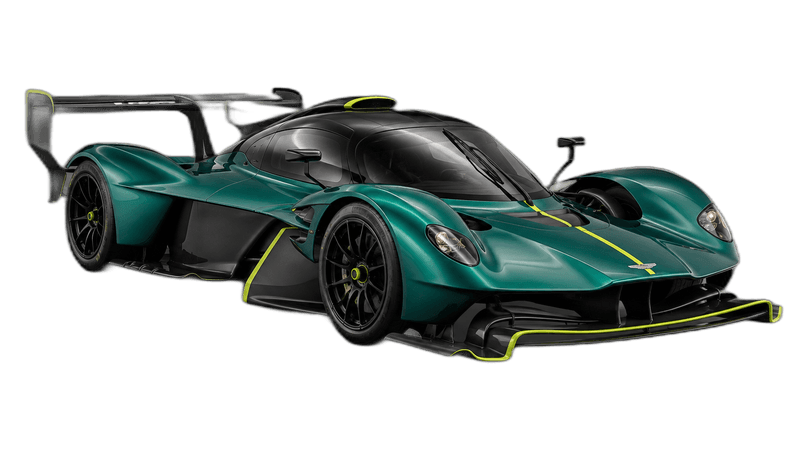
9. Aston Martin Valkyrie AMR Pro (production-derived): class reference 2:05.x
The Valkyrie AMR Pro, though produced in extremely limited numbers for closed-circuit use, represents the limit of what the Aston Martin architecture can achieve in track-focussed form. Its Cosworth 6.5-litre naturally aspirated V12, producing over 1,000 bhp, and its ground-effect aerodynamics have not been officially timed at Mount Panorama, but its technical specification places it in the same tier as the Ferrari 488 GT3 Evo as a point of reference for the extreme capabilities of current track hypercars. Where production GT cars end, the Valkyrie AMR Pro begins.
10. Chevrolet Corvette Z06 (C8): approximately 2:18.0 (2023 Bathurst event)
The C8 Z06's naturally aspirated flat-plane crank V8, producing 670 bhp with a 8,600 rpm redline, and its Z07 aerodynamic package brought it to Bathurst for the first time in C8 form in 2023. The circuit's demands highlighted the Z06's particular character: an American sports car with European track credentials, capable of exploiting Conrod Straight's banking while remaining composed through the Dipper's compression zone. Its Bathurst time placed it among the fastest non-European production cars on the mountain.
What the Mountain Takes
Bathurst is the great leveller. Its 174 metres of elevation change expose every compromise in a car's design: an understeering front axle becomes treacherous on the descent, an oversteering rear becomes a liability at Skyline. The cars at the top of this list have resolved those contradictions through engineering ambition that extends from the fundamental architecture to the final tyre compound selection. For the Australian engineers who race here, and the international manufacturers who use Mount Panorama as their Asia-Pacific benchmark, a fast Bathurst lap time is proof that the work was done completely. The mountain demands nothing less.