
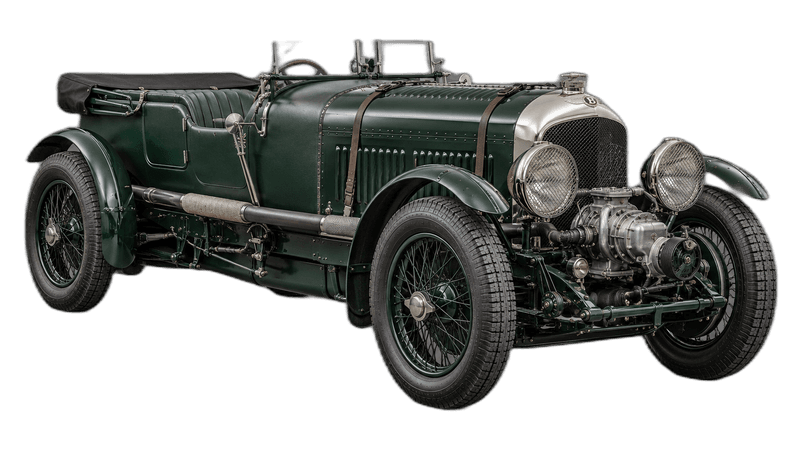
Bentley 4½ Litre Blower
175cv
Potenza
201km/h
Velocita Massima
The Bentley 4½ Litre Blower produces 175 bhp and has a top speed of 201 km/h.
Dream Car Garage Editorial · Edited by José Teo Lorente Vallecillos · Last updated 3 November 2026
Panoramica
We have not driven this car. This review is based on published specifications and the sources listed below.
Scope of this guide
This guide is scoped to the Bentley 4½ Litre Blower, the supercharged version of the 4½ Litre that Sir Henry "Tim" Birkin had built with the Amherst Villiers supercharger and that was sold, in small numbers, between 1929 and 1931. It is a front-engine car with a 4.4L supercharged inline-four, a four-speed manual gearbox and rear-wheel drive. The supercharger sits on the nose of the crankshaft ahead of the radiator, so the engine layout is as far forward as a front-engine car gets. This guide covers the customer cars and, where sources describe them, the Birkin team racers. It does not cover the naturally aspirated 4½ Litre, and it does not cover the Blower Continuation Series that Bentley Mulliner built from 2021 to 2023, which we mention only because some of the best-published figures belong to it.
We have not driven this model for this article. We are an editorial desk that reads sources, and everything below comes from pages we opened: Wikipedia's articles on the 4½ Litre and on Blower No.1, an RM Sotheby's lot page, two supercars.net pages, the Bentley Motors media site, a New Atlas article and a Sports Car Market article. This is a collector and competition car that rarely comes to market, so a guide like this cannot replace a specialist inspection, and this page is for research, not a buying recommendation.
The figures at a glance
- Engine: 4.4L supercharged inline-four, 4,398 cc, with a 100 mm bore and 140 mm stroke, per Wikipedia and supercars.net. It has a single overhead camshaft and four valves per cylinder, and supercars.net lists two SU carburettors with an Amherst Villiers Roots-type supercharger.
- Power: 175 bhp at 3,500 rpm for the touring (customer) Blower, per Wikipedia and the supercars.net specification table. The racing Blower is quoted at about 240 bhp at 4,200 rpm. We use 175 bhp as the headline figure because this guide is about the road-going cars.
- Torque: no figure shown. We did not find an original torque figure in any page we read.
- 0-100 km/h: no figure shown. We found no period or tested acceleration time for an original car. The Bentley Media page lists 0-60 mph in 12 seconds, but that is for the 2020 continuation car, and a 0-60 mph time is not a 0-100 km/h time, so we do not use it.
- Top speed: 201 km/h, which is 125 mph. supercars.net lists 125 mph for the Number 2 team car and quotes a period advertisement that guaranteed 125 mph in racing trim. The Bentley Media page prints the same 125 mph for its continuation car. See the next section for other figures.
- Drive: rear-wheel drive through a four-speed manual gearbox, with a solid front axle and a live rear axle on semi-elliptic leaf springs, per supercars.net.
- Weight: 1,727 kg per Wikipedia, against 1,625 kg for the standard 4½ Litre. supercars.net prints 1,930 kg.
- Production: 55 supercharged cars is the figure we use, although the split between customer and team cars varies by source.
Where the sources disagree
Sources disagree in several places and we say so rather than choosing silently.
Production is the main disagreement. Wikipedia says 55 supercharged cars were built out of 720 4½ Litre cars in total, and New Atlas also says 55. The Bentley Media page says Birkin persuaded chairman Woolf Barnato to approve four supercharged cars for competition plus an additional 50 homologation cars for the road, which makes 54. supercars.net's team car article says 54, with four allocated for competition, while its Blower page has the text saying 50 and the specification table saying 55. The RM Sotheby's page and the Sports Car Market article both say 50 customer or production cars. Wikipedia's Blower No.1 article says Birkin's own team had four remodelled prototypes plus a spare, which fits the 50 plus 5 reading. The racers are therefore four or five depending on whether the spare is counted, and none of the pages we read lists the cars individually. We keep 55 because Wikipedia, New Atlas and the supercars.net table print it, and because 50 customer cars plus five team cars adds up to it.
Power also differs. 175 bhp for the touring car appears in Wikipedia and in the supercars.net table. The RM Sotheby's lot page for one customer car prints 182 bhp and a 4,382 cc engine, which differs from the 4,398 cc in the other sources. The racing figure is about 240 bhp in New Atlas, in the supercars.net team car article and in the Bentley Media specification for the continuation car, while Wikipedia's Blower No.1 article prints 242 bhp at 4,200 rpm. New Atlas states that the supercharger took output from 130 to around 240, which mixes the unblown racing figure with the blown racing figure. Wikipedia gives the unblown figures as 110 bhp touring and 130 bhp racing.
Top speed is not settled either. The 125 mph figure is for racing trim. The supercars.net Blower page prints about 130 mph, which is 209 km/h. Birkin's single-seater Blower, the Monoposto, reached 137.96 mph (222.03 km/h) at Brooklands according to Wikipedia, but that was a special single-seater and not a customer car. Wikipedia's pages do not agree on whether that run was in 1931 or 1932. We chose 125 mph because two pages give it and because it is the most cautious.
The weight differs as well: 1,727 kg in Wikipedia and 1,930 kg in supercars.net, which gives 4,250 lb for the latter. We cannot tell whether one is a dry weight or whether the cars were weighed with different bodies.
History and the Birkin story
Wikipedia says the Blower was officially presented in 1929 at the British International Motor Show at Olympia. Birkin, one of the Bentley Boys, wanted a supercharged car for racing. He had approval from Woolf Barnato, and Dorothy Paget financed the project. Amherst Villiers designed the Roots-type supercharger, and the cars were developed in a workshop at Welwyn Garden City. The Bentley Media page names the 1929 team car, chassis HB 3403 with registration UU 5872, as the car that Bentley used as the master for its continuation cars.
W.O. Bentley disliked the idea. Wikipedia quotes him as saying that to supercharge a Bentley engine was to pervert its design and corrupt its performance. Because he would not allow the engine to be altered, the supercharger was fitted at the front of the crankshaft, ahead of the radiator. Wikipedia says this added weight at the front and increased understeer.
Wikipedia says the cars were built to comply with the 24 Hours of Le Mans regulations, and its Blower No.1 article says fifty supercharged cars were necessary for the model to be accepted for Le Mans. The racing record was thin. Wikipedia says two Blowers entered by Paget ran at Le Mans in 1930 and neither finished, while the works Speed Six cars won. Wikipedia and New Atlas both say the Blowers never won a race, with New Atlas counting 12 races. supercars.net says the Blower held the Brooklands outer circuit lap record, which is not a race win, and it records Paget withdrawing her backing in October 1930. Ettore Bugatti, according to Wikipedia, called the 4½ Litre the fastest lorry in the world.
Variants and what changed over the run
The sources do not describe model-year changes in the way a mass-production car would have them. What they describe is a split between the road cars and the racers. The racing Blower was quoted at 240 bhp at 4,200 rpm, against 175 bhp at 3,500 rpm for the touring car. The sources we could open say little else about how the team cars differed from the customer cars, beyond Wikipedia's note that Birkin's own team had four remodelled prototypes plus a spare, and we do not guess at the rest.
Bodies were coachbuilt. The RM Sotheby's lot we read describes a car completed in 1931 that went unsold for about two years during Bentley Motors' receivership, and that was fitted in 1933 with a four-passenger tourer body by Vanden Plas. Sports Car Market describes a Le Mans specification chassis that received a Brooklands-style two-seater racing body in 1938, and says it was one of only three of the 50 supplied in that specification. So the body style varies from car to car, and the catalogue wording of a two-door sports tourer describes the type, not every car.
What the rarity means for a buyer
- Provenance dominates. The RM Sotheby's page lists chassis MS3929, engine MS3932, gearbox 7241 and supercharger 129, and traces owners from 1933 to the present owner. The Sports Car Market article says a Blower had one owner for over 55 years. Those are the kinds of records a buyer would expect to review.
- Originality is a question. The RM Sotheby's page says a replacement body was built in 1990 and the original Vanden Plas body is offered with the car. The engine was overhauled in 2011 and 2012 with new inner cylinders, and the originals kept. A car may therefore differ from what left the factory, and the paperwork should explain how.
- Team car or customer car matters. The pages we read identify the team cars by registration, such as UU 5872, and say one team car has two chassis numbers. A buyer should expect a specialist to confirm which a given car is.
- Check which is which. Birkin's 1929 cars, Blower No.1 and the continuation cars are separate subjects, and a listing may blur them.
Running costs and known issues
We found no source with running costs, service intervals, parts supply or failure rates for the original Blower, so we give none. Wikipedia says the competitive performance was not outstanding, and Bentley's own Car Zero page describes the original as having thunderous but unreliable performance. That is the only reliability comment we found, and it concerns the racers. Anyone quoting a repair bill for these cars without a source is guessing.
Recalls and safety
We found no recall information in any page we read. That is not a clean bill of health, because we did not search a recall database and these cars predate modern recall systems. Nothing we read gives crash-test or safety-equipment data, and a car of this age has none of the structure or restraints of a modern car. Wikipedia describes a steel frame, and a specialist should inspect the frame.
Market and value notes
Prices are scattered and a few sales do not make a valuation. RM Sotheby's sold chassis MS3929 for 4,015,000 US dollars at Monterey in 2015, lot 342, and the page shows no estimate. The supercars.net Blower page says a 1931 boattail Blower did not sell at 7,100,000 US dollars, without giving us a date on the page we read. Wikipedia says standard 4½ Litres sold for around 1,000,000 euros as of 2013 and that Blowers can fetch more than 7 million euros. Wikipedia's Blower No.1 article says that car sold for 5,042,000 pounds sterling at Bonhams in June 2012 after the death of its owner George Daniels. Sports Car Market reported on 22 July 2013 that a Le Mans specification car would be offered by Bonhams at Quail Lodge in August 2013, with no estimate. These figures cover different cars, years and conditions, and none of them is a current price.
What we could not find
We found no maker document that gives original torque, 0-100 km/h or top speed, which is why we give no torque or 0-100 km/h number: both are no figure shown. The speed figures come from supercars.net and from a continuation car specification. We could not settle the production split between customer and team cars, and we found no running costs, recall data or crash data. We did not run any registry search and we did not verify any chassis number against a factory record.
About the photograph
This page uses the catalogue photograph for the car. Its credit is listed on the credits page.
Verdict
The Blower is a front-engine, rear-wheel-drive car with a 4.4L supercharged inline-four rated at 175 bhp in customer form and about 240 bhp for the racers, with a quoted 201 km/h in racing trim and a production run of 55 on the best evidence we found, though the split between customer and team cars varies by source. Its importance is in the Birkin and Paget story, in W.O. Bentley's objection and in rarity, not in the racing results. The practical advice from our reading is to treat the production split, the top speed and the power as figures that sources disagree about, to insist on chassis and body provenance, and to work out whether a car is original, rebodied or a team car. We have not driven it, so use the sources, the seller's records and an independent specialist inspection to decide.
Sources
- Wikipedia: Bentley 4½ Litre
- Wikipedia: Bentley Blower No.1
- RM Sotheby's: 1931 Bentley 4½ Litre Supercharged Two-Seater Sports (Monterey 2015, lot 342)
- supercars.net: Bentley 4½ Litre Supercharged Team Car #2
- supercars.net: 1929-1931 Bentley 4½ Litre Blower
- Bentley Motors media: 2020 Blower Continuation Series Car Zero
- New Atlas: Bentley 1929 team Blower (9 September 2019)
- Sports Car Market: Blower Bentley Le Mans of Charles R.J. Noble (22 July 2013)
Specifiche
| Motore | 4.4L supercharged inline-four |
|---|---|
| Cilindrata | 4.4L |
| Potenza | 175 cv |
| Velocita Massima | 201 km/h |
| Trazione | RWD |
| Paese | United Kingdom |
| Carrozzeria | open sports tourer (coachbuilt) |
| Anni | 1929–1931 |
| Produzione | 55 |
Specifications are manufacturer-published figures.
Domande Frequenti
How much power does the Bentley 4½ Litre Blower have?
The Bentley 4½ Litre Blower produces 175 bhp.
What is the top speed of the Bentley 4½ Litre Blower?
The Bentley 4½ Litre Blower has a top speed of 201 km/h.
What engine does the Bentley 4½ Litre Blower have?
The Bentley 4½ Litre Blower uses a 4.4L supercharged inline-four.
How many Bentley 4½ Litre Blower were made?
Bentley produced 55 units of the Bentley 4½ Litre Blower.
When was the Bentley 4½ Litre Blower built?
The Bentley 4½ Litre Blower was built from 1929 to 1931.
Is the Bentley 4½ Litre Blower all-wheel drive?
No. The Bentley 4½ Litre Blower is configured with rear-wheel drive.
Altre di Bentley
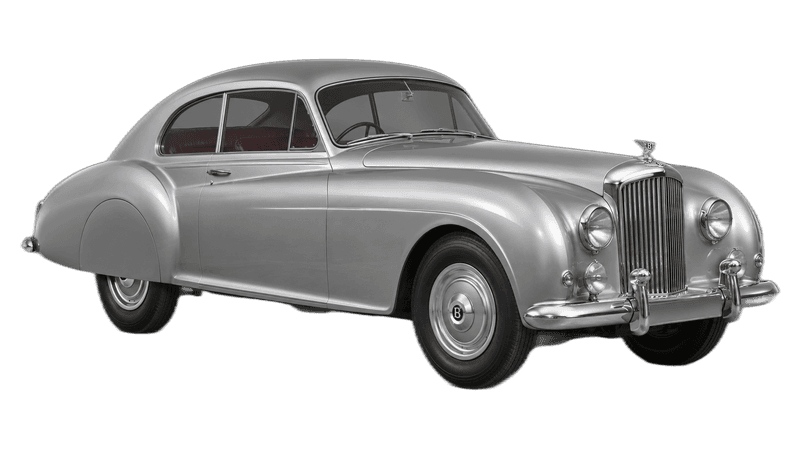 153 cv
Bentley R-Type Continental
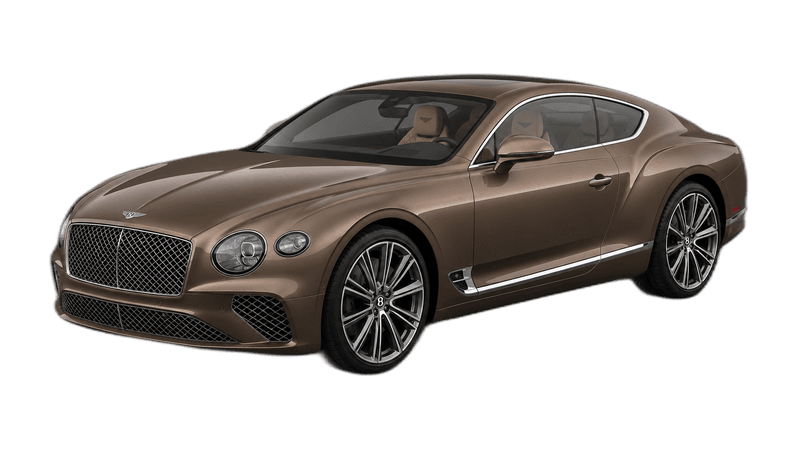 626 cv
Bentley Continental GT Mulliner (3rd Gen)
£230,000
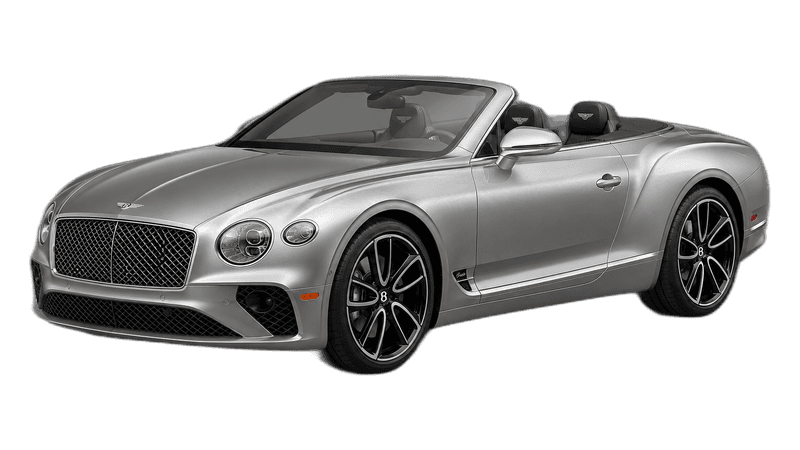 650 cv
Bentley Continental GTC Speed (3rd Gen)
£225,000
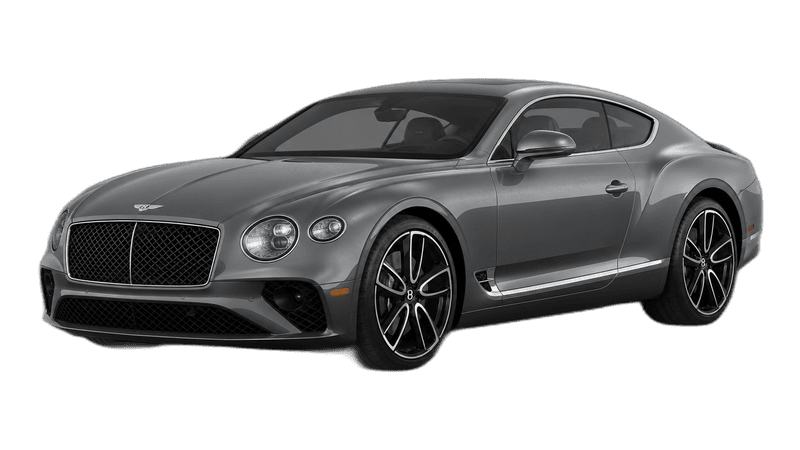 650 cv
Bentley Continental GT Speed (3rd Gen)
£210,000
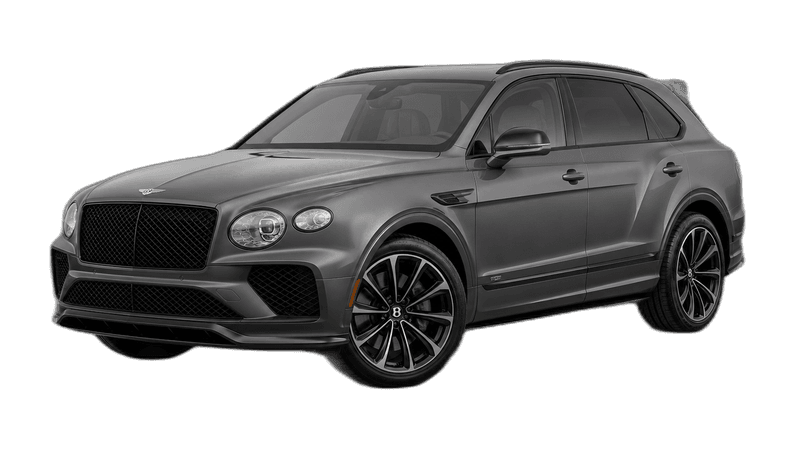 626 cv
Bentley Bentayga Speed
£175,000
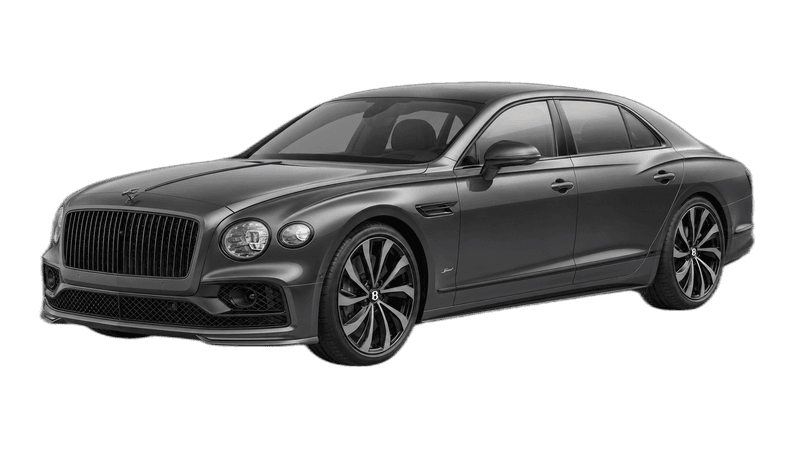 626 cv
Bentley Flying Spur W12 Speed
£175,000