
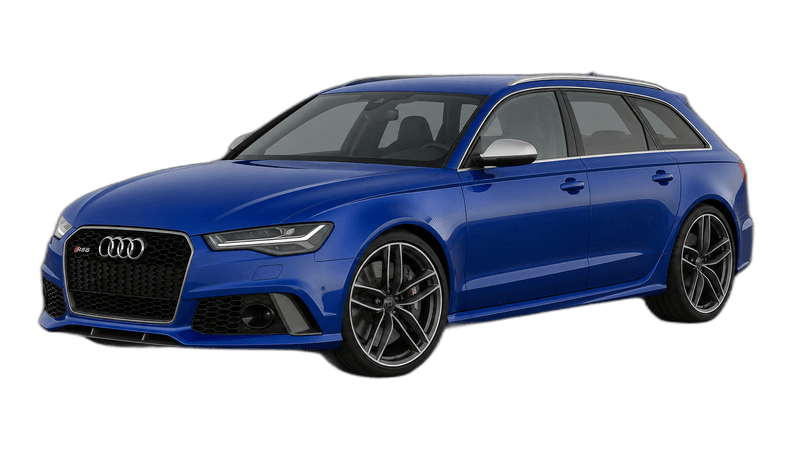
Audi RS6 Avant (C7)
£55,000
usatoIndicative market price, updated periodically.
560cv
Potenza
3.9s
0-100 km/h
305km/h
Velocita Massima
£55,000
Prezzo Usato
Quanto spinge.
La forza g di picco nell'istante in cui affondi l'acceleratore, stimata dal tempo 0–100 e dalla trazione.
Audi RS6 Avant (C7)G di partenza stimata dal tempo 0–100 e dalla trazione: un'approssimazione onesta, non un dato misurato.
The Audi RS6 Avant (C7) is a 5-door wagon by Audi, with 560 bhp, 700 Nm of torque, a 0-100 km/h time of 3.9 seconds and a top speed of 305 km/h. Indicative used value: approximately £55,000. Actual values vary with specification, condition and history.
Dream Car Garage Editorial · Edited by José Teo Lorente Vallecillos · Last updated 29 October 2026
Panoramica
We have not driven this car. This review is based on published specifications and the sources listed below.
Why this car
The C7 RS6 Avant arrived in 2013 as the car that settled the argument about whether an estate could be a genuine supercar rival. Its 4.0 twin-turbo V8 produced numbers that embarrassed dedicated sports cars, yet it carried five people, their luggage, and a towing hitch if needed. The formula had existed since the C5 of 2002, but the C7 distilled it: lighter, sharper, more efficient, and styled with enough restraint to be invisible when required. For a large group of buyers it remains the definitive modern fast estate, and the benchmark every rival still chases.
What it is
The RS6 Avant C7 produces 560 bhp and 700 Nm from a 4.0 twin-turbo V8, delivered to all four wheels through an eight-speed torque-converter automatic with a self-locking centre differential and a rear limited-slip differential. The run to 100 km/h takes 3.9 seconds and the top speed is 305 km/h. The body mixes steel and aluminium, adaptive air suspension was standard equipment, and the 2015 facelift brought matrix LED headlights, an upgraded infotainment system and detail styling changes. A Performance version added roughly forty horsepower and meaningful torque for buyers who found the standard car insufficient, which tells you everything about the audience.
Ownership and running
We have not driven this model for this article. The observations below come from documented ownership reports, buying guides and manufacturer records, and should be read as research pointers rather than first-hand experience.
The PistonHeads buying guide describes a car whose reputation for giant-killing pace is matched by sensible running costs relative to its performance. Routine service work lands around six hundred dollars a year at then-current exchange rates, brake sets around two thousand, and real-world fuel consumption in the low twenties of miles per gallon when driven normally. The eight-speed gearbox is a torque-converter unit rather than a dual-clutch, chosen for durability, and it has proved reliable in service. The standard-fit air suspension gives the car its split personality, crouching twenty millimetres lower at speed, while the optional Dynamic Ride Control steel-spring system was preferred by reviewers for its connection and control; both need specialist verification on a used example. The lineage behind it explains the expectation: the 2002 C5 RS6 established the twin-turbo V8 formula, and the 2008 C6 with its ten-cylinder engine was the characterful outlier, so the C7's restrained, durable engineering reads as maturity rather than dilution.
Known issues and what to inspect
The first inspection item is the suspension the car carries. DRC-equipped cars with leaking or knocking dampers are not flagged by the dashboard, and continued driving on a failed unit damages the far more expensive central control valve, so listen for knocks over broken surfaces and ask for evidence of specialist re-pressurisation work where applicable. The 2015-on coolant hose split, caused by a clip rubbing at the bulkhead, announces itself through squeaks before it fails, and the 2016 recall for a loose camshaft-adjustment filter element is documented; confirm completion through the DVSA check. Early cars saw an auxiliary-heater connector recall for cars built between July and October 2014, and parking-brake control units failed on some early examples. Discs can warp from hot-spotting when the car is held on the footbrake in drive, a habit worth asking about.
Cabin and daily realities
The C7 cabin is classic A6 architecture of the period, which means a logical driving position, durable materials and an infotainment system that has aged into its role. Leather, Bose audio and four-zone climate were standard, so equipment anxiety is rare. The load bay swallows family life whole, and the towing capability that more than half of European buyers specified remains a genuine differentiator. Twenty-inch wheels with all-round 275-section tyres keep replacement costs sensible; the optional 21-inch wheels look better but buckle on broken roads more readily, and tyre life of eight to fifteen thousand miles depending on driving style is the honest range. The car excels at being used, and its depreciation curve rewards the buyer who uses it without guilt.
Buying and values
The PistonHeads guide from April 2020 recorded early C7 RS6s from around 44,000 dollars at then-current exchange rates, with facelifted and Performance cars commanding premiums; the market has softened since as the C8 arrived, which works in the buyer's favour. The purchase decision turns on suspension health, gearbox behaviour on a cold test, and evidence that the big V8 has been serviced on schedule with the correct oil. A mapped car with an expired engine tells its own story, and the guide records that heavily tuned examples have failed. Choose condition over specification, because the standard car was already lavish.
FAQ
What is an indicative used value?
Indicative used value: C7 RS6 Avants have traded from roughly 44,000 dollars at then-current exchange rates for early cars, with facelifted and Performance examples asking more. Actual values vary with specification, condition and history.
What drivetrain does it use?
A front-mounted engine driving all four wheels through quattro all-wheel drive.
How many were built?
Audi never published production figures for the C7 RS6 Avant, so this catalogue records production as unset.
We have not driven this model for this article. The observations below come from documented ownership reports, buying guides and manufacturer records, and should be read as research pointers rather than first-hand experience.
No present valuation, investment assurance or universal failure rate is offered. The C7 RS6 Avant's ownership case rests on being the fast estate that asks the fewest compromises, bought best through suspension, service-history and tuning-provenance verification.
Specifiche
Motore
4.0L (3993 cc) twin-turbo V8 petrol
Cilindrata
4.0L
Potenza
560 cv
Coppia
700 Nm
0-100 km/h
3.9s
Velocita Massima
305 km/h
Trazione
AWD
Paese
Germany
Carrozzeria
5-door wagon
Anni
2013–2018
Prezzo Usato
£55,000
Specifications are manufacturer-published figures.
Altre di Audi
In evidenza su Carpedia
Domande Frequenti
What are the specifications of the Audi RS6 Avant (C7)?
The Audi RS6 Avant (C7) is a 5-door wagon by Audi, with 560 bhp, 700 Nm of torque, a 0-100 km/h time of 3.9 seconds and a top speed of 305 km/h. Indicative used value: approximately £55,000. Actual values vary with specification, condition and history.
How much does a Audi RS6 Avant (C7) cost?
Indicative used value: approximately £55,000. Actual values vary with specification, condition and history.
What drivetrain does the Audi RS6 Avant (C7) use?
The Audi RS6 Avant (C7) is configured with all-wheel drive.
What type of car is the Audi RS6 Avant (C7)?
The Audi RS6 Avant (C7) is a super saloons manufactured by Audi in Germany. Production ran from 2013 to 2018.