
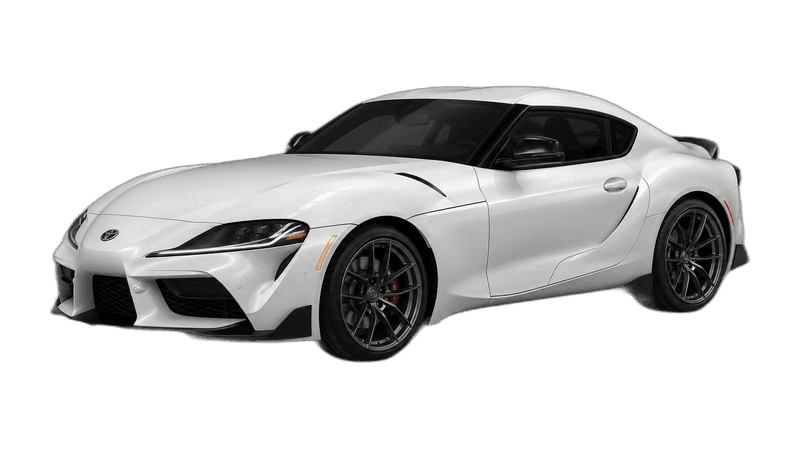
Toyota GR Supra 3.0 Pro
£45,000
usadoIndicative market price, updated periodically.
335cv
Potencia
4.3s
0-100 km/h
250km/h
Velocidad Máxima
£45,000
Precio Usado
Cómo empuja.
La fuerza g máxima en el instante en que pisas a fondo, estimada a partir del 0–100 y la tracción del coche.
Toyota GR Supra 3.0 ProG de salida estimada a partir del 0–100 y la tracción: una aproximación honesta, no una cifra medida.
The Toyota GR Supra 3.0 Pro is a 2-seater coupe by Toyota, with 335 bhp, 500 Nm of torque, a 0-100 km/h time of 4.3 seconds and a top speed of 250 km/h. Indicative used value: approximately £45,000. Actual values vary with specification, condition and history.
Dream Car Garage Editorial · Edited by José Teo Lorente Vallecillos · Last updated 2 November 2026
Visión General
We have not driven this car. This review is based on published specifications and the sources listed below.
The A90 GR Supra 3.0 Pro in the UK
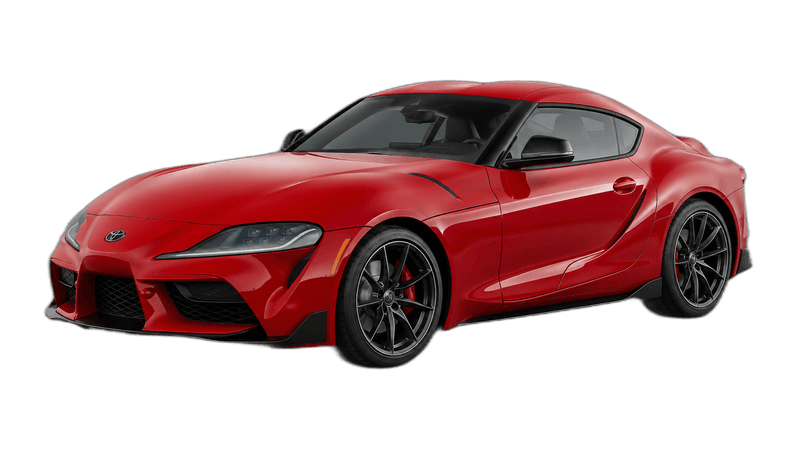
The Toyota GR Supra, known inside Toyota as the A90, is the fifth-generation Supra and the first global model from Toyota Gazoo Racing, according to Toyota UK's February 2024 press pack. It is a two-seat coupe with a front-mounted straight-six and rear-wheel drive, built in Graz, Austria. PistonHeads adds that it was co-developed with BMW, which supplied the platform, drivetrain and much of the electronics and cabin, and that the Supra and the BMW Z4 were built side by side at Magna Steyr. This guide is scoped to the UK-specification 3.0 Pro automatic GR Supra, from the first UK customer deliveries in September 2019 onwards. Our catalogue lists a 3.0L turbocharged inline-6 petrol engine producing 335 bhp and 500 Nm, with 0 to 100 km/h in 4.3 seconds, a limited top speed of 250 km/h and rear-wheel drive. We have not driven this model for this article. Everything below comes from the sources listed at the end, and where they disagree we say so.
Checking the figures
Power is where this car is easiest to get wrong. The Toyota UK technical table gives 335 bhp, 340 DIN hp and 250 kW at 5,000 to 6,500 rpm, and 500 Nm from 1,600 to 4,500 rpm. PistonHeads lists 340 hp and 368 lb ft instead, which is the same engine in different units: 340 hp multiplied by 0.9863 is 335 bhp, and 368 lb ft is 499 Nm. We use 335 bhp and 500 Nm.
A higher figure of 382 hp is quoted for some cars. Toyota's US newsroom says output was raised in 2021 to 382 hp for that market, which is roughly 387 PS. We did not find that increase in anything written for the UK. The Toyota UK press pack, updated in February 2024, still gives 335 bhp for the 3.0, and the PistonHeads buying guide does not mention a power rise either. We therefore treat 382 hp as a US-market figure and do not describe it as the UK car's output. If you are looking at an imported car, ask for the documented output rather than assuming either number.
Acceleration: Toyota UK quotes 4.3 seconds from rest to 62 mph with the launch control function, and PistonHeads repeats it as the official figure. 62 mph is 99.8 km/h, so we use it as 0 to 100 km/h. PistonHeads also notes that a US magazine recorded 3.7 seconds to 60 mph using a one-foot rolling start, which is a different test and not comparable. Top speed is electronically limited to 155 mph, which is 249.4 km/h and which we state as 250 km/h.
Weight is less settled. The Toyota table lists 1,495 kg without a driver and 1,570 kg on the ECE basis for the automatic. PistonHeads gives 1,570 kg from its data supplier and says UK testers measured about 1,500 kg. Fuel economy also differs: Toyota lists 34.4 mpg and 188 g/km on the WLTP cycle, while PistonHeads gives 32.7 mpg and 170 g/km. Neither source says why, so quote the Toyota figures when comparing cars.
Years: production for the UK began in 2019. Toyota UK's media archive files the car under an archive heading for 2019 to 2025, but none of the documents we read gives a final build date, so our catalogue leaves the end year open.
Engine and gearbox
The 3.0 is a single-turbocharged straight-six with a twin-scroll turbo, 2,998 cc, direct injection at 35 MPa, a 11.0:1 compression ratio and variable valve timing and lift. PistonHeads describes it as flexible rather than a revver, with most of the torque on a near-5,000 rpm plateau that starts at 1,600 rpm. Toyota UK pairs it with an eight-speed ZF automatic with paddle shifts, an active differential and launch control. PistonHeads calls the gearbox occasionally jolty on downshifts but effective with the differential for traction, and says launch control is limited to 2,000 rpm.
The same guide says very little goes wrong mechanically. It also reports owners and tuners finding more than Toyota claims: one US magazine found roughly 10 hp and 40 lb ft above Toyota's figures on a dyno, UK tuners reported 370 hp on stock cars, and one specialist reported 420 hp from a remap alone. Treat those as claims about individual cars and individual dynos. A remapped car should be priced and warrantied accordingly, because Toyota's new-car warranty is three years or 60,000 miles, and PistonHeads says it could be extended in 12-month blocks through the Relax scheme to 10 years or 100,000 miles.
Toyota UK lists a 52-litre fuel tank and PistonHeads says about 400 miles between fill-ups is achievable. Insurance groups run from 34E to 37E across the range.
The 2.0 and the manual
The 2.0 was added to the UK range in January 2021. Toyota UK lists 1,998 cc, 254 bhp (258 DIN hp, 190 kW), 400 Nm, 5.2 seconds to 62 mph, the same 155 mph limit, 18-inch wheels, 38.7 mpg and 167 g/km. It is about 100 kg lighter than the 3.0 (1,395 kg against 1,495 kg without a driver) and, despite the Pro name, lacks the 3.0 Pro's headline equipment: no head-up display, a four-speaker audio system and heated Alcantara seats instead of leather. PistonHeads says it feels noticeably pointier, and that it uses a BMW 2.0-litre turbo four. Toyota's own text gives the 2.0's torque range as 1,550 to 4,000 rpm while its table says 1,550 to 4,400 rpm, so do not quote the upper limit. Everything else in this guide is about the 3.0.
The six-speed manual is for the 3.0 only. Toyota UK's timeline dates it to June 2022 in the UK; some sources date it to 2023, which is how US cars are labelled. Toyota quotes 4.6 seconds to 62 mph, a shorter 3.46 final drive against 3.15 for the automatic, 32 mpg and 198.3 g/km. The intelligent manual transmission matches revs on upshifts and downshifts and can be switched off in Sport mode. We found no separate engine output for the manual, so we assume the 335 bhp figure applies.
The manual's weight advantage is reported inconsistently. PistonHeads' buying guide says it cut about 40 kg, and Toyota UK's own launch release for the manual, which we also read, gives a similar saving. Yet the Toyota press-pack table lists the manual at 1,502 kg against 1,495 kg for the automatic, 7 kg heavier. Another PistonHeads piece on the manual puts the saving at 17 kg, or 38 kg with fabric seats. Pick the figure you trust and check the car on a weighbridge if it matters.
Chassis, brakes and wheels
The suspension is MacPherson struts at the front and a five-link rear, with adaptive dampers in two modes, Normal and Sport, on every UK car. Toyota quotes a 2,470 mm wheelbase and a 1,589 mm rear track, a ratio it calls the 1.55 golden ratio, and a claimed 50:50 weight distribution. In 2022 the suspension was revised with firmer vulcanised rubber in the anti-roll bar bushes and re-tuned dampers, and the press pack says the braking control systems were re-tuned for all models. If you are comparing a 2019 car with a 2022 car, that is a real difference to ask about.
The 3.0 Pro runs 19-inch forged wheels with Michelin Pilot Super Sport tyres, 255/35 ZR19 at the front and 275/35 ZR19 at the rear. Brakes are Brembo, with opposed four-piston calipers and 348 x 36 mm ventilated discs at the front and single-piston floating calipers with 345 x 24 mm discs at the rear. The brake system also has drying and anti-fade functions.
PistonHeads questions the brake feel and chassis control under hard mountain driving and says the car can show some mild tail-out behaviour on slippery surfaces. It also reports motorway steering-wheel shudder, usually traced to unbalanced or misaligned wheels. Forged wheels on a heavy coupe suffer on kerbs and potholes, so inspect the rims and have the balance and alignment checked.
Body, interior and electronics
The 3.0 Pro has black leather, power-adjustable heated seats with a driver's memory, a 12-speaker JBL system, a head-up display, a wireless phone charger and LED dual-beam projector headlights. The standard 3.0 has a 10-speaker system and no head-up display. PistonHeads says almost all UK used GR Supras are Pro-spec cars. The infotainment screen is 8.8 inches and the iDrive-based system and gear selector come from BMW, with altered graphics and Apple CarPlay. PistonHeads finds the BMW influence in the cabin a little too keen to show itself.
The boot is 290 litres by VDA measure. With no bulkhead behind the seats, more noise reaches the cabin, and with the windows down at speed buffeting can be significant. PistonHeads attributes that to the rear glass shape and says anti-buffeting kits are available. The double-bubble roof means Toyota could not offer a sunroof, and the shallow glasshouse limits visibility.
Check the paint carefully. PistonHeads says some cars had faulty paint, with white bubbles or spots in the clear coat, and that some dealers suggested localised heat as a fix, though it was unsure how effective that was. Look at every panel in daylight, particularly the large bonnet and the rear wings.
Recalls and history
PistonHeads lists several recalls and defects, and the dates matter. An engine management software recall covered cars built from April 2019 to June 2021, because the software issue could damage the oil or vacuum pumps. Fuel tank welding issues affected cars built between June and October 2019. Cars built between mid-March and early April 2019 may have incorrectly specified steering tie rods that can suffer vibration-related damage. PistonHeads also says BMW North America recalled about 50,000 cars in August 2021 for a braking software glitch, with just over 13,000 of them A90 Supras, and says it does not know whether BMW UK issued a similar notice. We could not find the UK position either.
A recall that has been completed leaves no mark you can see, so do not rely on a seller's word. Enter the registration into the DVSA vehicle recall check on GOV.UK, which lists outstanding recalls, and ask for the dealer paperwork showing which recalls were carried out. PistonHeads reports that Toyota's own online checker also works from the registration number. The PistonHeads guide was published on 14 May 2022, so it predates the manual's UK arrival and anything found on later cars. We have no source for faults reported after that date.
Limited editions exist. PistonHeads lists the A90 Edition, limited to 90 cars in Europe with about 24 reportedly sent to the UK, and the Jarama Race Track Edition, 90 for Europe and 30 for the UK. It dates the Jarama car to late summer 2021, while the Toyota timeline lists it in March 2021, so the date varies by source. Toyota UK says cumulative UK sales since launch reached 1,242 by the end of 2023, with 197 in 2023, which is a small pool to choose from.
Buying decision
This is a car where the paperwork matters more than the odometer. PistonHeads' verdict in 2022 was that ownership is low-risk, that nothing really goes wrong, and that the biggest headache is choice. It also says the Supra sits in a slightly awkward space between grand touring and sportiness, and that it is bigger and heavier than a Porsche Cayman or Alpine A110. Our reading of the sources suggests the car suits someone who wants a fast, quiet, usable coupe and does not mind its BMW parts bin.
Before you buy, do the following in order. Run the registration through the DVSA recall check and ask for proof that the 2019 tie rod, fuel tank and engine software recalls were completed on any car built in those windows. Confirm the engine output is the UK-specification 335 bhp, particularly on an import or a remapped car. Inspect the paint, the forged wheels and the tyres. Confirm which suspension revision you are buying, because 2022 cars have the revised dampers and bushes. Finally, decide between automatic and manual using a drive, not the brochure, because the weight figures above do not agree.
If you want the lighter, cheaper-to-run car, the 2.0 is a different proposition with different equipment, and this guide does not cover its long-term reliability. If you want the original six-cylinder car with the best equipment, the 3.0 Pro automatic is what most of the UK used market consists of.
Especificaciones
Motor
3.0L turbocharged inline-6 petrol
Cilindrada
3.0L
Potencia
335 cv
Par Motor
500 Nm
0-100 km/h
4.3s
Velocidad Máxima
250 km/h
Tracción
RWD
País
Japan
Carrocería
2-seater coupe
Años
2019–present
Precio Usado
£45,000
Specifications are manufacturer-published figures.
Más de Toyota
Destacado en Carpedia
Best Sports Cars Under €100,000 in 2026
Nine sports cars from €50,000 to €100,000 that deliver genuine GT-class performance, including a junior Aston, a Japanese analogue icon, and the most underrated Porsche money can buy.
Toyota GR Supra vs BMW M2 vs Porsche 718 Cayman GTS 4.0
Below the supercar threshold lies the most contested category in performance motoring. The GR Supra, M2, and 718 Cayman GTS 4.0 each cost less than £80,000 and each makes a compelling argument for why it is the most rewarding driver's car at the price.
Preguntas Frecuentes
What are the specifications of the Toyota GR Supra 3.0 Pro?
The Toyota GR Supra 3.0 Pro is a 2-seater coupe by Toyota, with 335 bhp, 500 Nm of torque, a 0-100 km/h time of 4.3 seconds and a top speed of 250 km/h. Indicative used value: approximately £45,000. Actual values vary with specification, condition and history.
How much does a Toyota GR Supra 3.0 Pro cost?
Indicative used value: approximately £45,000. Actual values vary with specification, condition and history.
What drivetrain does the Toyota GR Supra 3.0 Pro use?
The Toyota GR Supra 3.0 Pro is configured with rear-wheel drive.
What type of car is the Toyota GR Supra 3.0 Pro?
The Toyota GR Supra 3.0 Pro is a gts manufactured by Toyota in Japan. Production started in 2019.