
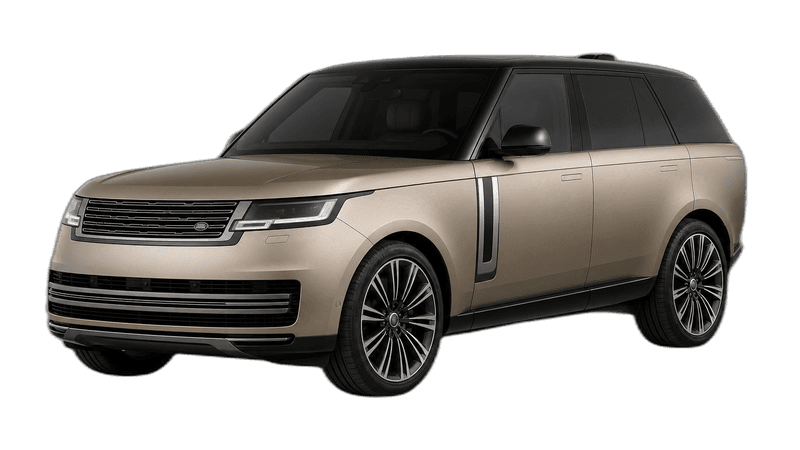
Range Rover SV (L460)
£210,000
usadoIndicative market price, updated periodically.
607cv
Potencia
4.5s
0-100 km/h
261km/h
Velocidad Máxima
£210,000
Precio Usado
Cómo empuja.
La fuerza g máxima en el instante en que pisas a fondo, estimada a partir del 0–100 y la tracción del coche.
Range Rover SV (L460)G de salida estimada a partir del 0–100 y la tracción: una aproximación honesta, no una cifra medida.
The Range Rover SV (L460) is a suv by Range Rover, with 607 bhp, 750 Nm of torque, a 0-100 km/h time of 4.5 seconds and a top speed of 261 km/h. Indicative used value: approximately £210,000. Actual values vary with specification, condition and history.
Dream Car Garage Editorial · Edited by José Teo Lorente Vallecillos · Last updated 2 November 2026
Visión General
We have not driven this car. This review is based on published specifications and the sources listed below.
Scope of this guide
This guide is scoped to the standard-wheelbase, five-seat Range Rover SV (L460) with the 4.4L Twin-turbo V8 in its 615 PS form, which Land Rover announced for the 2024 model year in May 2023. The larger car, the long-wheelbase body, is a separate decision with its own figures, and we say where it differs below. The original SV with 530 PS, announced in December 2021, the later SV Black and other special editions, the plug-in hybrids and the all-electric Range Rover are outside this guide.
We have not driven this model for this article. Everything here comes from reading the sources listed at the end: the manufacturer press material, the PistonHeads used buying guide and the government recall checker page. Several other outlets and data sites were read only through condensed page summaries, and we say so in our working notes. Treat the guide as a checklist of questions to put to a seller, not as a verdict from the driver's seat.
The figures at a glance
- Engine: 4.4L Twin-turbo V8, 4395 cc, with a 48-volt mild hybrid system on this version.
- Power: 615 PS, which is 452 kW and about 607 bhp. The metric figure is the one the manufacturer uses, and some outlets print it as 615 bhp or 615 hp, which is the PS number with the wrong unit. We use 607 bhp for the same output.
- Torque: 750 Nm, about 553 lb ft.
- 0-100 km/h: 4.5 seconds for the standard-wheelbase car on the data we found. The same sources show 4.6 seconds for the long-wheelbase body. PistonHeads quotes 0-62 mph in 4.5 seconds and 0-60 mph in 4.3 seconds for the same car, which is a different test point from 0-100 km/h.
- Top speed: 261 km/h, which is 162 mph. We found this figure in third-party data and in road tests, not in a Land Rover statement we could reach.
- Drive: all-wheel drive through an eight-speed automatic and a two-speed transfer case.
- Weight: roughly 2,700 to 2,800 kg kerb depending on the source and the specification, so it is a very heavy car to stop and to tyre.
Which car this is, and how the versions differ
The L460 generation of the Range Rover was revealed in October 2021, built at Solihull and reached customers during 2022. The SV is the top specification, built by the company's special vehicle operation. The first SV used a 530 PS version of the twin-turbo V8. The 615 PS car with the mild hybrid system followed for the 2024 model year, so a car described only as an SV and registered in 2022 or most of 2023 may well be the lower-output one. Check the build year and the power figure on the paperwork and the badge before you assume which engine is fitted.
Wheelbase matters as much as year. The standard-wheelbase car is about 5.05 metres long with a wheelbase near 2,995 mm. The long-wheelbase body adds about 200 mm between the axles, is offered with four or five seats on the SV, and carries the extra weight and the slightly slower aggregator acceleration figure noted above. The stored 4.6 seconds in our catalogue matched the long-wheelbase car, so we have changed it to 4.5 seconds for the standard-wheelbase car this guide covers.
The SV also comes in themed colour and trim packages, with names such as Serenity and Intrepid on the early cars. These change the look of the interior and the finish of the exterior but not the drivetrain, so the figures in this guide apply to both. They do change what a particular car is worth to a particular buyer, and bespoke paint and leather are expensive to repair, so ask what is original.
The V8 and what the sources say about it
PistonHeads reports that the early L460 V8 cars used the older BMW-derived N63 engine and that the 615 PS cars use the newer S68 unit. We could only find that detail in one place, so treat it as unconfirmed and ask a specialist to read the engine code from the car rather than relying on it. The fact that the engine is sourced from outside the company is well reported, and it matters because parts, software updates and specialist knowledge sit partly with the engine maker and partly with Land Rover.
Power is held back during the first 500 km, which is about 310 miles, while the engine beds in. A car with very low mileage should still show that this was respected, and a seller who cannot explain how the first few hundred kilometres were spent is worth a second question. Petrol V8 models are listed with a service every year or 12,000 miles, whichever comes first, so a missing annual stamp is a real gap and not a formality.
The chassis, the wheels and the running costs
The SV is a very large car on air suspension in our understanding, and the cars we saw described run very large wheels, up to 23 inches. Large wheels and low-profile tyres on a car of this weight are a running cost: tyres, kerb damage and alignment all need checking. Look at every rim for damage, and ask when the tyres were last replaced and whether they are the correct type for the car.
Air suspension and the electronic systems are the parts most owners worry about on a modern luxury SUV. We have not found a clean answer in the sources about long-term reliability of this exact generation, so we do not claim one. What we can say is that any warning message on the display, any lopsided stance when parked and any slow rise of the body after the car is started deserves a diagnostic read before you commit.
What to check before buying
- Confirm the power figure and model year from the registration document, the build plate and the badge, so you know whether it is the 530 PS or the 615 PS car.
- Confirm the wheelbase, since the standard and long bodies have different figures, seating and values.
- Ask for the full service history with the annual or 12,000-mile services shown, and check that the first 500 km restriction was followed.
- Ask for a diagnostic printout and proof that every software update and open campaign has been applied.
- Inspect all four wheels for kerb damage and check the tyre date codes and wear pattern.
- Test every air suspension height setting, the tailgate, the doors, the cameras and the infotainment screens.
- Check the paint and trim against the original specification if the car carries a colour or interior theme.
- Ask whether the car has been used abroad or on a company fleet, and check it has not been recorded as written off.
Recalls and the DVSA check
We did not run the government vehicle recall checker for this article, because it needs a specific registration number and we have no particular car. Any buyer can run it for free on the official page listed in our sources, using the registration, and should do so before a purchase and again after any service. The absence of a recall in the sources we read is not a clean bill of health. A recall can be issued at any time, can cover a limited range of build dates and can be open on one car and closed on another.
About the photograph
The hero image is a photograph of a dark Range Rover SV at an indoor motor show in Zurich, taken by Matti Blume and published on Wikimedia Commons under the Creative Commons Attribution-ShareAlike 4.0 licence. We cropped it to a 16:9 frame and resized it to 800 by 450 pixels. We did not blur anything, and we checked it for people and readable number plates: the car carries a show placard in place of a plate and no person is visible. We could not confirm from the file description whether it shows the standard or long wheelbase, so the picture illustrates the model and not the specific version this guide covers.
Verdict
The 615 PS SV is a heavy, complex and costly car. The 607 bhp and 750 Nm figures are consistent across the sources we reached, and 4.5 seconds is the best-supported 0-100 km/h figure for the standard wheelbase. The top speed of 261 km/h and the engine code both rest on weaker evidence. A careful buyer should confirm the model year, the wheelbase, the service history and any open recall, and should pay a specialist to inspect the air suspension, the wheels and the engine before agreeing a price.
Especificaciones
Motor
4.4L Twin-turbo V8
Cilindrada
4.4L
Potencia
607 cv
Par Motor
750 Nm
0-100 km/h
4.5s
Velocidad Máxima
261 km/h
Tracción
AWD
País
UK
Carrocería
SUV
Años
2023–present
Precio Usado
£210,000
Specifications are manufacturer-published figures.
Más de Range Rover
Destacado en Carpedia
Preguntas Frecuentes
What are the specifications of the Range Rover SV (L460)?
The Range Rover SV (L460) is a suv by Range Rover, with 607 bhp, 750 Nm of torque, a 0-100 km/h time of 4.5 seconds and a top speed of 261 km/h. Indicative used value: approximately £210,000. Actual values vary with specification, condition and history.
How much does a Range Rover SV (L460) cost?
Indicative used value: approximately £210,000. Actual values vary with specification, condition and history.
What drivetrain does the Range Rover SV (L460) use?
The Range Rover SV (L460) is configured with all-wheel drive.
What type of car is the Range Rover SV (L460)?
The Range Rover SV (L460) is a luxury manufactured by Range Rover in UK. Production started in 2023.