
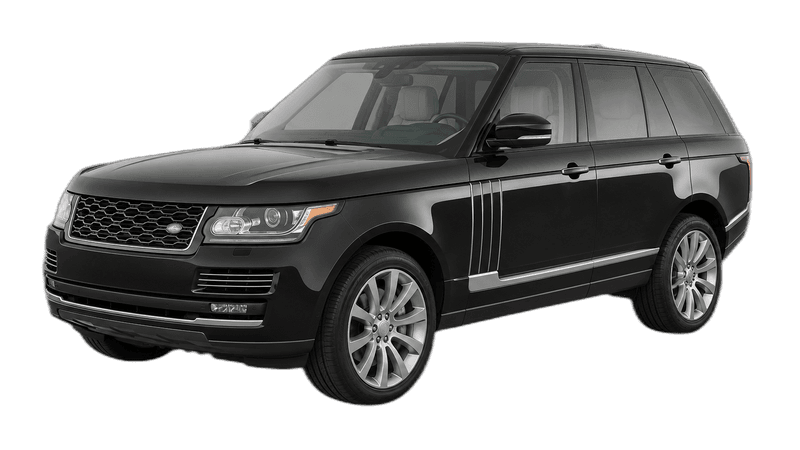
Range Rover Autobiography (L405)
£65,000
usadoIndicative market price, updated periodically.
503cv
Potencia
5.4s
0-100 km/h
225km/h
Velocidad Máxima
£65,000
Precio Usado
Cómo empuja.
La fuerza g máxima en el instante en que pisas a fondo, estimada a partir del 0–100 y la tracción del coche.
Range Rover Autobiography (L405)G de salida estimada a partir del 0–100 y la tracción: una aproximación honesta, no una cifra medida.
The Range Rover Autobiography (L405) is a five-door full-size luxury suv by Range Rover, with 503 bhp, 625 Nm of torque, a 0-100 km/h time of 5.4 seconds and a top speed of 225 km/h. Indicative used value: approximately £65,000. Actual values vary with specification, condition and history.
Dream Car Garage Editorial · Edited by José Teo Lorente Vallecillos · Last updated 2 November 2026
Visión General
We have not driven this car. This review is based on published specifications and the sources listed below.
Scope of this guide
This guide is scoped to the fourth-generation Range Rover (code L405) in Autobiography trim with the 5.0L supercharged V8 petrol engine in its original 510 PS form, which is 503 bhp, with permanent all-wheel drive, an eight-speed automatic gearbox and the standard-length body, sold for the 2013 to 2016 model years. It is not a guide to the 4.4 litre SDV8 or 3.0 litre TDV6 diesels, to the diesel hybrid that joined the range in 2015, to the long-wheelbase body that arrived in the same period, to the SVAutobiography versions, or to the updated petrol car with 525 PS that followed the original. Where those cars differ we say so below, because an advert that says only "Range Rover Autobiography" can describe any of them.
We have not driven this model for this article. Everything here comes from three cited sources: Land Rover's own press release from the 2012 Paris motor show, PistonHeads' used buying guide to the L405, and the government recall checker. We also read figures from Wikipedia and from several specification databases (autohints, auto-data and cars-data) and from one Malaysian motoring site, and we flag every point that rests on them. Several of those pages reached us only as machine summaries rather than as full text, and one specification page we tried refused our request, so we used other sources instead of trying to get around it. Where sources disagree we say so rather than pick a winner quietly. This is not a price guide and we quote no prices.
The figures at a glance
- Engine: 5.0L supercharged V8 petrol, which Land Rover's release calls the LR-V8 Supercharged. The sources give 5000 cc, and that is the figure we now store. Our older catalogue entry said 4999 cc, which no source supports.
- Power: 503 bhp. Land Rover quotes 510 PS, a metric figure, and 510 x 0.98632 is about 503 bhp. PistonHeads prints the same output as 510hp for the UK car. We use bhp throughout because the catalogue does.
- Torque: 625 Nm, which is about 461 lb ft. We took this figure from the specification databases, not from the manufacturer release, which does not print a torque figure for the petrol engine.
- 0-100 km/h: 5.4 seconds. This is the figure three databases give. Land Rover's own release gives a different test: 0-60 mph in 5.1 seconds, which is not the same distance, and a Malaysian site printing 5.1 seconds for 0-100 km/h appears to have copied that 0-60 mph time. We therefore treat 5.4 seconds as the 0-100 km/h figure and 5.1 seconds as the 0-60 mph claim.
- Top speed: 225 km/h, which is 140 mph. This is what the databases show. Wikipedia prints 155 mph, about 249 km/h, for the car. We could not reach the manufacturer's own top speed figure, so treat the number as a database value and not a measurement.
- Drive: all-wheel drive, a full-time system with a two-speed transfer box, working with an eight-speed automatic gearbox.
- Body: all-aluminium monocoque. Land Rover says it is 39 per cent lighter than the steel body of the car it replaced and that the whole car saves up to 350 kg model for model.
How the numbers were checked
Every figure above was compared across at least two places, and the conversions are ours. The 510 PS to 503 bhp step uses the standard factor between metric and mechanical horsepower, so a car quoted in "hp" by a magazine may be either unit. The 625 Nm figure lines up with the roughly 461 lb ft in the databases, but PistonHeads' own guide is about the diesel, so it gives no petrol torque for us to check against. It does say the 4.4 diesel's torque beats the supercharged 5.0 by more than 50 lb ft, which is consistent with 461 lb ft for the petrol against the 516 lb ft it prints for the diesel.
Land Rover's 2012 release also says the petrol car's 0-60 mph time was 0.8 seconds quicker than the outgoing model. That is a comparison within one manufacturer's own testing, and it tells you the new aluminium car was a real step forward, not what an individual used car will do today.
Which cars this guide covers, and which it does not
The L405 was shown in Paris on 27 September 2012 and PistonHeads says the changeover year from the old L322 was 2013, with some old-shape cars still registered then. We store 2013 as the start year. For the end year we store 2016, which follows Wikipedia, but one database says production of this generation of petrol car ran to 2017 and PistonHeads describes a 2018 upgrade. The switch from 510 PS to 525 PS is the loosest date in this guide: Wikipedia and the databases tie it to a 2017 update, while Land Rover's October 2017 release concerns the 2018 model year. A car from 2017 could therefore have either output, and you should read the figure from the vehicle documents and not from the year.
PistonHeads says the UK got only the supercharged petrol engine, not a naturally aspirated one, alongside the two diesels. It also says that by far the most numerous used L405 is the diesel. That matters for a petrol buyer: most advice you will read about this car, including most of the PistonHeads guide, concerns the 4.4 diesel, and we do not repeat its engine advice here because it does not apply to the V8 petrol. We found no production count for the Autobiography petrol alone, so our catalogue gives none.
What PistonHeads says that applies to every L405
Because the PistonHeads guide is about the diesel, we only pass on points it makes about the whole car. It says most of the early problems were on cars built before 2015, mainly electrical faults and body fit, and it quotes one owner's 2015 forum post describing several service campaigns on a mid-2015 car. That is one person's account, and we cannot confirm which of those campaigns were formal recalls.
On the chassis it mentions faulty air suspension compressors and blown air bags as known issues, soft 22 inch wheels that can buckle on potholes, and a knocking noise that probably points to worn front track control arms or rear bottom arms. It says the car is heavy despite the aluminium, so suspension parts work hard. On the body it reports panel fit problems on the rear doors, tailgate and bonnet, bonnet sensors that wrongly warn that the bonnet is not closed, and RANGE ROVER bonnet lettering that tarnishes. On the inside it mentions degraded buttons on older cars, a touchscreen that is a long reach, interior door release mechanisms that can play up and random warning lights.
For the Autobiography specifically it lists as standard items the remote pre-heater, massage seats, a 1700 watt Meridian sound system, a raft of cameras and an electric tow bar. Each of those is an extra thing to test on a used car, and we have no figures for their repair costs.
What to check before buying
- Read the vehicle documents and confirm the engine is the 5.0L supercharged V8 petrol at 510 PS, not a later 525 PS car and not an SV model.
- Check the wheelbase, since the long body looks similar in photographs but is a different car.
- Test the air suspension at every ride height and listen for the compressor running too often.
- Look at the wheels for kerb and pothole damage, particularly the largest sizes.
- Listen for knocking from the suspension arms on a rough road.
- Open and close the bonnet, tailgate halves and rear doors, and look for uneven panel gaps and stray warning messages.
- Try every comfort item: massage seats, heated and cooled seating, the cameras, the electric tow bar and the audio system.
- Ask for a full service history, including transfer box and differential oil changes. PistonHeads says some owners in the know recommend those at 30,000 miles, though we do not know whether Land Rover's schedule agrees.
- Get an independent inspection from a specialist who knows aluminium Range Rovers.
Recalls and the DVSA check
We did not run the government checker, because it needs a vehicle registration number or details of a specific car and we are not looking at one. We found no recall notice for this petrol Range Rover in any of our sources, and absence from our sources is not a clean bill of health. Run the registration of any car you are viewing through the official checker, and ask a main dealer whether any campaign or software update is still outstanding.
About the photograph
The picture at the top of this page shows a dark Range Rover Autobiography L405, as titled by its uploader on Wikimedia Commons, in a car park in what appears to be South Korea. It is a pre-update body with no facelift label in its file name, and we could not verify its engine, its wheelbase or its model year, so it shows the shape and not the specification. The number plate was already blank in the original, and the image has been cropped and reduced in size from the Commons file.
Verdict
The car described here is a 503 bhp, 625 Nm, 5.0L supercharged V8 petrol Range Rover Autobiography, with all-wheel drive, a claimed 5.4 seconds from 0 to 100 km/h and a database top speed of 225 km/h, built in an aluminium body between 2013 and 2016. It is a strong performer for something so large, and its weak spots as reported are in the electrics, the air suspension and the fit of the panels, not the engine. Before you buy, confirm the exact output and wheelbase from the documents, test every feature on the Autobiography equipment list and have a specialist look underneath. We have not driven it, so use the sources and a proper inspection to decide.
Especificaciones
Motor
5.0L supercharged V8 petrol
Cilindrada
5.0L
Potencia
503 cv
Par Motor
625 Nm
0-100 km/h
5.4s
Velocidad Máxima
225 km/h
Tracción
AWD
País
UK
Carrocería
five-door full-size luxury SUV
Años
2013–2016
Precio Usado
£65,000
Specifications are manufacturer-published figures.
Más de Range Rover
Preguntas Frecuentes
What are the specifications of the Range Rover Autobiography (L405)?
The Range Rover Autobiography (L405) is a five-door full-size luxury suv by Range Rover, with 503 bhp, 625 Nm of torque, a 0-100 km/h time of 5.4 seconds and a top speed of 225 km/h. Indicative used value: approximately £65,000. Actual values vary with specification, condition and history.
How much does a Range Rover Autobiography (L405) cost?
Indicative used value: approximately £65,000. Actual values vary with specification, condition and history.
What drivetrain does the Range Rover Autobiography (L405) use?
The Range Rover Autobiography (L405) is configured with all-wheel drive.
What type of car is the Range Rover Autobiography (L405)?
The Range Rover Autobiography (L405) is a luxury manufactured by Range Rover in UK. Production ran from 2013 to 2016.