
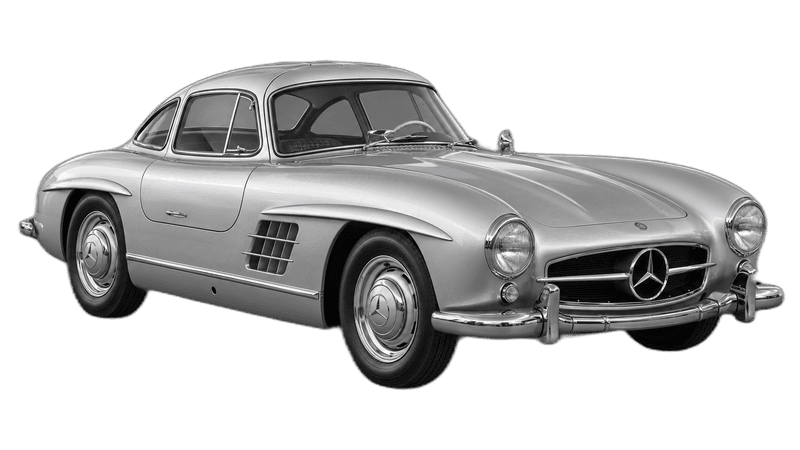
Mercedes-Benz 300 SL Gullwing
212bhp
Power
10s
0-100 km/h
260km/h
Top Speed
How hard it pulls.
Peak g-force the instant you bury the throttle, estimated from the car's 0–100 time and drivetrain.
Mercedes-Benz 300 SL GullwingEstimated peak launch g from the 0–100 time and drivetrain: an honest approximation, not a measured figure.
The Mercedes-Benz 300 SL Gullwing is a 2-door coupé by Mercedes-Benz, with 212 bhp, 275 Nm of torque, a 0-100 km/h time of 10 seconds and a top speed of 260 km/h.
Dream Car Garage Editorial · Last updated 28 October 2026
Overview
We have not driven this car. This review is based on published specifications and the sources listed below.
The W198 Gullwing
The Mercedes-Benz 300 SL Gullwing is the road-going version of the W198 model series, built from 1954 to 1957. It grew out of the 300 SL racing programme of 1952, which brought Mercedes success at Le Mans and the Carrera Panamericana. The road car was developed with encouragement from the American importer Max Hoffman, who saw a market for a fast, exotic Mercedes.
Mercedes built 1400 coupes. Of those, 1371 had steel bodywork and 29 were built with aluminium panels for competition-oriented customers. The engine is a 3.0-litre fuel-injected inline-six producing approximately 215 PS DIN, about 212 bhp. Period advertising often quotes a higher gross figure, so compare like with like. A four-speed manual gearbox drives the rear wheels, and the car is capable of around 155 to 161 mph depending on the axle ratio.
This is a desk-researched ownership guide. We have not driven this model for this article. The 300 SL is a historic car with a well-documented restoration culture, but individual examples vary enormously. The guide is a framework for inspection, not a substitute for a marque specialist.
Engine, injection and dry sump
The M198 inline-six is canted 50 degrees to lower the bonnet line. It uses a Bosch mechanical direct-injection system, which was advanced for a production car of the period. The engine also uses dry-sump lubrication, allowing it to sit low in the chassis.
A cold start is one of the most useful tests. Listen for uneven running, misfires and mechanical noise. The injection pump is a precision component, and wear or poor adjustment can cause rich running, hard starting and poor throttle response. Ask who last serviced the pump and whether it was rebuilt by a recognised specialist.
Check the oil pressure, the oil condition and the evidence of leaks. The dry-sump system has hoses, a tank and a pump that all need inspection. Oil consumption may be normal for the period, but excessive smoke or a rapid level drop is not. A compression test and a leak-down test are useful, along with a check for coolant contamination.
The four-speed gearbox should shift cleanly. Listen for bearing noise and check for oil leaks. The rear axle and swing-axle suspension are part of the car's character, but they also need inspection for wear, play and correct setup.
Tubular spaceframe and corrosion
The 300 SL's tubular spaceframe is central to its identity. It is also the most expensive part of the car to repair. The frame tubes run through the sills, the floor and the front and rear structures. Corrosion can start inside the tubes and may not be visible from the outside.
A proper inspection needs the car on a lift, with the wheels removed and the underbody cleaned. Look for bubbling paint, fresh underseal, irregular welds and patches. Tap the tubes where accessible and use a borescope if the specialist has one. Ask for photographs of the frame during any restoration.
Accident damage is another concern. The spaceframe is difficult to repair correctly, and a poor repair can affect the car's structure and value. Ask for the restoration invoices, the body shop's identity and the photographs of the work. A car with a known history and a documented repair is easier to assess than one with unexplained fresh paint.
The gullwing doors are a consequence of the high sill and the spaceframe. They are not a styling gimmick. Check the hinges, the latches and the roof alignment. The doors are heavy and can sag if the structure or hinges are worn.
Bodywork and trim
Steel-bodied cars are more common, but the 29 aluminium-bodied cars are particularly significant. Aluminium panels are hand-formed and can be difficult to repair. Check for ripples, incorrect panel gaps and paint cracking around the seams.
Inspect the front wings, the nose, the sills and the rear quarters for accident damage. Look at the shut lines and the fit of the bonnet and boot. A car that has been restored to a high standard should have consistent gaps and a clean finish, but originality matters as well.
The trim, glass, lights and chrome should be correct for the model year. The 300 SL has a distinctive interior with a large steering wheel, a dashboard with period instruments and a centre console. Check the seats, the carpets and the headlining. Replacement parts are available, but incorrect trim can reduce the car's appeal.
Documentation and provenance
The Datenkarte, or data card, is an important document. It records the original specification, including the colour, the interior and the options. Ask for a copy and compare it with the car. Matching numbers for the engine, gearbox and axle are valuable, but they are not the only measure of quality.
Ask for the ownership history, the restoration records and the invoices. A car with a continuous file is easier to assess than one with a gap. Mercedes-Benz Classic can provide documentation for some cars, and a recognised 300 SL specialist can verify the details.
Be cautious with cars that have been converted, modified or fitted with non-original parts. A change from the factory specification should be documented and reversible. A car that has been raced or rallied may have significant modifications and repairs.
Running and maintenance
The 300 SL is a 1950s car with a 1950s maintenance regime. It needs regular servicing, careful warm-up and attention to fluids. The injection system, the ignition and the cooling system should be set up by someone who understands the model.
The brakes, tyres and suspension should be inspected regularly. Modern tyres can improve grip, but the car's suspension and steering were designed for period rubber. A specialist can recommend a suitable tyre and setup without compromising the car's character.
Storage should be dry and well ventilated. A car that has been left standing may need a full recommissioning, including fuel-system work, brake repairs and new tyres. Ask when the car was last driven and what was done before it was stored.
Inspection and ownership planning
Use a recognised 300 SL specialist. The inspection should cover the spaceframe, the body, the engine, the injection system, the gearbox, the axle, the brakes, the suspension, the trim and the documentation. Ask for a cold start, a compression test and a written report.
The cost of restoring a 300 SL can be substantial, particularly if the spaceframe or the aluminium bodywork needs work. A project car should be priced with that in mind. This guide makes no claim about transaction prices, future values or universal reliability.
Sources and limitations
Mercedes-Benz's official model history supplies the production and technical context, while the Car Collector International buyer's guide provides the ownership and inspection topics. Mercedes-Benz Classic's SL pages provide additional background. The guide is a desk-researched framework, not a substitute for a specialist inspection.
Specifications
Engine
3.0 L naturally aspirated inline-six
Displacement
3.0L
Power
212 bhp
Torque
275 Nm
0-100 km/h
10s
Top Speed
260 km/h
Drivetrain
RWD
Country
Germany
Body Style
2-door coupé
Years
1954–1957
Production
1,400
Specifications are manufacturer-published figures.
More from Mercedes-Benz
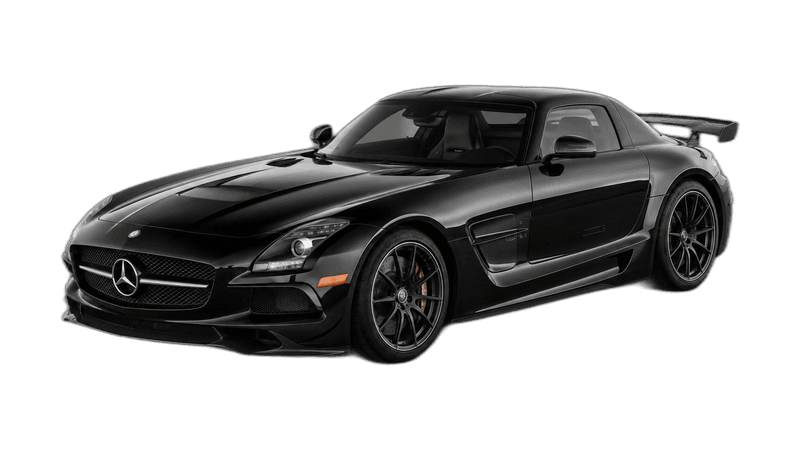 622 hp
Mercedes-Benz SLS AMG Black Series
£550,000
 250 hp
Mercedes-Benz 600 Grosser (W100)
£450,000
 232 hp
Mercedes-Benz 190E 2.5-16 Evo II
£350,000
 617 hp
Mercedes-Benz SLR McLaren
£350,000
 661 hp
Mercedes-Benz SL65 AMG Black Series
£350,000
 517 hp
Mercedes-Benz S600 Pullman (W221)
£250,000
Frequently Asked Questions
What are the specifications of the Mercedes-Benz 300 SL Gullwing?
The Mercedes-Benz 300 SL Gullwing is a 2-door coupé by Mercedes-Benz, with 212 bhp, 275 Nm of torque, a 0-100 km/h time of 10 seconds and a top speed of 260 km/h.
How many Mercedes-Benz 300 SL Gullwing were made?
Mercedes-Benz produced 1,400 units of the Mercedes-Benz 300 SL Gullwing.
What drivetrain does the Mercedes-Benz 300 SL Gullwing use?
The Mercedes-Benz 300 SL Gullwing is configured with rear-wheel drive.
What type of car is the Mercedes-Benz 300 SL Gullwing?
The Mercedes-Benz 300 SL Gullwing is a sports cars manufactured by Mercedes-Benz in Germany. Production ran from 1954 to 1957.