
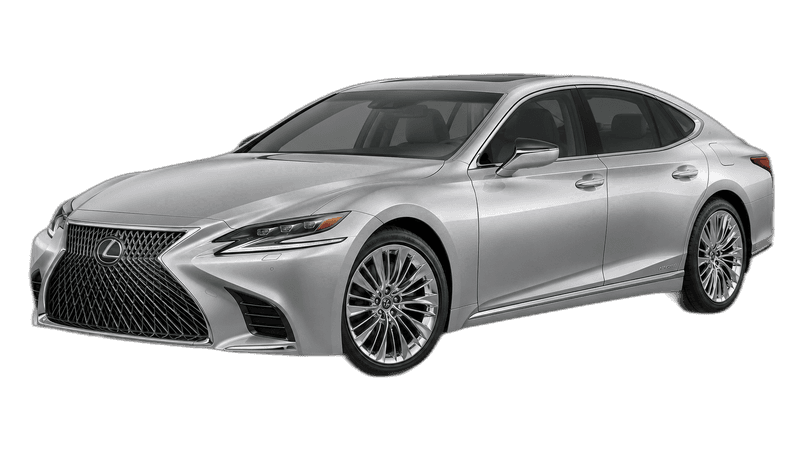
Lexus LS 500h
£55,000
usedIndicative market price, updated periodically.
354bhp
Power
5.4s
0-100 km/h
250km/h
Top Speed
£55,000
Price Used
How hard it pulls.
Peak g-force the instant you bury the throttle, estimated from the car's 0–100 time and drivetrain.
Lexus LS 500hEstimated peak launch g from the 0–100 time and drivetrain: an honest approximation, not a measured figure.
The Lexus LS 500h is a 4/5 seater sedan/saloon by Lexus, with 354 bhp, 350 Nm of torque, a 0-100 km/h time of 5.4 seconds and a top speed of 250 km/h. Indicative used value: approximately £55,000. Actual values vary with specification, condition and history.
Dream Car Garage Editorial · Edited by José Teo Lorente Vallecillos · Last updated 2 November 2026
Overview
We have not driven this car. This review is based on published specifications and the sources listed below.
Scope of this guide
This guide is scoped to the rear-wheel drive Lexus LS 500h saloon with the 3.5L V6 naturally aspirated hybrid petrol powertrain, which Lexus calls the Multi Stage Hybrid System, sold from 2018 and updated in 2020. It is not a guide to the all-wheel drive LS 500h, which Lexus offered on some grades with a slightly slower 0-62 mph time and a heavier body, nor to the twin-turbo petrol LS 500, which is a different engine and a different car. Where the all-wheel drive car differs we say so below, because an advert that says only "LS 500h" can describe either.
We have not driven this model for this article. The three cited sources are the official Lexus UK technical specification sheet for the LS 500h, a PistonHeads forum thread from 2017 that discusses the launch specification, and the government recall checker. We also read Lexus UK press releases of 21 February 2017, 8 December 2017 and 18 September 2020, the Lexus Europe newsroom release of 22 February 2017, the Toyota global newsroom release of 7 March 2017 and Lexus Canada's recall notice of 27 February 2019, and we flag every point that rests on them. Where sources disagree we say so rather than choose quietly. We give no prices, because used values move too quickly for a guide like this.
The figures at a glance
- Engine: 3.5L V6 naturally aspirated hybrid petrol, coded 8GR-FXS on the Lexus sheet, with a displacement of 3,456 cc, a 94.0 x 83.0 mm bore and stroke and a 13.0:1 compression ratio. The car has no turbocharger, which separates it from the LS 500. Our label "naturally aspirated" is our reading of the sheet, which lists no forced induction.
- Power: 354 bhp, which Lexus prints on its UK sheet as 354 bhp, 359 DIN hp (the metric horsepower, PS) and 264 kW for the total system output. That is one figure in three units, and our check agrees: 264 kW is about 354 bhp, and 354 bhp is about 359 PS. The Toyota global newsroom prints 354 hp and 264 kW. The V6 alone is 295 bhp (299 PS, 220 kW) at 6,600 rpm.
- Torque: 350 Nm, which is the engine-only figure at 5,100 rpm on the Lexus UK sheet. The electric motor adds 300 Nm and 177 bhp (132 kW). We found no combined system torque published by Lexus, so our catalogue shows the engine figure and you should not read it as a peak at the wheels.
- 0-100 km/h: 5.4 seconds. Toyota's global newsroom release of 7 March 2017 says 0-100 km/h in 5.4 seconds, and the Lexus UK sheet prints 0-62 mph in 5.4 seconds for the rear-wheel drive car (and 5.5 for all-wheel drive). 62 mph is 99.8 km/h, so the two figures are the same test to within a rounding error.
- Top speed: 250 km/h. The Lexus UK sheet prints a maximum speed of 155 mph and gives no km/h figure; 155 mph is 249.4 km/h by our conversion, so 250 km/h is a rounded conversion. None of the pages we read says whether the car is electronically limited.
- Drive: rear-wheel drive through a Multi Stage Hybrid transmission that Lexus says simulates ten speeds. Lexus lists four fixed gear ratios on the sheet (3.538, 1.888, 1.000 and 0.650) and marks fifth to tenth as variable.
- Battery: lithium-ion, 84 cells, 310.8 V nominal, on a 650 V system.
- Weight: 2,175 to 2,215 kg with coil springs, 2,265 to 2,320 kg with air suspension and 2,270 to 2,290 kg for the F Sport, all rear-wheel drive. The all-wheel drive car is 2,340 to 2,425 kg.
Why 359 and 354 both appear
Two numbers circulate for the same car, and they are not a conflict. The stored catalogue figure of 354 bhp is the mechanical horsepower rating, and 359 is the same power in metric horsepower, which Lexus labels DIN hp. The PistonHeads thread we cite has a poster writing "359 bhp combined", which mislabels the unit: on Lexus's own sheet the bhp figure is 354. The V6 alone is 299 PS, so an advert quoting that figure is describing the engine, not the car. If an advert gives a different number, ask which of the three it is: system, engine or motor.
What the 500 Nm figure was
Our previous catalogue row showed 500 Nm. We could not find that number on any Lexus page we read, and it does not match the 350 Nm engine torque or the 300 Nm motor torque on the sheet. We have replaced it with the 350 Nm engine figure and flagged the gap: a hybrid system does not simply add engine and motor torque, because they peak at different speeds, and Lexus does not publish a combined figure that we could find.
How the Multi Stage Hybrid works
The system pairs the 3.5 litre V6 with two electric motors and puts a four-stage shifting device in the drivetrain, which Lexus says reproduces the feel of a ten-speed transmission. Lexus also says the car can cruise at up to 140 km/h with the petrol engine switched off, which is a statement about electric-only cruising and not a top speed. The sheet describes the hybrid battery as lithium-ion, and Toyota's global release says it is 20 per cent smaller than the nickel-metal hydride battery in the earlier LS 600h.
When it was sold and what changed in 2020
Lexus revealed the LS 500h at the Geneva Motor Show on 7 March 2017. The UK press release of 8 December 2017 opened orders and promised first deliveries early in the new year, which is why our catalogue starts the car in 2018. The UK range then included LS 500h, Luxury, F Sport and Premier grades, with all-wheel drive on the Luxury and Premier.
Lexus gave the LS a European premiere update on 18 September 2020, ahead of sales in the UK and Europe in late 2020. The release describes enhanced hybrid battery control, reduced run-flat tyre sidewall stiffness, a new damper solenoid for the adaptive suspension, anti-roll bar changes, softer seats, a 12.3 inch touchscreen with Apple CarPlay and Android Auto, an advanced parking system and a digital rear-view mirror. The release gives no power or performance figures. The technical sheet we cite lists Premium Pack, F Sport and Takumi grades and the same 354 bhp, so we read it as describing the updated car, although the sheet itself prints no date. We did not confirm whether the car is still on sale as a new car, so our catalogue leaves the end year empty.
Size, running costs and warranty on the sheet
The car is 5,235 mm long, 1,900 mm wide and between 1,450 and 1,470 mm high depending on suspension and drive, with a 3,125 mm wheelbase, a drag coefficient of 0.26 and a 430 litre boot. The fuel tank holds 82 litres. Lexus quotes combined WLTP economy of 35.7 to 36.6 mpg for the rear-wheel drive car and 30.7 mpg for all-wheel drive, with CO2 of 182 g/km for the base LS, 184 g/km for the rear-wheel drive Premium Pack and the F Sport, 214 g/km for the all-wheel drive Premium Pack and 215 g/km for the Takumi. Those are laboratory figures from the manufacturer, and we have no real-world economy data. The service interval is 10,000 miles or annually, the new-vehicle warranty is three years and 60,000 miles, and the hybrid warranty is five years and 60,000 miles, whichever comes first. The sheet lists insurance group 50E. These are new-car terms, so ask a used seller what remains and whether it transfers.
What to check before buying
- Confirm the drive layout in the paperwork and on the car. All-wheel drive cars are heavier and slightly slower, so a seller quoting 5.4 seconds for one is quoting the wrong figure.
- Confirm coil or air suspension. The Lexus sheet lists both, with different weights and ride heights, and the two will cost different amounts to repair.
- Check the tyres. The car runs 245/45 RF20 run-flat tyres, with wider rears on the F Sport, and run-flat tyres are expensive to replace. Lexus Canada recalled about 298 Canadian 2018 LS 500 and LS 500h cars on 27 February 2019 because run-flat tyres had been assembled to the wheels improperly. We read that notice, but it is a Canadian campaign and we have not established that any UK car was affected.
- Ask for the full service record against the 10,000 mile or annual interval, and whether it was serviced by a Lexus dealer.
- Ask for evidence that the hybrid warranty is still valid or transferable, and have the hybrid system and battery health checked by a Lexus dealer or a specialist who knows the car.
- Work through the electronics and driver aids on a test drive, especially on a pre-2020 car, since the 2020 update changed the screen, the parking system and some safety equipment.
- Check the number of owners and whether the car was a chauffeur or company vehicle, which our sources do not cover.
Recalls and the DVSA check
We did not run the government checker, because it needs a registration number and we are not looking at a specific car. The page says the MOT checking service shows outstanding safety recalls for a car with a registration number, and that the manufacturer, model and year are the inputs for vehicles without one. It also says non-safety recalls come from the manufacturer directly. We found no UK recall notice for the LS 500h in our sources. Listing sites seen only as search snippets report campaigns on North American cars, including fuel pump, airbag occupant-classification and stability control software items, which we did not verify and which may not apply to UK cars. Absence from our sources is not a clean bill of health: run the registration through the checker and ask a Lexus dealer to check for open campaigns.
About the photograph
The picture at the top of this page is a Wikimedia Commons image by Benespit, described there as a Lexus LS 500h (GVF50) photographed on 21 March 2023. It shows an updated-style car in grey. We have not verified its market or whether it is rear-wheel drive or all-wheel drive, and the number plate on the original is already blanked out. We cropped and resized the photograph and use it only to show the shape of the car.
Verdict
The LS 500h in this guide is a 354 bhp (359 PS) hybrid saloon with a 3.5L V6 naturally aspirated hybrid petrol powertrain, a quoted 5.4 seconds to 100 km/h and a 250 km/h maximum speed, sent to the rear wheels. It is a big, heavy saloon, and the figures say little about how it feels, which we cannot judge. If you are shopping for one, confirm which drive layout, suspension and grade it is, insist on the service history and the hybrid warranty position, and treat the torque and top speed figures as the manufacturer's data with the caveats above. We have not driven it, so use the sources and a proper inspection to decide.
Specifications
Engine
3.5L V6 naturally aspirated hybrid petrol
Displacement
3.5L
Power
354 bhp
Torque
350 Nm
0-100 km/h
5.4s
Top Speed
250 km/h
Drivetrain
RWD
Country
Japan
Body Style
4/5 seater sedan/saloon
Years
2018–present
Price Used
£55,000
Specifications are manufacturer-published figures.
More from Lexus
Frequently Asked Questions
What are the specifications of the Lexus LS 500h?
The Lexus LS 500h is a 4/5 seater sedan/saloon by Lexus, with 354 bhp, 350 Nm of torque, a 0-100 km/h time of 5.4 seconds and a top speed of 250 km/h. Indicative used value: approximately £55,000. Actual values vary with specification, condition and history.
How much does a Lexus LS 500h cost?
Indicative used value: approximately £55,000. Actual values vary with specification, condition and history.
What drivetrain does the Lexus LS 500h use?
The Lexus LS 500h is configured with rear-wheel drive.
What type of car is the Lexus LS 500h?
The Lexus LS 500h is a luxury manufactured by Lexus in Japan. Production started in 2018.