
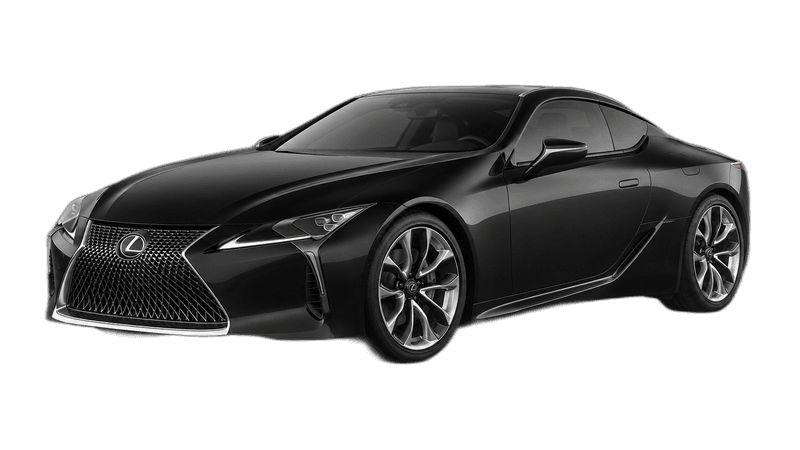
Lexus LC 500
£62,000
usedIndicative market price, updated periodically.
457bhp
Power
4.7s
0-100 km/h
270km/h
Top Speed
£62,000
Price Used
How hard it pulls.
Peak g-force the instant you bury the throttle, estimated from the car's 0–100 time and drivetrain.
Lexus LC 500Estimated peak launch g from the 0–100 time and drivetrain: an honest approximation, not a measured figure.
The Lexus LC 500 is a 2+2 seater fixed-head coupé by Lexus, with 457 bhp, 530 Nm of torque, a 0-100 km/h time of 4.7 seconds and a top speed of 270 km/h. Indicative used value: approximately £62,000. Actual values vary with specification, condition and history.
Dream Car Garage Editorial · Edited by José Teo Lorente Vallecillos · Last updated 2 November 2026
Overview
We have not driven this car. This review is based on published specifications and the sources listed below.
A naturally aspirated V8 coupé from Lexus
The Lexus LC 500 covered here is the rear-wheel drive 2+2 coupé with a naturally aspirated 5.0-litre V8 and a 10-speed automatic gearbox. Lexus unveiled it at the Detroit motor show on 11 January 2016 and described it as a luxury 2+2 coupé, the first Lexus on its new rear-wheel-drive GA-L platform. Our catalogue lists a 5.0L naturally aspirated V8 petrol engine producing 457 bhp and 530 Nm, with 0 to 100 km/h in 4.7 seconds and a 270 km/h top speed. Those are the figures on the Lexus UK sheet, and the 4.7 seconds is Lexus's 0 to 62 mph time, which we use as the closest published match to 0 to 100 km/h. We have not driven this model for this article. This is a desk-researched ownership guide built from the Lexus UK technical specification sheet for the coupé (reference 210201M, February 2021), the PistonHeads review of the updated car dated 8 October 2021 and the government recall check. We also read Lexus's January 2016 debut release and its US launch release of March 2017 for the early cars, and name them where we use them.
This guide is scoped to the Lexus LC 500 coupé with the 5.0-litre V8. It leaves out the LC 500h hybrid and the LC 500 Convertible, which have their own figures, described below. The PistonHeads piece is a road test of the 2021 car, not a used buying guide, so it tells us how the car drives and what changed, not how it ages. None of our sources lists a mechanical fault, and we have not invented one: where they are silent, we say so and turn the gap into a question for the seller.
Checking the figures
Several sets of numbers circulate for this car, so work out which one an advert is quoting. We use the Lexus UK sheet of February 2021, which prints 457 bhp, 464 DIN hp and 341 kW at 7,100 rpm, with 530 Nm at 4,800 rpm. PistonHeads prints 464 hp for the 2021 car, which matches the DIN figure, but pairs it with 398 lb ft, an older US torque figure, while Lexus UK says 530 Nm, so those two PistonHeads numbers do not come from one rating. Lexus's US launch release of 17 March 2017 gives a higher 471 hp at 7,100 rpm and 398 lb-ft of torque from 4,800 to 5,600 rpm, and 398 lb-ft converts to about 540 Nm. That is why some adverts and older listings say 471 hp and 540 Nm. The debut release of 2016 gave a preliminary 467 bhp and 527 Nm, which it labelled a target. We found no Lexus document that explains why the ratings differ, so treat any reason, such as the rating method or the market, as our guess. Whatever the advert says, confirm the figure in the car's own paperwork.
The 0 to 100 km/h figure needs more care. The 4.7 seconds in this guide is the 0 to 62 mph time that both the Lexus UK sheet and PistonHeads print, not a measured 0 to 100 km/h time. Because 62 mph is about 100 km/h, it is the closest published match. Lexus's US release and its 2016 debut release both say less than 4.5 seconds to 60 mph, a claim and a target, so an advert quoting 4.4 or 4.5 seconds is repeating that claim, and we could not trace a 4.4 seconds figure to any manufacturer document. The top speed is well supported: Lexus UK and PistonHeads both print 168 mph, which is 270 km/h. Weight is 1,930 to 1,965 kg on the Lexus UK sheet and in PistonHeads, which also calls it a 2,000 kg car in the text, so allow for the options on the car in front of you.
Early cars and the 2021 update
PistonHeads describes the 2021 car as an update of the original, and lists what changed: new forged suspension components said to save 10 kg, redone dampers, bump stops, springs and anti-roll bars, extra bracing to stiffen the steering, software changes to the steering, revisions to the 10-speed gearbox and new brake pads. It says the V8 is unchanged, and that most changes are largely unseen. Its verdict is that the ride is clearly improved, comfier and smoother and less brittle than the original, with a better balance between ride and handling.
That makes the car's age a real buying question. Lexus's US release is dated March 2017 and covers the 2018 model year, so our catalogue start year of 2017 rests on that release. We did not find a UK first-sale date in our sources, and we did not find an end date, so we have left the end year open. Check the first registration, and ask the seller whether the car is from before or after the 2021 changes, because the ride, steering and gearbox you are reading about in a recent review may not match an earlier car.
Do not mix this car up with its relatives. The Lexus UK sheet lists the LC 500h as a hybrid with a 3.5-litre V6, 354 bhp of system output, 0 to 62 mph in 5.0 seconds and 155 mph. It lists the LC 500 Convertible with the same V8 rating of 457 bhp and 530 Nm, but 0 to 62 mph in 5.0 seconds, a kerb weight of 2,035 to 2,055 kg and 149 litres of luggage space against 197 litres in the coupé. Figures quoted in an advert that match those are not this car.
Engine and gearbox
Lexus describes the V8 as a 4,969 cc, 32-valve, double overhead camshaft engine with a bore of 94 mm, a stroke of 89.5 mm and a compression ratio of 12.3:1. The US release says it is based on the engine in the GS F and RC F, has a 7,300 rpm redline, uses direct injection plus port injectors and switches to the Atkinson cycle at cruising speeds. PistonHeads calls it ferociously sharp and endlessly eager, with a snort and a snarl at high revs, though it argues the weight holds it back.
The gearbox is a direct-shift 10-speed automatic with magnesium paddles, which Lexus called the first 10-speed automatic in a luxury car. PistonHeads says the revised version is smoother and seamless in gentle driving, but a little short of perfect under sudden acceleration, lacking the decisiveness of a dual-clutch on downshifts, and that manual control is a tad cumbersome. Drive cold and warm and use the paddles. Lexus says the drive mode select changes powertrain response and exhaust sound, and that the sportiest setting opens the active exhaust baffles under acceleration, so check that the exhaust sounds right and the mode changes work.
The Lexus UK sheet gives a service interval of 10,000 miles or annually, so ask for invoices that show each service was done on time. It also gives a comprehensive new-car warranty of 3 years or 60,000 miles in the UK, a surface rust and paintwork warranty of 3 years and a corrosion and perforation warranty of 12 years with unlimited mileage. A car that is more than three years old is likely to be out of the main warranty, so ask what dealer history and cover remain. PistonHeads quotes 24.3 mpg and 262 g/km on the WLTP test, and the UK sheet gives an 82-litre fuel tank, so in our opinion you should expect a thirsty car. We have left out insurance and service prices as they date quickly.
Chassis, brakes and wheels
Lexus says the GA-L platform gave the stiffest unibody it had built. The US release lists a double ball joint front suspension with all but one control arm in forged aluminium, and the UK sheet gives multilink suspension at both ends. Steering is electric, with a ratio of 13.0:1 and 2.6 turns lock to lock. Lexus Dynamic Handling, which combines the electric steering with variable gear ratio steering and active rear steering, was listed as an option in the US release, so do not assume a car has it. PistonHeads says the car still lacks the steely body control to match something like a BMW M850i, even in Sport and Sport+ modes.
The Lexus UK sheet lists ventilated discs all round, 337.8 mm by 36 mm at the front with six-piston calipers and 308.2 mm by 30 mm at the rear with four-piston calipers. Wheels are 20-inch cast alloys with 245/45RF20 front and 275/40RF20 rear tyres, or 21-inch forged alloys with 245/40RF21 front and 275/35RF21 rear tyres. The RF in each size means run-flat tyres, and Lexus's 2016 release says that means no spare is carried. The US launch release named Michelin Pilot Super Sport and Bridgestone Potenza S001 run-flats as the original fitments. Check the make, age and wear of all four tyres, whether the pairs match, and the condition of every wheel for kerb damage. Ask what the car does after a puncture and whether the previous owner kept any inflation or repair kit. The sheet lists the brakes but gives no wear data, so inspect the disc surfaces and ask when the pads were last changed.
Body, interior and electronics
Lexus says the bonnet, front wings and door skins are aluminium, the inner door panels and boot floor use carbon-fibre reinforced plastic, the rear wings are steel and the structure uses a lot of high-strength steel. The aluminium and steel meet at the front suspension towers with self-piercing rivets, and a carbon roof was optional over a standard glass one. An active rear spoiler deploys automatically above 50 mph. Our own inference is that a mixed-material body deserves extra scrutiny after an accident, so look for evidence of any bodywork and paint repair, and check that the spoiler moves.
The Lexus UK sheet gives a length of 4,770 mm, a width of 1,920 mm without mirrors and 2,168 mm with them, and a height of 1,345 mm, so measure your garage. It lists 197 litres of luggage space. Lexus described four seats, and PistonHeads says there is not quite as much room as might be expected, so sit in the back before you assume it will carry adults. Lexus's launch release describes a low seating position, a digital instrument display with a moving ring taken from the LFA, and optional sports seats with larger bolsters. PistonHeads says the interior quality is excellent, with every element feeling like it will last a century, and a satisfying weight to the controls. Test every seat adjustment and switch for wear.
PistonHeads calls the infotainment maddening and the weakest part of the car, and it describes no change to it in the 2021 update. Lexus's US release lists a Remote Touch Interface touchpad, a standard 12-speaker Pioneer audio system and an optional Mark Levinson system, so equipment varies by market and by car. Spend time with the screen, the touchpad, the audio and the driver assistance functions, such as the radar cruise control and lane departure alert that Lexus listed in its US release, rather than trusting an equipment list.
Recalls and history
None of our sources supplies a recall list for the LC 500. Enter the registration in the DVSA recall service and ask the seller for dealer paperwork showing that any open work was completed. Ask for a full service history to the 10,000-mile or annual interval, any accident repair record, and a list of what has been changed. The UK sheet gives insurance groups of 48E and 49E, but groups are revised, so get a quote on the actual car.
Buying decision
PistonHeads concludes that the LC 500 is more recommendable than ever, with a few of the rougher edges smoothed off, and that it is not comprehensively talented compared with some rivals but has an idiosyncratic charm. It singles out existing owners and anyone who last considered the car in 2017 as the people to try the update. Our advice follows from that: decide whether you want the ride and steering changes of the 2021 car, and drive an earlier example on the same road if you are tempted by a cheaper one. Prefer a car with a documented service history, tyres that match and are in date, undamaged wheels, a smooth gearbox, a spoiler and exhaust that work, an infotainment screen you can live with and every recall closed. Compare current adverts for prices, and check the paperwork on any that quote 471 hp or a time below 4.5 seconds, because those are the US launch claims.
Specifications
Engine
5.0L naturally aspirated V8 petrol
Displacement
5.0L
Power
457 bhp
Torque
530 Nm
0-100 km/h
4.7s
Top Speed
270 km/h
Drivetrain
RWD
Country
Japan
Body Style
2+2 seater fixed-head coupé
Years
2017–present
Price Used
£62,000
Specifications are manufacturer-published figures.
More from Lexus
Frequently Asked Questions
What are the specifications of the Lexus LC 500?
The Lexus LC 500 is a 2+2 seater fixed-head coupé by Lexus, with 457 bhp, 530 Nm of torque, a 0-100 km/h time of 4.7 seconds and a top speed of 270 km/h. Indicative used value: approximately £62,000. Actual values vary with specification, condition and history.
How much does a Lexus LC 500 cost?
Indicative used value: approximately £62,000. Actual values vary with specification, condition and history.
What drivetrain does the Lexus LC 500 use?
The Lexus LC 500 is configured with rear-wheel drive.
What type of car is the Lexus LC 500?
The Lexus LC 500 is a hyper gts manufactured by Lexus in Japan. Production started in 2017.