
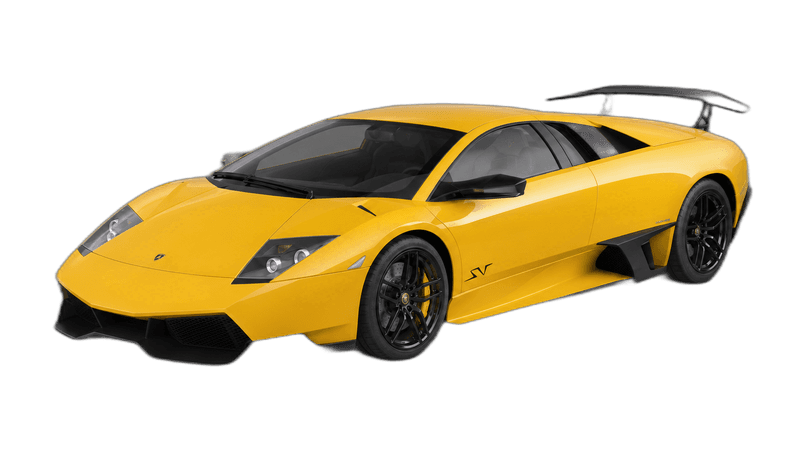
Lamborghini Murcielago LP670-4 SV
£550,000
usedIndicative market price, updated periodically.
661bhp
Power
3.3s
0-100 km/h
337km/h
Top Speed
£550,000
Price Used
How hard it pulls.
Peak g-force the instant you bury the throttle, estimated from the car's 0–100 time and drivetrain.
Lamborghini Murcielago LP670-4 SVEstimated peak launch g from the 0–100 time and drivetrain: an honest approximation, not a measured figure.
The Lamborghini Murcielago LP670-4 SV is a 2-door coupe by Lamborghini, with 661 bhp, 660 Nm of torque, a 0-100 km/h time of 3.3 seconds and a top speed of 337 km/h. Indicative used value: approximately £550,000. Actual values vary with specification, condition and history.
Dream Car Garage Editorial · Edited by José Teo Lorente Vallecillos · Last updated 29 October 2026
Overview
We have not driven this car. This review is based on published specifications and the sources listed below.
The Murcielago at its most extreme
The LP670-4 SuperVeloce was the send-off for the Murcielago line, built for two years from 2009 with the brief of being the fastest, lightest and most focused version of the car. The 6.5-litre V12 was tuned to 661 bhp with 660 Nm, good for a catalogue 3.3 seconds to 100 km/h and 337 km/h, and the diet was extensive: carbon fibre across the body and interior, a lighter exhaust and a stripped cabin brought roughly one hundred kilograms off the LP640 coupe. All-wheel drive was retained, which distinguishes the SV from purist rear-drive specials, and most cars left Sant'Agata with the E-gear transmission.
We have not driven this model for this article. This desk-researched ownership guide relies on Lamborghini's official Murcielago history page, the PistonHeads Lamborghini Murcielago used buying guide and the DVSA vehicle recall service. The PistonHeads guide covers the wider Murcielago range including the SV rather than the SV alone, so its observations are inspection prompts for the individual example, not predictions that every SV will behave the same way.
What the SV changes
Over the LP640, the SV gains power, loses weight and sharpens everything: stiffer suspension settings, a more aggressive aerodynamic package with its prominent rear wing, and optionally the lighter wheel and brake package. Independent testing at the time recorded 3.2 seconds to 62 mph and a 212 mph maximum, and the wider consensus was that this was the best-handling Murcielago of all, the version in which the heavy, wide flagship finally came together. Production was deliberately limited, commonly quoted around three hundred and fifty cars, while this catalogue records 186 examples. Either figure places the SV firmly in collector territory. That scarcity changes the buying calculus from a used-car inspection towards a provenance exercise: the car's history, originality and documentation carry as much weight as its mechanical condition.
The send-off context
The SV also carries historical weight as the last naturally aspirated V12 Lamborghini flagship before the hybrid era arrived with the Revuelto, and the end of the Murcielago line itself. It was not replaced like-for-like; the Aventador that followed was a different car on a different platform. For collectors who value the last-of-line position, the SV's combination of scarcity, carbon construction and the final evolution of the long-serving V12 gives it a standing the LP640 cannot match. That standing also means most surviving cars are well documented, and the few that are not deserve proportionate scepticism.
Mechanical health
Mechanically the SV shares the LP640's fundamentals, which is good news. The V12 is strong and the all-wheel-drive system robust. The same watch points apply with greater financial consequence: the E-gear's clutch and hydraulic pump, the throttle-body calibration that governs idle quality, and oil consumption that is normal within reason. Because SVs are often kept as collector pieces with low mileage, the specific risks are storage-related: flat-spotted tyres, seized brake pistons from disuse, perished seals and batteries that have spent years on trickle chargers. A car that has been driven regularly and serviced on schedule is usually a safer buy than a museum piece, and a pre-purchase inspection by a Murcielago specialist remains the minimum diligence at this price level.
Carbon, cosmetics and originality
The SV's value lives in its carbon, and carbon that has been repaired, repainted or replaced needs paperwork. Check panel gaps, weave consistency and the documented history of any accident repair. The interior is intentionally sparse; non-standard additions are worth questioning on a car whose appeal is factory purity. The wing is a defining feature, and cars without it are materially different propositions. Interior trim on these cars is thin by design, and upholstery that has been over-restored can say as much about a car's past as an accident file, so originality in the cabin is worth verifying with the same care as the carbon outside. A documented original interior also protects the next owner when the time comes to sell, because collectors of this generation increasingly treat untouched cabins as strongly as untouched paint. The same logic applies to the service file: continuity matters more than cosmetic completeness, and a gap of a year or two is a question worth asking.
Buying and values
Values for the SV have run well above LP640 money and are supported by scarcity rather than speculation alone, though no trajectory is guaranteed and the model trades at the top of the Murcielago market. The buying discipline combines the LP640's mechanical checklist with collector-grade documentation: matching numbers, a continuous service file, evidence of the correct limited-production specification and ideally single or few ownership. Specialist inspection is not optional at this level, and nor is patience: the right car, with the right history, rewards both the driving and the keeping. The SV also asks its buyer to resist the temptation of the cheapest available example, because at this level the difference between a good car and a compromised one is measured in six figures and in how the car makes its next owner feel on the first cold start.
We have not driven this model for this article. No present valuation, investment assurance or universal failure rate is offered. The LP670-4 SV's value as an ownership proposition is that it is the definitive analogue Murcielago: the lightest, fastest and rarest of the line, with the scissor-door theatre intact. Buy on provenance and mechanical candour, and it rewards both driving and holding.
Specifications
Engine
6.5L (6496 cc) naturally aspirated V12 petrol
Displacement
6.5L
Power
661 bhp
Torque
660 Nm
0-100 km/h
3.3s
Top Speed
337 km/h
Drivetrain
AWD
Country
Italy
Body Style
2-door coupe
Years
2009–2010
Production
186
Price Used
£550,000
Specifications are manufacturer-published figures.
More from Lamborghini
Featured in Carpedia
Best Investment Cars to Buy in 2026
Eight cars whose combination of rarity, historical significance, and cultural resonance positions them as strong appreciation candidates in 2026 and beyond.
The 10 Greatest V12 Engines Ever Made
A celebration of the twelve-cylinder engine, the most intoxicating configuration ever devised, and the ten units that defined it.
Frequently Asked Questions
What are the specifications of the Lamborghini Murcielago LP670-4 SV?
The Lamborghini Murcielago LP670-4 SV is a 2-door coupe by Lamborghini, with 661 bhp, 660 Nm of torque, a 0-100 km/h time of 3.3 seconds and a top speed of 337 km/h. Indicative used value: approximately £550,000. Actual values vary with specification, condition and history.
How much does a Lamborghini Murcielago LP670-4 SV cost?
Indicative used value: approximately £550,000. Actual values vary with specification, condition and history.
How many Lamborghini Murcielago LP670-4 SV were made?
Lamborghini produced 186 units of the Lamborghini Murcielago LP670-4 SV.
What drivetrain does the Lamborghini Murcielago LP670-4 SV use?
The Lamborghini Murcielago LP670-4 SV is configured with all-wheel drive.
What type of car is the Lamborghini Murcielago LP670-4 SV?
The Lamborghini Murcielago LP670-4 SV is a supercars manufactured by Lamborghini in Italy. Production ran from 2009 to 2010.