
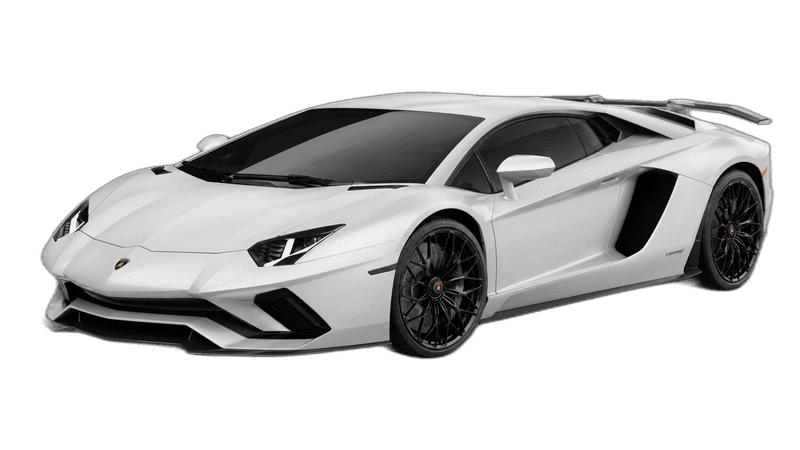
Lamborghini Aventador S
£340,000
usedIndicative market price, updated periodically.
730bhp
Power
2.9s
0-100 km/h
350km/h
Top Speed
£340,000
Price Used
How hard it pulls.
Peak g-force the instant you bury the throttle, estimated from the car's 0–100 time and drivetrain.
Lamborghini Aventador SEstimated peak launch g from the 0–100 time and drivetrain: an honest approximation, not a measured figure.
The Lamborghini Aventador S is a 2-door coupe by Lamborghini, with 730 bhp, 690 Nm of torque, a 0-100 km/h time of 2.9 seconds and a top speed of 350 km/h. Indicative used value: approximately £340,000. Actual values vary with specification, condition and history.
Dream Car Garage Editorial · Edited by José Teo Lorente Vallecillos · Last updated 27 October 2026
Overview
We have not driven this car. This review is based on published specifications and the sources listed below.
What the S changes
The Aventador S is not merely an original LP700-4 with a different badge. Its 6,498 cc naturally aspirated V12 produces 740 PS, approximately 730 bhp, and 690 Nm. Lamborghini quotes 2.9 seconds to 100 km/h and a 350 km/h maximum speed. The coupe combines all-wheel drive with four-wheel steering, revised chassis management and the seven-speed ISR automated manual.
We have not driven this model for this article. This desk-researched guide separates factory descriptions of the S from early Aventador ownership reports. The S was announced at the end of 2016 for the following model period; registration dates should be checked against the build record. No body-specific global production total is assigned here, and the 770 PS SVJ figure does not belong to this car.
Four-wheel steering needs its own assessment
Lamborghini introduced rear-wheel steering to the Aventador range with the S. The factory describes a combination of front dynamic steering and electromechanical rear actuators. That changes the scope of a purchase inspection: it should include both steering systems and their diagnostic status, rather than concentrating only on the engine.
Ask a specialist to check alignment, tyre wear, steering warnings and the condition of relevant joints and mounting points. A road evaluation should establish consistent operation at appropriate speeds without trying to explore the car's limits. If geometry or steering parts have been changed, the invoices should explain the reason and subsequent setup.
The S also integrates its controls through Lamborghini Dinamica Veicolo Attiva, with an Ego mode allowing choices within the chassis and powertrain settings. Demonstrate the available settings and investigate a warning rather than treating it as a harmless consequence of complexity. The presence of a selectable mode is not proof that every associated component is functioning.
ISR behaviour and V12 maintenance
ISR uses a single clutch and automated shift actuation. It should not be described as a dual-clutch gearbox, nor should the buyer expect identical low-speed behaviour. Arrange a cold and warm assessment by a technician familiar with this transmission, and ask what diagnostic evidence supports the clutch and gearbox condition.
The PistonHeads guide concentrates on earlier LP700-4 cars, including their software revisions and individual transmission faults. Those reports are useful historical context but do not establish an S-specific failure rate. Investigate the actual S in front of you: warnings, uncertain selection, leaks or an unexplained repair history need a diagnosis, not a borrowed explanation from an earlier car.
Review oil and fluid servicing, engine warnings and any non-standard exhaust or software. An aftermarket part should have an identifiable supplier and installer. A seller should be able to explain what was changed and whether original parts remain available. The service file matters more than a claim that the engine is fundamentally strong.
Structure, dampers and braking evidence
The carbon-monocoque platform makes underside and repair inspection important. Have the specialist assess the passenger cell, aluminium subframes, suspension mountings and visible body repairs. If structural history is uncertain, obtain the appropriate further examination rather than assuming a polished panel settles the question.
Carbon-ceramic brakes require documented condition. PistonHeads discusses weighing discs as part of assessment; the result should be interpreted by a competent technician. Do not assign an assumed disc lifespan or accept appearance alone. Pads, fluid, hoses and the parking brake should be included.
Inspect dampers, suspension hardware and tyres together. Confirm the specified wheel and tyre sizes, compare tread wear across the axle and ask for geometry evidence if the wear is uneven. Test front lift where fitted and inspect the splitter and undertrays for contact. A lifter reduces some clearance difficulties but does not prove that the nose has never touched the road.
Specification and cabin usability
Assess entry through the scissor doors, the seating position and visibility before deciding that a particular seat specification is suitable. A more supportive seat is not automatically the most usable choice for every driver. Confirm adjustment, air conditioning, screens, windows and any fitted camera or parking equipment.
Match the paint, trim, carbon components and Ad Personam choices to the build record. A later cosmetic addition should be described separately from a factory option. Check for wear where the driver crosses the sill and around seat bolsters; this helps explain use but is not a substitute for the odometer and service record.
Storage history should include battery maintenance and any recommissioning work. Ask whether warnings appeared after inactivity and what diagnosis followed. A fresh battery may be appropriate maintenance, but it should not be used to close an unresolved electrical question without checking the wider system.
VIN checks and a realistic ownership file
Use Lamborghini's recall page and a dealer to establish campaigns applicable to the individual VIN. An internet account of a similar car does not establish that this chassis is affected, while an absence of symptoms does not establish that a required recall can be ignored. Keep completion evidence with the service file.
Before purchase, obtain a written inspection and itemised quotations for any outstanding work. Separate scheduled servicing, measured wear and cosmetic preferences. Ask the inspector to list areas that were not accessible and systems that were not demonstrated. That gives the buyer a practical first-year plan without inventing tariffs or promising that a low-mileage car needs nothing.
Research boundaries
Factory material supplies the S engine, steering and control-system identity. PistonHeads supplies family context, with its early-car fault discussion kept explicitly separate from this later model. Lamborghini's recall service provides the safety-check route. This guide does not certify condition, estimate future prices or guarantee reliability. A specialist examination of the actual car and its records remains necessary.
Specifications
Engine
6.5L (6498 cc) naturally aspirated V12
Displacement
6.5L
Power
730 bhp
Torque
690 Nm
0-100 km/h
2.9s
Top Speed
350 km/h
Drivetrain
AWD
Country
Italy
Body Style
2-door coupe
Years
2016–2021
Price Used
£340,000
Specifications are manufacturer-published figures.
More from Lamborghini
Featured in Carpedia
Frequently Asked Questions
What are the specifications of the Lamborghini Aventador S?
The Lamborghini Aventador S is a 2-door coupe by Lamborghini, with 730 bhp, 690 Nm of torque, a 0-100 km/h time of 2.9 seconds and a top speed of 350 km/h. Indicative used value: approximately £340,000. Actual values vary with specification, condition and history.
How much does a Lamborghini Aventador S cost?
Indicative used value: approximately £340,000. Actual values vary with specification, condition and history.
What drivetrain does the Lamborghini Aventador S use?
The Lamborghini Aventador S is configured with all-wheel drive.
What type of car is the Lamborghini Aventador S?
The Lamborghini Aventador S is a supercars manufactured by Lamborghini in Italy. Production ran from 2016 to 2021.