
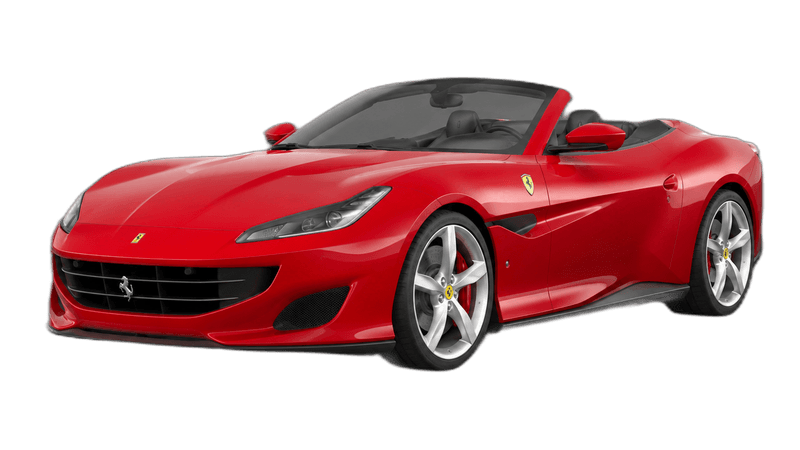
Ferrari Portofino
£155,000
usedIndicative market price, updated periodically.
592bhp
Power
3.5s
0-100 km/h
320km/h
Top Speed
£155,000
Price Used
How hard it pulls.
Peak g-force the instant you bury the throttle, estimated from the car's 0–100 time and drivetrain.
Ferrari PortofinoEstimated peak launch g from the 0–100 time and drivetrain: an honest approximation, not a measured figure.
The Ferrari Portofino is a 2-door convertible by Ferrari, with 592 bhp, 760 Nm of torque, a 0-100 km/h time of 3.5 seconds and a top speed of 320 km/h. Indicative used value: approximately £155,000. Actual values vary with specification, condition and history.
Dream Car Garage Editorial · Last updated 30 October 2026
Overview
We have not driven this car. This review is based on published specifications and the sources listed below.
What the Portofino is and which car this entry covers
The Portofino is a front-engined 2+2 convertible with a 3.9-litre twin-turbocharged V8 producing 592 bhp and 760 Nm, an 8-speed dual-clutch transmission and rear-wheel drive. Ferrari quotes 3.5 seconds to 100 km/h and 320 km/h. Production ran from 2017 to 2020, when the Portofino M arrived with 612 bhp and a revised gearbox.
This guide covers the original Portofino, not the M variant. The M has more power, a different transmission calibration, retuned Magnaride dampers as standard and a slightly different interior. A seller describing a car as a Portofino when it is an M, or vice versa, is mixing two distinct entries.
We have not driven this model for this article. This desk-researched ownership guide uses Ferrari's official Portofino model page, PistonHeads' used buying guide from October 2022 and the DVSA vehicle recall service. The PistonHeads guide found no common mechanical complaints, but that is not a guarantee and its observations should still lead to individual inspection.
Engine, gearbox and the E-Diff3
The 3,855 cc flat-plane V8 uses twin-scroll turbochargers and reaches peak power at 7,500 rpm. The timing chain avoids the belt-change schedule of older Ferraris. PistonHeads records that a trickle charger is practically essential because the battery discharges quickly if the car is left unused. Check the battery's age, condition and charge state before any road assessment.
The 8-speed dual-clutch gearbox works with the E-Diff3 electronic differential. Check that the gearbox selects drive and reverse cleanly, that shifts are smooth and that no warning messages appear. Ask for the service history covering gearbox oil changes and any software updates.
Roof, boot and body checks
The retractable hardtop deploys in 14 seconds and can operate while the car is moving at low speed. During the cycle the boot is open to the elements, so test the mechanism repeatedly and check the seals, drainage channels and boot carpets for water marks. Confirm the roof closes flush and that the tonneau cover aligns correctly.
Inspect the folding mechanism for play, the hydraulic rams for leaks and the rear window for delamination. Check the condition of the roof seals and the drain holes below the windscreen. A car that has been stored with a wet roof may have corrosion or mould in the cabin, so look for damp carpets and a musty smell.
Brakes, suspension and chassis systems
Carbon-ceramic brakes are standard, so measure disc and pad thickness rather than relying on a visual estimate. Magnaride adaptive dampers were an option on the original Portofino; confirm whether the car has them and test each setting. The 20-inch wheels carry 245/35 front and 285/35 rear tyres, so check date codes, tread depth and inner-edge wear against an alignment report.
The car has Isofix mounts in the rear seats, which is unusual for a Ferrari and useful for family buyers. Test the seat mechanisms, belts and adjustment motors. Check the condition of the leather, the stitching and the magnesium seat frames for cracks or corrosion.
Cabin electronics and long-term issues
The 10.2-inch display and infotainment system should be tested for navigation, audio, phone integration and climate control. PistonHeads records that Android Auto was flaky in long-term use, so confirm phone connectivity on the specific car. Test all lighting, the Airscarf option where fitted and the heated and ventilated seats.
The cabin's magnesium seat frames and optional carbon-fibre trim carry high replacement prices, so inspect for damage and confirm that any prior work is documented. Ask for invoices covering audio system repairs, seat motors and any electrical faults.
Warranty, servicing and pre-purchase checks
The four-year warranty and seven years of free routine servicing are linked to the car, not the owner, but only if the service record is complete. Confirm the remaining coverage and whether any extended warranty has been transferred. Ferrari's New Power programme can extend cover to 15 years, but it must be purchased within the eligibility window.
Use the DVSA recall service and obtain retailer confirmation of completed or outstanding campaigns. Commission a specialist inspection that reads the diagnostic memory, tests the roof mechanism, measures the brakes and checks the gearbox condition. Ask for a written report that separates measured findings from the seller's account.
Storage, charging and occasional use
A trickle charger is close to essential on this family of cars, so ask whether the seller uses one and inspect the battery's age and condition. Cars that cover only a few short trips between long idle periods can suffer from moisture in the oil and uneven wear on brakes and tyres, so prefer evidence of regular use over a very low odometer figure. If the car has been stored under a cover, check for trapped moisture around the roof seals and the boot aperture. Confirm that the stored roof panels, wind deflector and luggage covers are present and undamaged, because replacements carry boutique prices. Where the car has covered very low mileage, ask when the last brake fluid and coolant changes were carried out, because time-based service items still fall due regardless of use.
We have not driven this model for this article. No present valuation, investment assurance or universal failure rate is offered. The Portofino's ownership value is its combination of a usable 2+2 cabin, a retractable hardtop and a front-engined V8 that suits daily driving. Buy on documented service history, a completed recall check and a specialist inspection of the roof and electrical systems, and treat the maintenance file as part of the car's condition, not on the badge alone.
Specifications
Engine
3.9L (3855 cc) twin-turbo V8 petrol
Displacement
3.9L
Power
592 bhp
Torque
760 Nm
0-100 km/h
3.5s
Top Speed
320 km/h
Drivetrain
RWD
Country
Italy
Body Style
2-door convertible
Years
2017–2020
Price Used
£155,000
Specifications are manufacturer-published figures.
More from Ferrari
Frequently Asked Questions
What are the specifications of the Ferrari Portofino?
The Ferrari Portofino is a 2-door convertible by Ferrari, with 592 bhp, 760 Nm of torque, a 0-100 km/h time of 3.5 seconds and a top speed of 320 km/h. Indicative used value: approximately £155,000. Actual values vary with specification, condition and history.
How much does a Ferrari Portofino cost?
Indicative used value: approximately £155,000. Actual values vary with specification, condition and history.
What drivetrain does the Ferrari Portofino use?
The Ferrari Portofino is configured with rear-wheel drive.
What type of car is the Ferrari Portofino?
The Ferrari Portofino is a hyper gts manufactured by Ferrari in Italy. Production ran from 2017 to 2020.