
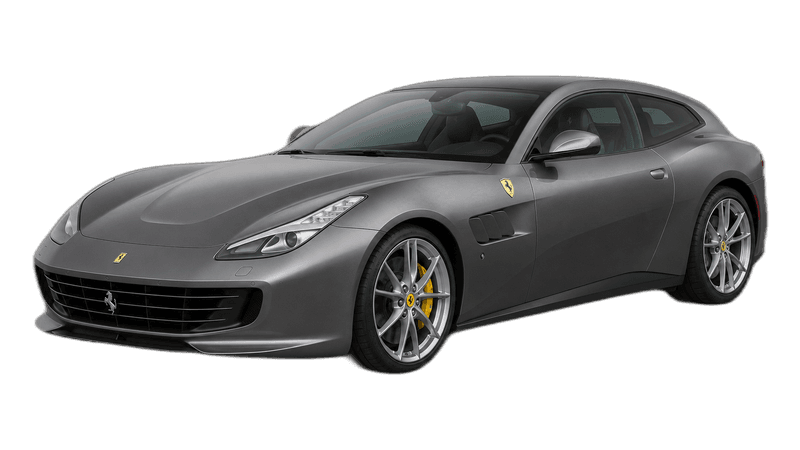
Ferrari GTC4Lusso T
£150,000
usedIndicative market price, updated periodically.
602bhp
Power
3.5s
0-100 km/h
320km/h
Top Speed
£150,000
Price Used
How hard it pulls.
Peak g-force the instant you bury the throttle, estimated from the car's 0–100 time and drivetrain.
Ferrari GTC4Lusso TEstimated peak launch g from the 0–100 time and drivetrain: an honest approximation, not a measured figure.
The Ferrari GTC4Lusso T is a 3-door shooting brake by Ferrari, with 602 bhp, 760 Nm of torque, a 0-100 km/h time of 3.5 seconds and a top speed of 320 km/h. Indicative used value: approximately £150,000. Actual values vary with specification, condition and history.
Dream Car Garage Editorial · Last updated 30 October 2026
Overview
We have not driven this car. This review is based on published specifications and the sources listed below.
What the GTC4Lusso T is and which car this entry covers
The GTC4Lusso T is a front-engined four-seater shooting brake with a 3.9-litre twin-turbocharged V8 producing 602 bhp and 760 Nm, rear-wheel drive and a 0-100 km/h time of 3.5 seconds. Ferrari quotes 320 km/h. Production ran from 2016 to 2020.
This guide covers the V8 T model only. The V12 sibling has 680 bhp, all-wheel drive and a different chassis. The T is the first four-seater Ferrari with a V8, and its rear-wheel-drive layout, four-wheel steering and 46:54 weight split distinguish it from the V12. A seller describing a car as a Lusso without confirming the engine is mixing two distinct entries.
We have not driven this model for this article. This desk-researched ownership guide uses Ferrari's official GTC4Lusso T model page, CAR magazine's UK road test and the DVSA vehicle recall service. The CAR article is a road test rather than a long-term reliability study, so its observations should lead to individual inspection rather than a prediction about every car.
Engine, gearbox and the V8 layout
The 3.9-litre twin-turbo V8 uses copper-alloyed con-rods and pistons, twin oil jets, a redesigned intercooler and equal-length exhaust manifolds. The engine is tuned for reduced noise, vibration and harshness compared with the V12. The car is around 55 kg lighter than the V12 sibling, and the 46:54 weight split improves agility.
Start the engine cold and listen for unusual noise. Check the service invoices for annual maintenance, oil and filter changes and any turbocharger or intercooler work. The seven-year maintenance programme covers scheduled servicing, and the four-year UK warranty can be extended. Confirm which coverage remains on the specific car.
Four-wheel steering, suspension and brakes
Four-wheel steering is standard and works with the rear-wheel-drive layout to improve turn-in and stability. Check that the system operates smoothly at low and high speed and that no warning messages appear. The suspension uses adaptive dampers; test each setting and look for uneven ride height or knocking over bumps.
Carbon-ceramic brakes are standard, so measure disc and pad thickness rather than relying on a visual estimate. The 20-inch wheels carry 245/35 front and 285/35 rear tyres, so check date codes, tread depth and inner-edge wear against an alignment report. The 91-litre fuel tank gives a realistic range of around 30 per cent better than the V12 sibling, according to CAR.
Body, cabin and electrical checks
The shooting brake body has a large glass tailgate and a long roof. Inspect the seals, drainage channels and boot carpets for water marks. Check the tailgate hinges and gas struts for smooth operation. The cabin has a 10.2-inch display and a passenger-side screen option; test the infotainment, navigation, climate control, seats and all lighting.
Check the condition of the leather, stitching and soft-touch surfaces for wear or stickiness. Confirm the rear seats fold correctly and that the Isofix mounts are present. Test the electronic handbrake repeatedly and ask for the battery's age and condition, because electrical faults are often battery-driven.
Campaigns, recalls and paperwork
Use the DVSA recall service and obtain retailer confirmation of completed or outstanding campaigns. A campaign affecting a specific build period does not apply to every car, so check the vehicle identification number and ask for evidence of completed work. Match the service file to the mileage and dates.
Ferrari's maintenance programme and warranty terms are transferable between owners, but only if the service record is complete. The New Power programme can extend cover to 15 years, but it must be purchased within the eligibility window. Ask for invoices covering any suspension, steering or brake work.
What to verify before agreeing a price
Commission a specialist inspection that reads the diagnostic memory, tests the four-wheel steering, measures the brakes and checks the gearbox condition. Verify the original specification, including the panoramic roof, the audio system and any carbon-fibre options, because these affect both enjoyment and resale.
Check the tyres and brakes as consumables, not as cosmetic details. Confirm that the car's software is current and that any outstanding campaign has been completed. If the seller cannot provide a clear history, reduce the offer to reflect the cost of a full service and a specialist diagnosis rather than assuming the worst or the best.
Family use and the rear cabin
The T's rear seats are usable for adults on shorter journeys, which is unusual in a Ferrari and central to its ownership case. Check the rear seat folding mechanism, the rear climate controls and the condition of the rear carpets, because family use leaves marks that a fresh detail can hide for only a day or two. Confirm that the rear seatbelts retract and latch correctly, and test any rear entertainment or charging points. The wide-opening rear hatch suits pushchairs and luggage, but inspect the boot floor and the load cover for staining or damage. Ask how the car has actually been used, since a claimed four-seater role should show matching evidence in the cabin.
We have not driven this model for this article. No present valuation, investment assurance or universal failure rate is offered. The GTC4Lusso T's ownership value is its combination of a usable four-seater cabin, rear-wheel drive and a V8 that is lighter and more efficient than the V12. Buy on documented service history, a completed recall check and a specialist inspection of the steering and braking systems, and treat the maintenance file as part of the car's condition, not on the model's rarity alone.
Specifications
Engine
3.9L (3902 cc) twin-turbo V8 petrol
Displacement
3.9L
Power
602 bhp
Torque
760 Nm
0-100 km/h
3.5s
Top Speed
320 km/h
Drivetrain
RWD
Country
Italy
Body Style
3-door shooting brake
Years
2016–2020
Price Used
£150,000
Specifications are manufacturer-published figures.
More from Ferrari
Frequently Asked Questions
What are the specifications of the Ferrari GTC4Lusso T?
The Ferrari GTC4Lusso T is a 3-door shooting brake by Ferrari, with 602 bhp, 760 Nm of torque, a 0-100 km/h time of 3.5 seconds and a top speed of 320 km/h. Indicative used value: approximately £150,000. Actual values vary with specification, condition and history.
How much does a Ferrari GTC4Lusso T cost?
Indicative used value: approximately £150,000. Actual values vary with specification, condition and history.
What drivetrain does the Ferrari GTC4Lusso T use?
The Ferrari GTC4Lusso T is configured with rear-wheel drive.
What type of car is the Ferrari GTC4Lusso T?
The Ferrari GTC4Lusso T is a hyper gts manufactured by Ferrari in Italy. Production ran from 2016 to 2020.