
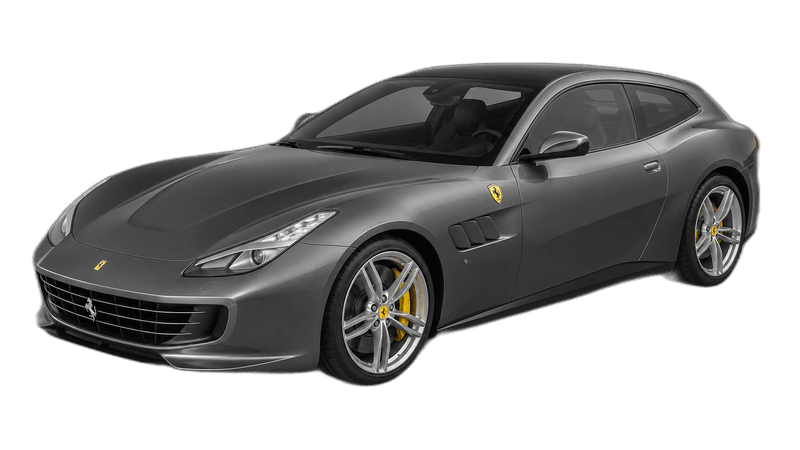
Ferrari GTC4Lusso
£185,000
usedIndicative market price, updated periodically.
681bhp
Power
3.4s
0-100 km/h
335km/h
Top Speed
£185,000
Price Used
How hard it pulls.
Peak g-force the instant you bury the throttle, estimated from the car's 0–100 time and drivetrain.
Ferrari GTC4LussoEstimated peak launch g from the 0–100 time and drivetrain: an honest approximation, not a measured figure.
The Ferrari GTC4Lusso is a 2+2 shooting brake by Ferrari, with 681 bhp, 697 Nm of torque, a 0-100 km/h time of 3.4 seconds and a top speed of 335 km/h. Indicative used value: approximately £185,000. Actual values vary with specification, condition and history.
Dream Car Garage Editorial · Last updated 28 October 2026
Overview
We have not driven this car. This review is based on published specifications and the sources listed below.
Keep the V12 and V8 models separate
The GTC4Lusso covered here has a 6,262 cc naturally aspirated V12, 4RM all-wheel drive and rear-wheel steering. Ferrari quotes 690 CV, approximately 681 bhp, and 335 km/h. PistonHeads lists 514 lb ft, about 697 Nm, and 3.4 seconds to 62 mph. The GTC4Lusso T is a different rear-wheel-drive V8 model and must not be used to fill this car's specification.
We have not driven this model for this article. The sources are Ferrari's GTC4Lusso history, the PistonHeads buying guide and Ferrari's VIN recall service. The guide dates from 2023, so ownership-cost examples and production guesses are not current quotations or official allocations. It covers the FF as well as the Lusso, but later-model faults should not be invented by transferring every FF observation unchanged.
4RM and rear-wheel steering
The V12 retains the FF's basic 4RM concept, with a rear dual-clutch transmission and a separate front power-transfer unit. Rear-wheel steering is added to the later car's technical identity. Ask a specialist to inspect both the drivetrain and steering systems with model-appropriate diagnostics, and to compare steering behaviour with geometry and tyre condition.
PistonHeads says PTU failures appear less common than on the FF but still occur. One reported warning combines four-wheel-drive failure with the Manettino remaining in Wet mode. Treat that as a diagnostic prompt, not a universal expectation. Request PTU fluid, seal and repair records and document any warning before clearing it. Do not dismiss an unresolved drivetrain warning as normal for an AWD Ferrari.
Dual-clutch history and parking behaviour
The guide describes seal and sensor issues and occasional hesitation when manoeuvring. Assess the actual DCT through normal operation and stored diagnostic information rather than repeated low-speed tests. Ask what work was performed, whether the symptom returned and whether software or component updates are recorded. A seller's reassurance does not replace that history.
The dual-clutch unit is not the F1 single-clutch transmission used in earlier 599 or 575 models. Keep service procedures and expectations separate. If the inspector cannot reproduce an intermittent symptom, record the limitation and retain any owner account or diagnostic evidence rather than declaring the system fault-free on the basis of one short drive.
V12 maintenance and carbon-ceramic brakes
The V12 uses timing chains, so do not carry over a 550 or 575 cambelt schedule. Ask for annual service invoices, fluid and filter history, plugs and any diagnostic work. Inspect for oil and coolant leaks and establish what maintenance was performed after storage. Historic maintenance-program coverage in the buying guide is not a promise that this car remains covered.
Carbon-ceramic brakes are standard. Obtain measured disc and pad condition and brake-fluid history. PistonHeads notes disc-bolt corrosion on the FF; for the Lusso it is a sensible physical inspection prompt, not evidence of a separate model-wide defect. Check wheel condition, tyre dates and approved fitment, and relate uneven wear to alignment and suspension findings.
Door cables and front lift
The buying guide reports failures of the electronic door-opening cables. Demonstrate interior and exterior release operation and ask about previous replacement. A door that works once during the viewing does not explain an intermittent history. Keep any repair invoice and ensure the specialist understands the actual symptom rather than simply lubricating visible parts.
Front lift was optional, so establish whether it is fitted before testing it. PistonHeads does not say that the FF's lift concerns occur at the same rate on the Lusso. Demonstrate operation where fitted and inspect for leaks or settling, but avoid inventing a Lusso-specific failure pattern. Inspect the front bumper and underside separately for contact and repairs.
Infotainment and cabin electronics
The 10.25-inch screen and connected systems deserve a full demonstration. PistonHeads discusses freezing displays, seat-heater display problems and intermittent mirror, light and passenger-window behaviour. Test the actual equipment, including the camera and phone connections, and ask for software or repair history. A restart that temporarily restores a screen does not identify the cause.
Try both front seats, rear access, seatbelts, windows, climate controls and the passenger display where fitted. Check the leather and controls for wear without treating age-related cosmetic marks as mechanical faults. The luggage compartment and rear-seat area are part of the car's practical appeal, so inspect their condition and operation as well as the driver's cockpit.
Body, panoramic roof and provenance
Inspect paint, panel alignment, glass and the large roof area for damage and previous repair. Confirm the exact factory equipment from the build record rather than using a photograph of another Lusso. Underbody access should be documented, and replaced panels or modified equipment should have invoices explaining the work. Cosmetic condition and structural condition require separate findings.
Match annual maintenance, repairs and storage to a continuous ownership record. The cited guide's production guesses are not official totals and remain unset here. If a car has been unused for an extended period, ask about battery support, charging and recommissioning. Regular specialist care and documented use are more useful than an isolated low-mileage claim.
VIN-specific recall evidence
PistonHeads mentions a fuel-vapour-separator recall for certain build dates. Do not infer applicability from that range alone. Enter the full VIN in Ferrari's official recall service and obtain dealer confirmation of open or completed campaigns. Ferrari provides free recall repairs through authorised dealers. A clear campaign result does not verify unrelated service or repair quality.
We have not driven this model for this article. No present price, future appreciation or universal reliability claim is offered. The strongest file separates V12 AWD identity from the V8 T, documents 4RM and DCT condition, measures the brakes, demonstrates door and cabin systems, and records every unresolved warning or inspection limitation.
Specifications
Engine
6.3L (6262 cc) naturally aspirated V12
Displacement
6.3L
Power
681 bhp
Torque
697 Nm
0-100 km/h
3.4s
Top Speed
335 km/h
Drivetrain
AWD
Country
Italy
Body Style
2+2 shooting brake
Years
2016–2020
Price Used
£185,000
Specifications are manufacturer-published figures.
More from Ferrari
Frequently Asked Questions
What are the specifications of the Ferrari GTC4Lusso?
The Ferrari GTC4Lusso is a 2+2 shooting brake by Ferrari, with 681 bhp, 697 Nm of torque, a 0-100 km/h time of 3.4 seconds and a top speed of 335 km/h. Indicative used value: approximately £185,000. Actual values vary with specification, condition and history.
How much does a Ferrari GTC4Lusso cost?
Indicative used value: approximately £185,000. Actual values vary with specification, condition and history.
What drivetrain does the Ferrari GTC4Lusso use?
The Ferrari GTC4Lusso is configured with all-wheel drive.
What type of car is the Ferrari GTC4Lusso?
The Ferrari GTC4Lusso is a hyper gts manufactured by Ferrari in Italy. Production ran from 2016 to 2020.