
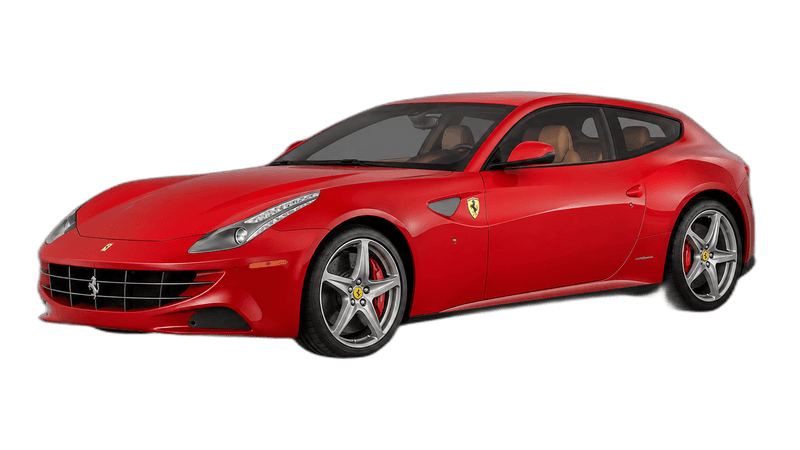
Ferrari FF
£120,000
usedIndicative market price, updated periodically.
651bhp
Power
3.7s
0-100 km/h
335km/h
Top Speed
£120,000
Price Used
How hard it pulls.
Peak g-force the instant you bury the throttle, estimated from the car's 0–100 time and drivetrain.
Ferrari FFEstimated peak launch g from the 0–100 time and drivetrain: an honest approximation, not a measured figure.
The Ferrari FF is a 2+2 shooting brake by Ferrari, with 651 bhp, 683 Nm of torque, a 0-100 km/h time of 3.7 seconds and a top speed of 335 km/h. Indicative used value: approximately £120,000. Actual values vary with specification, condition and history.
Dream Car Garage Editorial · Last updated 28 October 2026
Overview
We have not driven this car. This review is based on published specifications and the sources listed below.
The 4RM shooting brake
The FF is a four-seat, rear-biased all-wheel-drive Ferrari with a 6,262 cc naturally aspirated V12. Ferrari quotes 660 CV, approximately 651 bhp, and 335 km/h. PistonHeads lists 504 lb ft, about 683 Nm, and 3.7 seconds to 62 mph. The model was sold from 2011 to 2016 and preceded by no identical drivetrain layout in Ferrari's earlier V12 coupes.
We have not driven this model for this article. This guide uses Ferrari's FF history, the PistonHeads FF buying guide and the official VIN recall service. The 2021 article's prices, warranty coverage and production estimate are not current or official catalogue facts. The later GTC4Lusso is related but has its own equipment and model identity, so the two are not treated as interchangeable.
Understand the 4RM hardware
The rear wheels use a seven-speed Getrag dual-clutch transmission. A separate front power-transfer unit provides two forward ratios and reverse and can send torque to the front axle in the lower gears. This is not a conventional centre-differential AWD system. A model-familiar specialist should inspect both parts of the drivetrain and their diagnostic history.
PistonHeads reports PTU failures associated with fluid contamination from a leaking seal. Ask whether the PTU fluid and seals have been inspected or changed and request evidence of any repair. A failure on one car is not a universal forecast, but unexplained drivetrain warnings or fluid contamination should not be dismissed. Record the diagnosis and completed work precisely.
Dual-clutch operation and warnings
Early cars could experience seal or sensor issues in the dual-clutch unit. The guide also discusses low-speed hesitation and occasional re-engagement when moving from reverse to first, plus reports involving sixth and seventh gears. These are prompts to assess the actual gearbox through normal operation and diagnostics, not proof that every FF has the same fault.
Ask for software, seal, sensor and clutch history and whether any symptom returned after repair. Do not substitute Gallardo-style single-clutch assumptions or repeated parking manoeuvres for a structured inspection. Any warning should be read and documented before it is cleared. The specialist should distinguish stored historical information from a current fault requiring action.
V12 service and maintenance coverage
The V12 uses timing chains rather than the earlier 550/575 cambelt arrangement. Obtain annual service invoices and a clear record of fluids, filters, plugs, belt-driven ancillaries and diagnostic work. PistonHeads discusses Ferrari's Genuine Maintenance coverage, but its duration and prices belong to the date of the article. Verify what coverage, if any, remains for the individual car.
Inspect for oil and coolant leaks and evidence of overheating. The car's power and four-wheel-drive hardware do not reduce the importance of basic maintenance. If the car has been stored, ask about battery support and recommissioning. A battery warning after inactivity can have several causes and deserves diagnosis rather than automatic acceptance as normal behaviour.
Carbon ceramics, lift and tyres
Carbon-ceramic brakes require measured disc and pad assessment. PistonHeads notes corrosion concerns around disc bolts. Inspect the hardware and fluid history rather than relying on a clean wheel photograph. Ask for a current estimate if work is needed; the old article's prices are not a present repair tariff.
The FF's front lift can suffer seal or system faults according to the guide. Demonstrate the lift and investigate warning messages, leakage or settling. Inspect the front bumper and underbody independently because a working lift does not erase earlier contact. Check tyre dates, wear and approved sizes, and compare uneven wear with alignment and suspension condition.
Parking sensors and electrical systems
Phantom front parking-sensor activations are discussed in the buying guide. Test the sensors and camera in suitable conditions and ask for any previous diagnosis. Also check tyre-pressure warnings, particularly after storage or tyre replacement. A dashboard without lights after a restart is not enough evidence if the underlying warning recurs.
Demonstrate infotainment, Bluetooth and the fitted iPod or media connections. PistonHeads mentions connection problems, but these are not a reason to assume every unit will fail. Try seat adjustment, mirrors, windows, lights, climate control and the seatbelt concierge. Record any intermittent function for diagnosis rather than treating it as an acceptable quirk without investigation.
Four-seat cabin and practical inspection
The FF's rear seats and luggage space are part of its purpose. Try access, seat adjustment and headroom with the intended occupants and inspect the rear seatbelts and folding mechanisms. Check the hatch, seals and luggage area for water marks or damage. A polished front cabin does not establish the condition of equipment used mainly by rear passengers.
Inspect body repairs, glass and undertrays, and list any replaced panels or equipment. Match the physical findings to invoices and the build record. Regular use and consistent maintenance can be more informative than minimal mileage, while a long storage period should prompt additional charging, sealing and recommissioning checks.
VIN campaigns and inspection limits
Enter the full VIN in Ferrari's recall tool and ask an authorised dealer to confirm outstanding or completed work. The tool lists open campaigns and provides free recall repairs. Do not infer this chassis's status from a campaign affecting another FF or GTC4Lusso. A clear result also does not replace the mechanical inspection or service history.
We have not driven this model for this article. No current price, investment return or universal failure rate is claimed. The independent production figure is deliberately not assigned as an official total. The strongest assessment combines PTU and DCT evidence, measured brakes, a working lift, complete electrical checks and a written record of any unresolved symptom or inaccessible area.
Specifications
Engine
6.3L (6262 cc) naturally aspirated V12
Displacement
6.3L
Power
651 bhp
Torque
683 Nm
0-100 km/h
3.7s
Top Speed
335 km/h
Drivetrain
AWD
Country
Italy
Body Style
2+2 shooting brake
Years
2011–2016
Price Used
£120,000
Specifications are manufacturer-published figures.
More from Ferrari
Frequently Asked Questions
What are the specifications of the Ferrari FF?
The Ferrari FF is a 2+2 shooting brake by Ferrari, with 651 bhp, 683 Nm of torque, a 0-100 km/h time of 3.7 seconds and a top speed of 335 km/h. Indicative used value: approximately £120,000. Actual values vary with specification, condition and history.
How much does a Ferrari FF cost?
Indicative used value: approximately £120,000. Actual values vary with specification, condition and history.
What drivetrain does the Ferrari FF use?
The Ferrari FF is configured with all-wheel drive.
What type of car is the Ferrari FF?
The Ferrari FF is a hyper gts manufactured by Ferrari in Italy. Production ran from 2011 to 2016.