
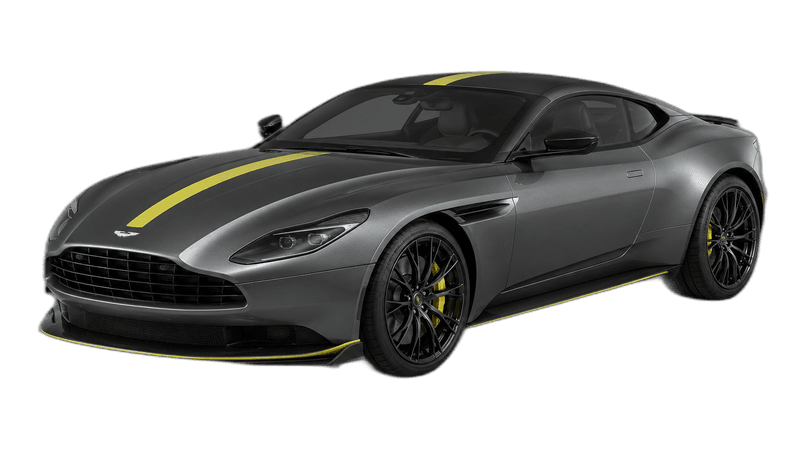
Aston Martin DB11 V12 AMR
£145,000
gebrauchtIndicative market price, updated periodically.
630PS
Leistung
3.7s
0-100 km/h
335km/h
Hochstgeschwindigkeit
£145,000
Gebrauchtpreis
Wie hart es zieht.
Die Spitzen-G-Kraft im Moment des Vollgases, geschätzt aus der 0–100-Zeit und dem Antrieb.
Aston Martin DB11 V12 AMRGeschätzte Start-G aus der 0–100-Zeit und dem Antrieb: eine ehrliche Näherung, kein Messwert.
The Aston Martin DB11 V12 AMR is a 2+2 seater fixed-head coupé by Aston Martin, producing 630 bhp, and 700 Nm of torque, with a 0-100 km/h time of 3.7 seconds, and a top speed of 335 km/h, Valued at approximately £145,000.
Dream Car Garage Editorial · Last updated 24 October 2026
Überblick
We have not driven this car. This review is based on published specifications, owner reports and market listings.
The case for the DB11 V12 AMR
When Aston Martin launched the V8-powered DB11, the original V12 was quietly retired and replaced in 2018 by the DB11 AMR. Power from the 5.2-litre twin-turbo V12 rose to 630 bhp, and the chassis team reworked the dampers, anti-roll bars and rear suspension to give the big GT more composure without ruining its ride.
The AMR is objectively the best V12 DB11: quicker, better resolved and built after many of the early quality issues were addressed. Visually it is distinguished by darkened details and exposed carbon-fibre trim. If you want the twelve-cylinder DB11 experience, this is the version to have.
What it costs to run
Identical in broad terms to the standard V12: £1,000 to £1,500 for annual servicing at a specialist, tyres around £1,200 a set, and fuel consumption in the high teens to low twenties mpg. The engine has proved robust. Because all AMRs are 2018-on, many are still within reach of manufacturer-approved used programmes, which are worth considering for the warranty cover.
Known weak points
The AMR benefits from running production fixes, but the DB11 platform's electrical complexity remains. Check the infotainment, digital instruments, seats, windows and climate systems all behave. Brake disc corrosion and battery drain affect cars that are stored. The carbon-ceramic brake option is expensive to replace; standard steel brakes are the pragmatic choice for a used buyer.
There are fewer AMR-specific issues on record simply because volumes are low and the cars are young. That means a specialist inspection is even more important, because there is less collective owner experience to lean on.
What to check before buying
Confirm full history, software status and recall completion. Inspect carbon exterior parts for damage; they are costly to replace. Check wheel condition, tyre age and even wear. On the test drive, verify the gearbox shifts cleanly and the engine pulls without hesitation through the range. As with any low-volume GT, a pre-purchase inspection by an Aston specialist is money well spent.
Market and depreciation
AMR values sit above the standard V12, typically from around £90,000 to £120,000 depending on year, mileage and specification. The AMR has depreciated less savagely than the launch V12 and, as the definitive version, should remain the more resilient. Launch Edition cars with the fullest specification are the most collectible.
Who it suits
The buyer who wants the most complete twelve-cylinder DB11 and values the AMR's sharper edge. It remains a GT at heart: fast, refined and comfortable, rather than a track tool.
Alternatives
Bentley Continental GT Speed, Ferrari Roma, McLaren GT, or a standard V12 DB11 at a meaningful discount.
The AMR, introduced for 2018, raised output to 630hp and added retuned suspension, carbon-fibre exterior details and darkened trim, effectively becoming the V12 flagship for the remainder of production. It is visibly and measurably more focused than the standard car, though the difference is one of degree rather than transformation; the AMR sharpens the DB11 formula rather than reinventing it. The extra power is most noticeable at higher revs, and the chassis changes reward enthusiastic driving without ruining the ride.
Collectability is modest but real: the AMR was built in smaller numbers than the standard V12 and represents the peak of the line. When buying, verify that the AMR-specific exterior carbon parts, badging and interior trim are intact and original, since a standard car with added options is not the same thing. Launch-era and special-edition cars should come with documentation supporting their identity. Values carry a premium over the standard V12, though not an enormous one.
Running costs mirror the standard V12 with one important addition: the AMR's standard carbon-ceramic brakes offer superb stopping power but carry very expensive disc-replacement costs if damaged or worn. Have them measured and inspected properly. As with any low-volume flagship, budget for agreed-value insurance, secure storage and a specialist who knows the model rather than assuming any prestige garage will do.
The AMR effectively replaced the standard V12 in the range from 2018, so later V12 cars are predominantly AMRs. The visual differences are genuine: carbon-fibre bonnet blades, darkened grille and lights, and unique interior details. Verify these are present and correct, as the AMR's identity is part of its value. The car represents the most developed form of the DB11 V12 and the version most likely to hold its appeal over time.
On the used market, the AMR commands a premium over the standard V12 that reflects its status as the flagship and final evolution. That premium is worth paying for a properly documented car. As with any limited-run Aston, the buying process benefits from the specialist network: a car with a full dealer or respected independent history, verified mileage and intact AMR specification is the one to buy. The DB11 V12 AMR is a genuinely complete grand tourer with a meaningful place in the marque's recent history.
The AMR badge draws on Aston Martin's racing programme, and the carbon-fibre exterior details are functional as well as visual. Inspect the carbon parts carefully for stone damage or repairs, as replacement panels are expensive. Verify the car's specification against factory records, since the AMR's premium depends on its identity being genuine. The interior's unique trim and badging should also be intact. For the buyer seeking the definitive DB11 V12, the AMR is the version to have, and its position as the range flagship supports its long-term desirability.
How this review was compiled
Research-based ownership review using Aston Martin specifications, independent buying guides and owner reports. We have not driven this car. Verify condition, service history and campaign completion for any individual car before purchase.
Spezifikationen
Motor
5.2 litre5204 cc(317.568 cu in) V 12 in 60° vee turbocharged petrol
Hubraum
5.2L
Leistung
630 PS
Drehmoment
700 Nm
0-100 km/h
3.7s
Hochstgeschwindigkeit
335 km/h
Antrieb
RWD
Land
UK
Karosserie
2+2 seater fixed-head coupé
Jahre
2018–2020
Produktion
100
Gebrauchtpreis
£145,000
Specifications are manufacturer-published figures.
Mehr von Aston Martin
Häufig gestellte Fragen
What are the specifications of the Aston Martin DB11 V12 AMR?
The Aston Martin DB11 V12 AMR is a 2+2 seater fixed-head coupé by Aston Martin, producing 630 bhp, and 700 Nm of torque, with a 0-100 km/h time of 3.7 seconds, and a top speed of 335 km/h, Valued at approximately £145,000.
How much does a Aston Martin DB11 V12 AMR cost?
The Aston Martin DB11 V12 AMR has a used market value of approximately £145,000.
How many Aston Martin DB11 V12 AMR were made?
Aston Martin produced 100 units of the Aston Martin DB11 V12 AMR.
Is the Aston Martin DB11 V12 AMR AWD or RWD?
The Aston Martin DB11 V12 AMR uses a RWD drivetrain configuration in a 2+2 seater fixed-head coupé body style.
What type of car is the Aston Martin DB11 V12 AMR?
The Aston Martin DB11 V12 AMR is a hyper gts manufactured by Aston Martin in UK. Production ran from 2018 to 2020.