
Germany's Internal Argument
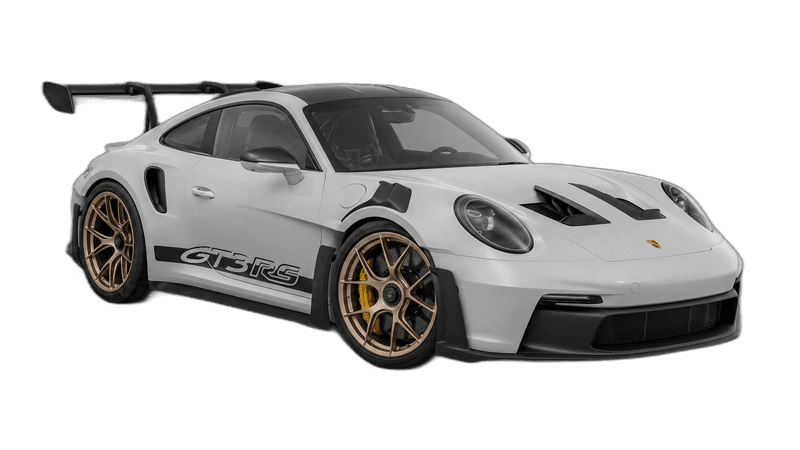
The German automotive industry has never been more productively divided than it is on the question of the ultimate driver's car. Stuttgart's answer, the Porsche 911 GT3 RS, is built on seventy years of racing heritage: naturally aspirated flat-six, rear-engine balance, aerodynamic downforce calibrated to the millisecond.
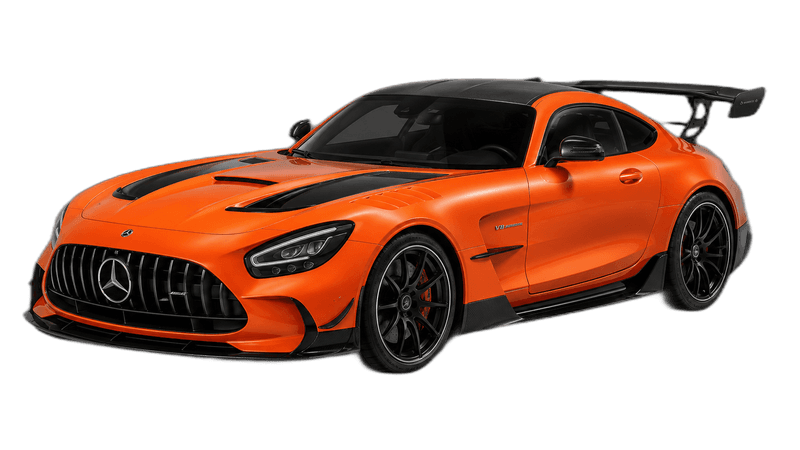
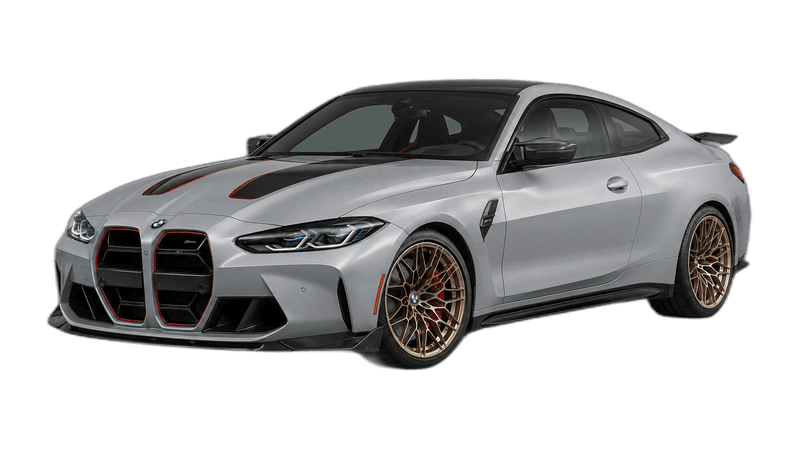
Munich's answer, the BMW M4 CSL, represents a different tradition: the competition-sport lightweight, a concept dating to the original M1 CSL, updated here with carbon fibre, deleted rear seats, and an S58 straight-six producing figures that would have defined a hypercar two decades ago. Affalterbach's answer, the Mercedes-AMG GT Black Series, arrives from a different lineage entirely: a front-engined grand tourer stripped of all grand-touring pretension and rebuilt around a hand-built flat-plane V8 that produces more power than any AMG road engine in history.
What unites these three cars is their shared acknowledgement that a road car can be a track car without becoming undriveable. Each was developed extensively on the Nürburgring Nordschleife. Each is road-legal but engineered around the question: how fast can we go on a circuit? The divergence begins with the approach. Porsche's GT division begins with a racing car and adds exactly enough road compliance to pass type approval. BMW M's CSL division begins with a production car and removes everything that is not essential. AMG's Black Series team begins with a touring car layout and adds so much power and aerodynamic aggression that the original platform becomes almost unrecognisable.
Three nations, three philosophies, three very different kinds of brilliant. The question is not which is fastest: it is which definition of fast matters most to you.
By the Numbers
Porsche 911 GT3 RS (992): The Racing Car That Drives Itself to the Track
The 992 GT3 RS is the most aerodynamically aggressive 911 ever built for road use. Its swan-neck rear wing generates 409 kg of downforce at 200 km/h, more than many dedicated track cars, while the front splitter and dive planes balance the axle loads to produce neutral, adjustable handling at the limit. Beneath the wing sits Porsche's 4.0-litre naturally aspirated flat-six: 525 bhp, 9,000 rpm red line, a mechanical note so distinctive that it renders the PDK's shift paddles almost redundant because you simply do not want to change gear.
The GT3 RS covers 0-100 km/h in 3.2 seconds and reaches a governed 296 km/h. These numbers conceal the car's true character: it is not fast in a straight line that impresses, but the effortlessness with which it deals with corners at circuit speed, as if the downforce and the chassis are doing the driving.
BMW M4 CSL (G82): The Last of the Lightweights
The M4 CSL makes the argument for mass reduction in an era of power inflation. At 1,625 kg, light for a modern M car, the CSL deploys its 550 bhp S58 straight-six with a purposefulness that heavier rivals cannot match off-line or through direction changes. The CSL package includes carbon fibre roof and bonnet, deleted rear seat, lighter brakes, Michelin Cup 2 tyres, and an adaptive M suspension recalibrated for track use.
The S58 delivers its 650 Nm with linear precision that rewards mechanical sympathy; the M xDrive all-wheel drive system allows the driver to adjust the rear bias progressively, from full traction to a rear-biased 4WD Sport mode that approaches the feel of a rear-drive car. The 0-100 km/h time of 3.7 seconds reads conservatively; the M4 CSL's circuit competence is substantially beyond what that figure implies.
Mercedes-AMG GT Black Series: Power as a Philosophy
The AMG GT Black Series is built around a single belief: that no road car should have 730 bhp and be timid about it. AMG's hand-built 4.0-litre biturbo V8, in Black Series specification, adopts a flat-plane crankshaft, the same architecture used in Ferrari's and McLaren's V8s, producing a higher-pitched, more urgent exhaust note than AMG's usual cross-plane V8s.
The aerodynamics are similarly uncompromising: a large front splitter, vast rear wing with 18 adjustment positions, and underbody diffuser generate significant downforce while the wide-body carbon fibre bodywork houses track-width suspension. On the Nordschleife, AMG's test driver drove it to 6:48.047, a production car record at the time. That time was not set by a car apologising for its power; it was set by a car that matched its aerodynamic grip precisely to the power being delivered.
Verdict
On a circuit with long, high-speed corners, the AMG GT Black Series' downforce advantage gives it a measurable edge over the BMW and an argument against the Porsche's higher-downforce aero. The 730 bhp V8 makes it devastating on long straights; the aerodynamic package keeps it planted through corners that would require significant driver bravery in lesser machinery. It is the most spectacular of the three, in every sense of that word.
On a tight, technical circuit, or on a public road where maximum corner speed is impossible, the Porsche 911 GT3 RS's chassis communication and aerodynamic balance make it the more rewarding car to drive quickly. The GT3 RS is the one that still surprises experienced drivers with how fast it corners relative to how little effort the driver seems to be contributing.
The BMW M4 CSL occupies the thoughtful middle ground: more practical than either rival, faster out of slow corners than the Porsche, more communicative than the AMG. If the GT3 RS and the Black Series are specialists, the CSL is the car for those who want one car to do everything exceptionally well.