
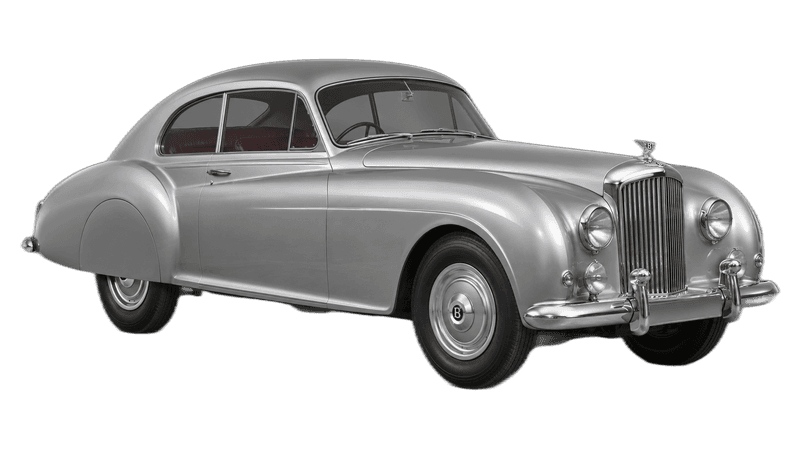
Bentley R-Type Continental
153cv
Potenza
13.6s
0-100 km/h
185km/h
Velocita Massima
Quanto spinge.
La forza g di picco nell'istante in cui affondi l'acceleratore, stimata dal tempo 0–100 e dalla trazione.
Bentley R-Type ContinentalG di partenza stimata dal tempo 0–100 e dalla trazione: un'approssimazione onesta, non un dato misurato.
The Bentley R-Type Continental is a 2-door coupé by Bentley, with 153 bhp, a 0-100 km/h time of 13.6 seconds and a top speed of 185 km/h.
Dream Car Garage Editorial · Edited by José Teo Lorente Vallecillos · Last updated 3 November 2026
Panoramica
We have not driven this car. This review is based on published specifications and the sources listed below.
Scope of this guide
This guide is scoped to the Bentley R-Type Continental, meaning the fastback sports saloon (a two-door, four-seat coupe) that H.J. Mulliner bodied on the Continental chassis between 1952 and 1955. It is a front-engine, rear-wheel drive car with a straight-six that grew from 4.6L to 4.9L part-way through the run. Our headline figures belong to the earlier 4.6L engine, because that is the engine in the catalogue entry, and we label every 4.9L figure as such. It is not a guide to the standard R-Type saloon on which the Continental was based, to the later S-Type Continental, or to the handful of Continental chassis that wore bodies from Park Ward, Franay, Graber, Pininfarina or James Young.
We have not driven this model for this article. We are an editorial desk that reads sources, and everything below comes from pages we opened: Wikipedia's R Type article, Supercars.net, Silodrome, Autozine, several RM Sotheby's lot pages and a Gooding and Company lot page. This is a collector car that rarely comes to market. A guide like this cannot replace an inspection by a specialist who knows these cars, and this page is for research, not a buying recommendation.
The figures at a glance
- Engine: 4.6L naturally aspirated inline-six. Supercars.net describes a 4,566 cc six with pushrod overhead inlet valves, side exhaust valves, a cast-iron block and an aluminium head. RM Sotheby's lists 4,566 cc for the early cars.
- Power: 153 bhp. Supercars.net gives 153 bhp at 4,000 rpm and says it was raised from 140 bhp, and the RM Sotheby's page for a 1952 car also lists 153 bhp. We found no power figure published by the maker, so every number here is a later quotation. Autozine says 158 hp for the 4.6L engine, which is a different claim.
- Torque: no figure shown. None of the pages we opened gave a torque figure for the 4.6L car, and Autozine lists torque as not available.
- 0-100 km/h: 13.6 seconds. This is the 0-62 mph time in the Supercars.net specification table, which is as close as any source comes to 0-100 km/h. It is a single-source, period-style figure and not a modern test result.
- Top speed: 185 km/h. Supercars.net, Autozine (for the 4.6L car) and the RM Sotheby's page for a 1954 car all say 115 mph, and 115 mph converts to about 185 km/h at 1.609 km per mile.
- Drive: rear-wheel drive through a four-speed manual gearbox, per Supercars.net and RM Sotheby's.
- Weight: 1,700 kg, per Supercars.net. Autozine gives about 1,680 kg and the RM Sotheby's page for a 1952 car gives a build weight of 3,771 lb.
- Size: 120 in wheelbase, 206.5 in long and 71.5 in wide, per Supercars.net.
- Production: 208 Continental chassis in total, including the prototype, with 193 bodied by H.J. Mulliner, per Supercars.net.
- Price when new: Autozine gives 7,600 pounds sterling at launch. RM Sotheby's says a shade over 7,000 pounds for a 1952 car and 18,000 US dollars for a 1953 car sold in the United States.
The 4.6L and 4.9L engines
The engine change is the most important thing to understand about these cars. Early Continentals used the 4,566 cc six of the standard R-Type, with changes to carburation, induction and exhaust manifolds. Wikipedia gives the standard R-Type engine a 92 mm bore and 114.3 mm stroke, and says the Continental raised compression to 7.25:1 from 6.75:1. Silodrome gives the same compression figures and describes twin SU H6 carburettors.
Wikipedia says that after July 1954 the bore was increased, giving 4.9 litres or 4,887 cc. Silodrome says from mid-1954. Autozine says the engine was enlarged about two years after introduction. RM Sotheby's calls its 1954 car with chassis BC2LD the second chassis built with the 4.9L engine, and says it was road-tested on 16 August 1954. We therefore read the change as mid-1954, but we did not find a single maker document that fixes the exact chassis number.
The sources disagree on the new bore. Wikipedia prints 94.62 mm, Silodrome says 3.7 in, and an RM Sotheby's lot page quotes a Bentley register entry for a 3 and three-quarter inch bore. We have not resolved this and it does not change the 4,887 cc displacement that all of them print.
The power numbers for the larger engine are also not settled. Gooding and Company lists 172 bhp for a 1954 car, and Autozine says 172 hp, with a top speed of 118 mph and a 13.5 second 0-60 mph time for the 4.9L car. Three RM Sotheby's lot pages list 178 bhp in their specification blocks. Silodrome says one fastback was brought to 178 bhp by upgrades made in 1997, which suggests a 178 figure may describe a tuned or restored car rather than a standard one. We do not use any 4.9L number as our headline, because we cannot tie them to a maker figure.
Gooding and RM Sotheby's both describe factory 4.9L upgrades fitted to earlier cars, and one RM page calls the larger unit the later, more desirable engine. That means a 1952 or 1953 chassis may carry a 4.9L engine today. It also means a car's body, chassis and engine numbers need to be read together.
Where the sources disagree
We found real disagreement and we say so rather than choosing silently.
- Production total: Supercars.net, Autozine and Wikipedia's production list give 208. Wikipedia's body text, Silodrome and RM Sotheby's say 207 production cars plus one prototype, which reconciles the two. We show 208 as the total including the prototype.
- Mulliner count: Supercars.net and RM Sotheby's both say 193. A Gooding lot page for a 1954 car says it is one of 190 fastbacks. We use 193 because two sources agree, but 190 is also published. RM Sotheby's says the other 14 chassis received Park Ward, Franay, Graber and Pininfarina bodies, while Supercars.net lists Park Ward six, Franay five, Graber three and Farina one, which does not quite add the same way. Wikipedia lists those makers plus a James Young body, giving 16.
- Top speed: 115 mph is the most repeated figure. The 120 mph figure (about 193 km/h) comes from wind-tunnel testing of quarter-scale models, according to RM Sotheby's, and Wikipedia calls it a design target and not a measurement. Supercars.net says the prototype averaged 118.75 mph over five laps at Montlhery. Autozine gives 118 mph for the 4.9L car. Silodrome says only over 100 mph. We use 185 km/h and call 120 mph a design figure.
- Acceleration: 13.6 seconds to 62 mph (Supercars.net), 13.5 seconds to 60 mph for the 4.9L car (Autozine). They are close but they measure different things and different engines.
- Power for the 4.6L: 153 bhp (Supercars.net, RM Sotheby's), 158 hp (Autozine), 130 plus hp (Silodrome) and 130 hp for the standard R-Type engine in Wikipedia. We use 153 bhp as the most frequent figure.
- Final drive: Wikipedia says the ratio changed from 3.41 to 3.07, while RM Sotheby's says production cars used a direct top gear and a lower axle ratio. These can both be true depending on the reading of lower, but we did not reconcile them.
- Designers: Supercars.net credits Ivan Evernden and John Blatchley, while Silodrome attributes the styling to Stanley Watts and credits wind-tunnel work by Milford Read.
History and development
The prototype was chassis 9-B-VI, registered OLG 490 and nicknamed Olga, and Wikipedia says it was on the road by August 1951. Supercars.net says it was inspired by the pre-war Embiricos Bentley and credits Evernden and Blatchley. Silodrome says Bentley sold the car as a chassis and the buyer chose the coachbuilder, and that H.J. Mulliner was the most used. RM Sotheby's says the 207 production cars were built between May 1952 and April 1955, while Supercars.net says the first production car was delivered in June 1952.
RM Sotheby's, writing about a 1952 car, says the 1952 Autocar road test was published on 12 September 1952 after trials in Belgium on 80-octane petrol, because only 73 to 74 octane was available in Britain. It also says the road tests showed that the prototype's overdrive top gear was unsuitable, so production cars used a direct top gear with a lower axle ratio.
The body was light. Supercars.net describes aluminium over a steel frame, and RM Sotheby's says the alloy body weighed about 750 lb and that the whole car was under 4,000 lb. Silodrome describes a full-metal body without a traditional ash frame. Wikipedia and two RM Sotheby's pages present the car as the fastest four-seat production car of its day.
Variants and what changed over the run
- Early cars, 1952 to mid-1954: 4.6L engine, with chassis numbers beginning BC and ending in a letter series. RM Sotheby's describes BC7A as one of 25 A-series cars.
- Later cars, from mid-1954: the 4.9L engine, with the cars we saw numbered such as BC2LD and BC67LD.
- Left-hand drive: Wikipedia and Silodrome say 43 were built, while RM Sotheby's says 43 fastbacks were delivered left-hand drive. The chassis numbers we saw for left-hand-drive cars, such as BC16LA, contain an L. That is our inference from the pages, not a stated rule.
- Gearbox: four-speed manual in the cars we read about. RM Sotheby's calls BC16LA the first R-Type Continental with the centre change. Silodrome says a four-speed automatic was also offered. We did not confirm how many cars received it.
- Options: RM Sotheby's mentions an option for lightweight bucket seats and rear wheel skirts, known as seats and spats, on one car.
What to check before buying
We found no known-faults list, so these are questions to ask, drawn from what the sources show.
- Which engine does it have? Ask whether it is the original 4.6L or a 4.9L, and whether the engine number matches the chassis records. RM Sotheby's describes a case where the register recorded a larger-bore engine fitted in 1965 and the original engine went to another chassis.
- Does the paperwork name chassis, engine and body numbers? RM Sotheby's lot pages print all three, which is a model for what a seller should provide.
- Is the body original? The body is alloy over steel, and we found no source on repair quality, so a specialist must judge it.
- Which build state is it in? Sources describe cars restored to original factory colours, restored to concours standard, and modified. A 1997 upgrade is recorded in one case.
- Left-hand or right-hand drive? Most cars were right-hand drive, per Wikipedia.
- Where has it been? Provenance and ownership history appear in every auction essay we read.
- Is there a specialist inspection? We cannot judge a car from a web page, and neither can you.
Running costs and known issues
We found no source giving running costs, service intervals, fuel consumption, insurance cost, failure rates or parts supply for this model, so we give none. Anyone quoting repair figures without a source is guessing. We found no recall notice and no crash-test or safety-equipment data, though we did not search a recall database. A car of this age has no modern crash structure, and four-wheel servo-assisted drum brakes are listed by Gooding and Company, which is a construction detail and not a safety rating.
Market and value notes
Prices are scattered and cover different cars and years, so treat them as a spread and not a price list. Every figure below is from a lot page, and the pages often do not give a precise sale date.
- RM Sotheby's, Monterey 2012: 1,622,500 US dollars for the left-hand-drive BC16LA.
- RM Sotheby's, London 2012: 532,000 pounds sterling for the 1952 car BC7A.
- RM Sotheby's, Amelia Island 2016: 1,815,000 US dollars for BC2LD, a 4.9L car.
- RM Sotheby's, sale of the Andrews Collection: 1,127,500 US dollars for BC67LD. The page does not give the date.
- RM Sotheby's, Cliveden House: 511,250 pounds sterling for a 1954 car. The page does not give the date.
- Gooding and Company, London 2024: an estimate of 650,000 to 750,000 pounds sterling for BC30C. The page we read showed no result.
- Silodrome, 11 August 2021: an RM Sotheby's price guide of 1.3 to 1.6 million US dollars for one car, with the article saying values are well over a million US dollars.
What we could not find
We found no maker document. Two other pages, a Wikipedia article specifically on the Continental and a Classic and Sports Car guide, returned a not-found error or no text. Our figures therefore come from Wikipedia, Supercars.net, Silodrome, Autozine and auction houses, none of which is Bentley. We found no torque figure, which is why torque has no figure shown here. We found no maker top speed or acceleration figure, no running costs, no recall or safety data, and no settled account of the exact chassis at which the 4.9L engine began, the 4.9L bore, the final-drive ratio or the number of Mulliner cars.
About the photograph
This page uses the catalogue photograph for the car. Its credit is listed on the credits page.
Verdict
The Mulliner-bodied R-Type Continental is a front-engine, rear-wheel drive fastback with a 4.6L naturally aspirated inline-six quoted at 153 bhp, a quoted 13.6 seconds to 100 km/h and a quoted 185 km/h, enlarged to 4.9L from about mid-1954 with figures of 172 or 178 bhp depending on the source. About 208 Continental chassis were built, 193 of them with the Mulliner fastback body on the best evidence we found. What these sources make clear is that the engine, its history and the paperwork matter more than any published number, because the numbers are not from the maker and the 4.6L and 4.9L cars differ. Use this page for research, and rely on documented history and a specialist inspection for any real decision. We have not driven it.
Sources
- Wikipedia: Bentley R Type
- Supercars.net: Bentley R Type Continental
- Silodrome: Bentley R-Type Continental
- Autozine: Bentley R-Type Continental (1952)
- RM Sotheby's: 1952 R-Type Continental Fastback by H.J. Mulliner (London 2012)
- RM Sotheby's: 1953 R-Type Continental Fastback by H.J. Mulliner (Monterey 2012)
- RM Sotheby's: 1954 R-Type Continental Fastback by H.J. Mulliner (Amelia Island 2016)
- RM Sotheby's: 1955 R-Type Continental by H.J. Mulliner (Andrews Collection)
- RM Sotheby's: 1954 R-Type Continental Fastback (Cliveden House)
- Gooding and Company: 1954 R-Type Continental Fastback, chassis BC30C
Specifiche
Motore
4.6L naturally aspirated inline-six
Cilindrata
4.6L
Potenza
153 cv
0-100 km/h
13.6s
Velocita Massima
185 km/h
Trazione
RWD
Paese
United Kingdom
Carrozzeria
2-door coupé
Anni
1952–1955
Produzione
208
Specifications are manufacturer-published figures.
Altre di Bentley
 175 cv
Bentley 4½ Litre Blower
 626 cv
Bentley Continental GT Mulliner (3rd Gen)
£230,000
 650 cv
Bentley Continental GTC Speed (3rd Gen)
£225,000
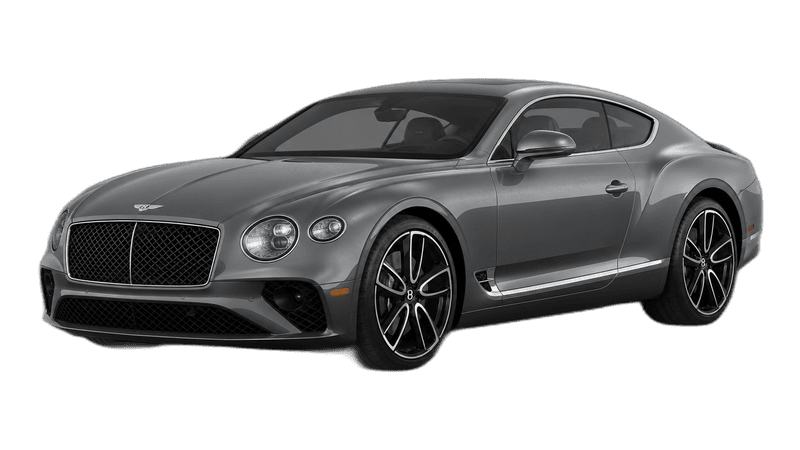 650 cv
Bentley Continental GT Speed (3rd Gen)
£210,000
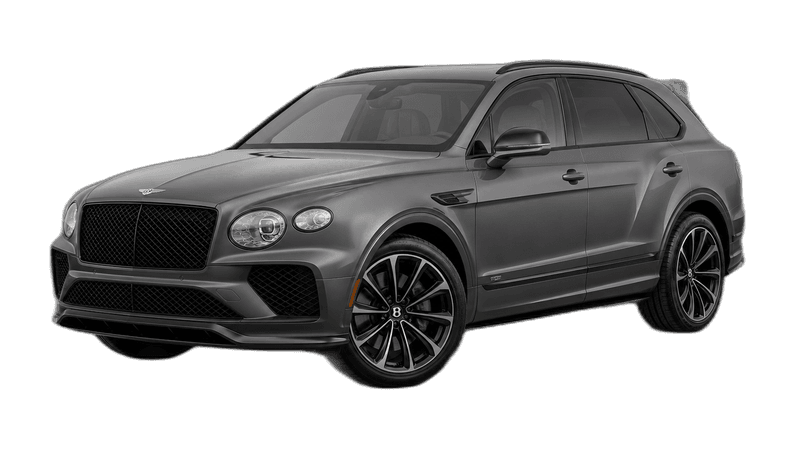 626 cv
Bentley Bentayga Speed
£175,000
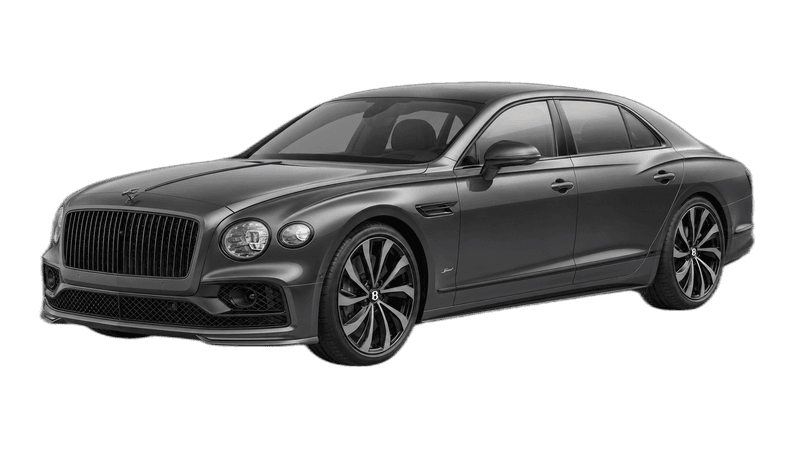 626 cv
Bentley Flying Spur W12 Speed
£175,000
Domande Frequenti
What are the specifications of the Bentley R-Type Continental?
The Bentley R-Type Continental is a 2-door coupé by Bentley, with 153 bhp, a 0-100 km/h time of 13.6 seconds and a top speed of 185 km/h.
How many Bentley R-Type Continental were made?
Bentley produced 208 units of the Bentley R-Type Continental.
What drivetrain does the Bentley R-Type Continental use?
The Bentley R-Type Continental is configured with rear-wheel drive.
What type of car is the Bentley R-Type Continental?
The Bentley R-Type Continental is a gts manufactured by Bentley in United Kingdom. Production ran from 1952 to 1955.