

Vauxhall Corsa VXR
£8,000
usedIndicative market price, updated periodically.
189bhp
Power
7.2s
0-100 km/h
225km/h
Top Speed
£8,000
Price Used
How hard it pulls.
Peak g-force the instant you bury the throttle, estimated from the car's 0–100 time and drivetrain.
Vauxhall Corsa VXREstimated peak launch g from the 0–100 time and drivetrain: an honest approximation, not a measured figure.
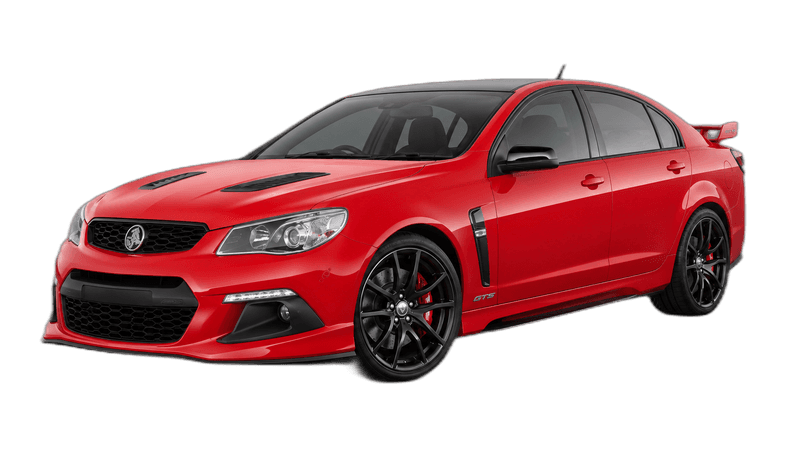
The Vauxhall Corsa VXR is a hatchback by Vauxhall, with 189 bhp, 260 Nm of torque, a 0-100 km/h time of 7.2 seconds and a top speed of 225 km/h. Indicative used value: approximately £8,000. Actual values vary with specification, condition and history.
Dream Car Garage Editorial · Last updated 2 November 2026
Overview
We have not driven this car. This review is based on published specifications and the sources listed below.
A 189 bhp turbo supermini from Vauxhall
The Vauxhall Corsa VXR is a three-door, front-wheel-drive hot hatch, sold in Germany and elsewhere as the Opel Corsa OPC. Our catalogue lists it with a 1.6L turbocharged inline-4 petrol engine producing 189 bhp and 260 Nm, with 0 to 100 km/h in 7.2 seconds and a top speed of 225 km/h. This guide is scoped to the Corsa D VXR built from 2007 to 2014. The sources we read give that as the first Corsa to wear the VXR name, and the figures above belong to it.
Two other generations matter when you read adverts. PistonHeads calls the Corsa D VXR of 2007 the first generation and the Corsa E VXR, on sale from 2015 and last registered in 2018, the second. It is a different car with its own figures and faults, and we do not cover it here. The same guide names the 1988 Nova GTE as an earlier ancestor. We found no source in our reading that describes a VXR-badged Corsa B or Corsa C, so we do not claim one exists. The catalogue's earlier start year of 1982 does not match any source we read for the VXR and is corrected to 2007.
We have not driven this model for this article. This is a desk-researched ownership guide built from sources we could read in full. The first is a reproduction on Autoblog of Vauxhall's January 2007 launch press release, credited on that page to Vauxhall. The second is the PistonHeads Corsa E VXR used buying guide by Tony Middlehurst, published on 18 June 2022, which also covers the Corsa D. We also read a PistonHeads used review of the Corsa VXR by Dan Prosser from 3 May 2020, the PistonHeads report on the Nurburgring Edition from 21 April 2011, a Wards Auto report from February 2007 that attributes its figures to Opel, and the Auto Bild model listing. The pages on vauxhall.co.uk and the Stellantis media site for Opel refused our automated requests, and we did not try to get around that, so we could not read Vauxhall's own current pages or brochures. We did not consult the government recall check for this article, and you should use it yourself.
Checking the figures
Power depends on the unit. Vauxhall's launch release gives 192 PS, which is about 189 bhp, and the PistonHeads Nurburgring report gives 189 hp as the base car's output. Metric horsepower is roughly 1.4 percent larger than mechanical horsepower, so 189 bhp and 192 PS describe the same standard car. The PistonHeads guide and review quote 192 hp and 205 hp, which look like metric figures labelled in hp, so read adverts with that in mind.
Torque is the loosest figure. The Vauxhall release says more than 260 Nm, available on overboost to help overtaking. Wards Auto, quoting Opel, says torque peaks at 230 Nm, with a temporary overboost reaching 266 Nm. PistonHeads lists 170 lb ft, about 230 Nm, plus 26 lb ft more on a five-second overboost. So the 260 Nm in the catalogue is the temporary overboost figure, and the sustained peak is 230 Nm. We keep 260 Nm because that is what Vauxhall's release states, and we flag it as an overboost claim.
Acceleration is where the manufacturer's own sources diverge. Vauxhall's release says 0 to 60 mph in 6.8 seconds with a top speed of 140 mph, and PistonHeads gives 6.8 seconds to 62 mph and 140 mph. Wards Auto and the Auto Bild listing, both attributing the figure to Opel, give 7.2 seconds from 0 to 100 km/h. Auto Bild lists the whole generation at 225 to 230 km/h. 140 mph is about 225 km/h, so that figure is consistent. The catalogue's 7.2 seconds and 225 km/h are Opel's published claims for the standard car. We cannot reconcile 6.8 and 7.2 from our sources, they are launch claims and not our measurements, and the PistonHeads author says power and weight data are hard to verify and should be treated as relative. The same guide also describes the car as approaching six seconds to 62 mph, which no other source supports, so we ignore it.
Weight is given by PistonHeads as 1,203 kg for the standard car and 1,223 kg for the Nurburgring Edition, in its review table. We found no weight in Vauxhall's release. Fuel economy in the release is 35.8 mpg combined and 44.1 mpg extra-urban, which is an official figure, not an owner's experience.
Production years: Auto Bild lists the Opel Corsa OPC from March 2007 to August 2014 and PistonHeads says 2007 to 2014. We use 2007 to 2014. We found no source stating how many were built, so we give no production count.
Engine and gearbox
The engine is a 1,598 cc turbocharged four-cylinder, described in the release as a lightweight unit, paired with a six-speed manual and front-wheel drive. PistonHeads says the Nurburgring Edition has an uprated version of this engine, and shares its mechanical hardware with the Clubsport.
The main weak point, according to both PistonHeads articles, is the engine on tuned cars. The buying guide says mapped cars were prone to failure of piston number four, and that specialists blame the side-fed inlet manifold, which can let the fourth injector run lean. The guide adds that it knew of no UK engine failures on standard-spec cars. The review describes the symptoms as a smoky idle, a misfire or a lack of power, and warns that if the problem is not caught early it will eventually prove terminal. It does not give a mileage or a count of failures. Our reading is that a remap, who did it, and whether there is a dyno sheet and fuelling evidence, matter more than the badge. The guide also advises warming the engine properly before hard use and letting it idle for about 30 seconds after a hard drive.
The gearbox is the other area to check. The review calls the Getrag gearbox a weak point and tells buyers to check the shift action and listen for unwanted noises. The guide says early mapped cars had transmission bearing problems in the M32 gearbox, and that later revisions used Timken bearings and a greater fluid capacity. We do not know which cars received the revised bearings, so ask for gearbox service history and any invoices, and try every gear on a long test drive.
The Nurburgring Edition and Clubsport add a mechanical multi-plate limited-slip differential. PistonHeads reports it is a Drexler unit on the Clubsport and praises it as very effective, while noting it can make the steering tug at your wrists. The standard car had no such differential in our sources.
Chassis, brakes and wheels
Vauxhall's release for the original car mentions uprated brakes with blue-painted calipers, uprated suspension, a tuned ESP and variable-assist power steering, with optional 18-inch alloy wheels. It gives no disc sizes. PistonHeads says the standard VXR's body control is the pogoing sort and the steering is vague, so do not expect a sharp chassis from a base car.
The Nurburgring Edition, announced in April 2011, changed the chassis considerably. PistonHeads reports Bilstein springs and dampers made for the car, with the ride height lowered 20 mm at the front and 15 mm at the rear, newly developed Brembo brakes said to be 30 percent lighter, with linings covering a 10 percent larger area, and forged aluminium wheels in high-gloss grey. ABS, traction control and stability control were recalibrated. The Clubsport, the run-out model, is described as having Recaro seats, a Remus exhaust, Brembo brakes, Bilstein dampers and the Drexler differential on certain cars, which suggests that equipment varied, so check each car's paperwork and parts.
The guide lists chassis wear on the Corsa D: the front subframes were prone to rust, and drop links, dampers and front coils wear out, with front coils able to fracture. Inspect the subframe closely, listen for knocks over bumps, and check the front springs. We found no source with wheel bearing, disc or tyre data for the Corsa D VXR, so ask for invoices for brakes and tyres, and check that the alloy wheels have no kerb damage or lacquer peeling.
Body, interior and electronics
Our sources say little about body faults on the Corsa D VXR. The buying guide does not mention paint or panel problems for the Corsa D. It warns that crash-damaged examples are common among the Corsa E cars, and says nothing similar for the D, but a thorough inspection for accident repair is still sensible on any hot hatch. Check panel gaps, matching paint across both doors, and the front bumper area.
Inside, PistonHeads describes the cabin as very patchy, with a seating position that is far too lofty. The Clubsport had Recaro seats on some cars, so inspect the bolsters and check that they are the correct seats. Auto Bild gives the Corsa OPC's boot as 285 to 1,050 litres, a manufacturer figure for the generation. We found no source describing electrical faults, so test the windows, locks, climate control and every warning light on a test drive, and ask what has been repaired.
Recalls and history
Neither PistonHeads article lists a recall for the Corsa D VXR. The buying guide mentions two recalls from 2020, one for faulty steering columns on cars built from September to December 2019 and one for incorrectly fastened fuel pumps on cars built between March 2019 and February 2020, but those belong to the Corsa E, not to the cars in this guide. It also mentions a releasing handbrake issue that it says applied mainly to earlier Corsa D models. It does not give a recall reference or dates, so we state no more than that.
We cannot say whether any campaign is open on a given car. Enter the registration into the government recall check, which we did not consult, and ask a Vauxhall dealer or specialist for open campaigns against the VIN. Ask for the full service history, evidence of any remap and who did it, gearbox and clutch invoices, subframe and suspension work, and brake and tyre receipts.
Buying decision
The PistonHeads review is lukewarm about the standard car. Prosser calls the Corsa VXR never a class-leader, says the Clubsport or the near-identical Nurburgring Edition is a fine, fun hot hatch for buyers who do not care about image, and says he would take a Fiesta ST instead. The buying guide makes the same comparison, calling the Corsa less resolved and less compliant on the road. Prices are dated, so compare current adverts and leave our sources' numbers aside.
Keep the editions straight. The standard car is the 189 bhp or 192 PS car in this guide, with 7.2 seconds and 225 km/h as Opel's claims. The Nurburgring Edition, which Auto Bild lists from June 2011 to August 2014, is a different specification: Vauxhall's UK figure is 202 bhp, about 205 PS, with 6.5 seconds to 60 mph and 143 mph, while Auto Bild lists the Opel version at 210 PS with 6.8 seconds from 0 to 100 km/h. PistonHeads gives about 279 Nm for it. The Clubsport uses the same 205 hp engine. Do not assume the standard car's figures apply to any of them.
Prefer a standard-spec car with an unmapped engine, or a mapped one with full documentation from a named specialist, a clean government recall check, a gearbox that shifts cleanly in all gears, no rust on the front subframe, sound dampers and springs, and written confirmation of which edition and output you are buying.
Specifications
Engine
1.6L turbocharged inline-4 petrol
Displacement
1.6L
Power
189 bhp
Torque
260 Nm
0-100 km/h
7.2s
Top Speed
225 km/h
Drivetrain
FWD
Country
UK
Body Style
hatchback
Years
2007–2014
Price Used
£8,000
Specifications are manufacturer-published figures.
More from Vauxhall

Frequently Asked Questions
What are the specifications of the Vauxhall Corsa VXR?
The Vauxhall Corsa VXR is a hatchback by Vauxhall, with 189 bhp, 260 Nm of torque, a 0-100 km/h time of 7.2 seconds and a top speed of 225 km/h. Indicative used value: approximately £8,000. Actual values vary with specification, condition and history.
How much does a Vauxhall Corsa VXR cost?
Indicative used value: approximately £8,000. Actual values vary with specification, condition and history.
What drivetrain does the Vauxhall Corsa VXR use?
The Vauxhall Corsa VXR is configured with front-wheel drive.
What type of car is the Vauxhall Corsa VXR?
The Vauxhall Corsa VXR is a hot hatches manufactured by Vauxhall in UK. Production ran from 2007 to 2014.