
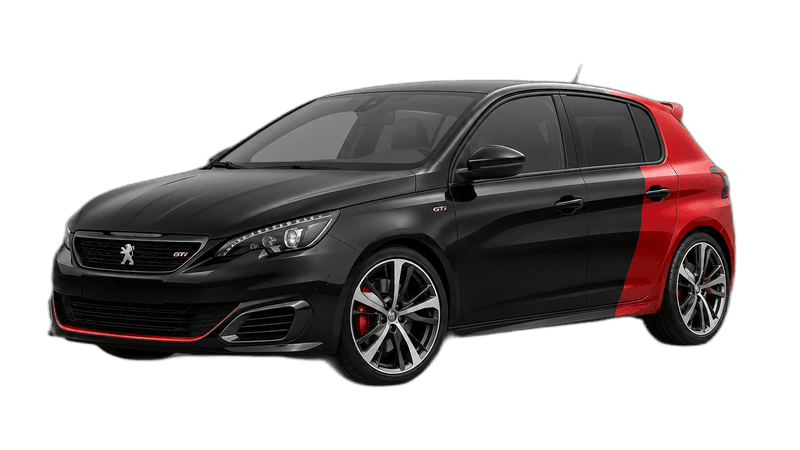
Peugeot 308 GTi 270
£18,000
usedIndicative market price, updated periodically.
266bhp
Power
6s
0-100 km/h
250km/h
Top Speed
£18,000
Price Used
How hard it pulls.
Peak g-force the instant you bury the throttle, estimated from the car's 0–100 time and drivetrain.
Peugeot 308 GTi 270Estimated peak launch g from the 0–100 time and drivetrain: an honest approximation, not a measured figure.
The Peugeot 308 GTi 270 is a 5-door hatchback by Peugeot, with 266 bhp, 330 Nm of torque, a 0-100 km/h time of 6 seconds and a top speed of 250 km/h. Indicative used value: approximately £18,000. Actual values vary with specification, condition and history.
Dream Car Garage Editorial · Last updated 2 November 2026
Overview
We have not driven this car. This review is based on published specifications and the sources listed below.
A five-door hot hatch from Peugeot Sport
The Peugeot 308 GTi 270 by Peugeot Sport is the more powerful of the two versions of the GTi that the French brand added to its 308 range in 2015 and 2016. It is a five-door, front-wheel-drive hatchback sold only with a six-speed manual gearbox, tuned by Peugeot's motorsport division. Our catalogue lists a 1.6L turbocharged inline-4 petrol (THP) engine producing 266 bhp and 330 Nm, with 0 to 100 km/h in 6 seconds and a 250 km/h limited top speed. We have not driven this model for this article. This is a desk-researched ownership guide built from the Japanese press release for the 308 GTi range of February 2016, a PistonHeads used buying guide published in March 2021 and the government recall check. The press release is a launch document for the Japanese market, written in Japanese, so we use it for the engineering description and treat the PistonHeads guide as the source for UK ownership experience.
Checking the figures
Peugeot's release gives the 270 version a maximum output of 200 kW at 6,000 rpm, which it also expresses as 270 PS, and a maximum torque of 330 Nm at 1,900 rpm from 1,598 cc, with a compression ratio of 10.5. The 270 PS rating is the metric figure, which converts to the 266 bhp in our catalogue, while PistonHeads prints it as 270 hp with 243 lb ft at 1,900 rpm, which is the same 330 Nm. Adverts that say 266, 268, 270 or 200 kW describe one engine in different units: 270 PS is about 266 bhp and 200 kW is about 268 bhp, so the small gap between 266 and 268 is rounding between the two ratings, not a different engine. The release says the 250 version makes 184 kW and the same 330 Nm, and that the standard 1.6 turbo it was developed from makes 200 PS, so the GTi 270 adds 35 per cent to the base output.
PistonHeads lists 0 to 62 mph in 6.0 seconds and a top speed of 155 mph, which is the 250 km/h limit in our catalogue, with a weight of 1,205 kg. The Japanese release gives a kerb weight of 1,320 kg for the Japanese-market car, and a European power-to-weight ratio of 4.46 kg per PS for the 270, so weights differ by source and by specification. PistonHeads dates the model from 2014 to 2019 in its specification table and from 2016 in its heading, so check the first registration rather than assuming a year. It also says that from late 2018 the 270 became the 260 to satisfy the WLTP emissions test, so a late car may carry a different power figure in its paperwork.
Engine and gearbox
Peugeot says Peugeot Sport tuned the 1.6 for combustion efficiency, strengthened the cylinder block by heat treatment, and fitted a twin-scroll turbocharger and a heat-resistant steel exhaust manifold. It lists new forged pistons made from the aluminium used in Formula 1 engines and a new intercooler in the front bumper. PistonHeads adds forged aluminium Mahle pistons, a reinforced block and a high-pressure fuel injection system for a broader torque curve. It reminds readers that this engine family had a poor reputation in its early life, but says that by the time the high-power THP reached the 308 GTi the connection to those problems was distant enough not to be a concern. PistonHeads notes that meaningful thrust arrives from about 2,500 rpm and that the engine becomes especially keen between 3,000 rpm and the 6,000 rpm redline.
The drive modes are limited to Normal and Sport. Sport sharpens throttle response and exhaust note, and PistonHeads says it pipes an engine sound through the speakers, though more than one tester found the Normal throttle easier to use. There is no automatic option, and the guide wishes the gearbox had a slightly shorter throw. Peugeot's release lists a low final drive ratio of 4.176 for more direct acceleration, and a standard Driver Sport Pack.
The reported weak point is hesitation. PistonHeads says a stuttering engine has caused the most worries, and that Peugeot prescribes new spark plugs at every 12,500-mile or annual service, so check whether that was done. The guide also says coil packs deserve a look because water can collect around them and cause corrosion, and that some owners replace their coils every 20,000 miles. Other suspects it names are faulty non-return valves in the fuel tank, which can saturate the carbon canister and prevent starting, and a failing high pressure fuel pump, which can be reconditioned. It adds that the engine is set up for the best fuel, and that anecdotal evidence suggests Peugeot knows about the hesitation issues and has sometimes helped with the cost. Ask for invoices for plugs, coils and fuel system work, and listen for any stutter on a cold start and under load.
Chassis, brakes and wheels
Peugeot's release lists a dedicated suspension, a dedicated electronic stability programme, a larger front brake disc and Peugeot Sport four-piston front calipers on the 270, with a Torsen limited-slip differential fitted only to the 270. It also lists 19-inch wheels for the 270 against 18-inch for the 250. PistonHeads says the 270 upgrade over the 250 also brought 19-inch Carbone diamond-cut alloys and sports seats, and describes the differential as worth the extra cost on its own, because it pulls the car hard out of corners. According to the guide, three in four UK buyers chose the 250, so the 270 is the less common version.
PistonHeads says the springs are 56 per cent stiffer at the front and 64 per cent stiffer at the rear than the 308 GT, and that the car sits 11 mm lower with wider tracks and more negative camber. The suspension is passive, so Sport mode does not change the ride. The ride is firm but not uncomfortable, the car is more understeery than a Leon Cupra, and the steering is described as short of feedback and over-assisted at motorway speed. One owner reported a front knock that was not cured even after Peugeot changed the dampers twice under warranty, so listen for it on a bumpy road.
PistonHeads says the Alcon-made four-piston brakes with 380 mm floating front discs give strong stopping power and a sharp initial bite. Our other source does not name the brake supplier, so treat the Alcon claim as PistonHeads' report. Replacement parts were originally available only through Peugeot at high cost, and non-Alcon alternatives now exist. The standard tyres are Michelin Pilot Super Sport in 235/35 size on 8 x 19 inch wheels. They can be noisy on concrete motorway sections, and the guide mentions a manufacturer advisory that the metal tyre valve caps do not always refit properly. Check disc wear, tyre age and condition, and the wheels for kerb damage.
Body, interior and electronics
The guide describes a solid body with LED headlights as standard, but reports squeaky doors in cold weather, whistling around the driver's window and folding mirrors that failed after the locks were changed. Exterior plastics scratch easily, and parts specific to the GTi have been slow to arrive, so a minor accident can mean a long wait. The two-tone Coupe Franche paint, which pairs red, blue or white with a black rear end, was a separate option and is rare on the used market. A fixed panoramic roof was optional, and its electric blind has been known to drop untidily.
Inside, PistonHeads rates the cabin quality as good. The seats are comfortable and have a massage function, though rear legroom is tight and the boot is 470 litres. The small steering wheel in Peugeot's i-Cockpit layout is meant to be looked over rather than through, which divides opinion, so try the driving position. The tachometer needle runs anti-clockwise, and Sport mode turns the dials red. PistonHeads says GTIs from July 2020 received the digital i-Cockpit first seen on the 3008, which sits oddly with its 2014 to 2019 dating, so check what the car in front of you has. The 9.7-inch touchscreen on pre-facelift cars is described as clunky and, according to the guide, the facelift from late 2017 added Apple CarPlay and Android Auto with better graphics and sensitivity, which is why a pre-2018 touchscreen is flagged as a weak point. Climate controls are in a touchscreen sub-menu, and some air conditioning compressors have failed. The keyless entry system is not faultless, and owners have been told not to carry two keys in the car at once. Test every switch, the screen, the parking sensors, the seats and the radio reception.
Recalls and history
PistonHeads says the 308 range has had its share of recalls, mostly diesel particulate filter and electrical problems, and that the GTi has done reasonably well. Neither source supplies a full recall list for this car, so enter the registration in the DVSA recall service and ask the seller for dealer paperwork showing that any open work was completed. Ask for a full service history, accident repair records and any engine modifications. The guide says an entry-level remap might add around 20 hp and improve low-rpm response, so ask whether the car has been tuned.
Buying decision
The PistonHeads verdict is that the 308 GTi has been described as a missed opportunity, but that appraised objectively it is a quick, good-handling, practical five-door car that will embarrass most other traffic without show. It says UK dealers generally try hard to resolve problems for GTi owners. The March 2021 prices are omitted as dated; compare current adverts. Prefer a car with a documented service history, evidence of plug and coil replacement, a smooth engine from cold, a firm brake pedal, a facelift touchscreen that works, evenly worn tyres and every recall closed.
Specifications
Engine
1.6L turbocharged inline-4 petrol (THP)
Displacement
1.6L
Power
266 bhp
Torque
330 Nm
0-100 km/h
6s
Top Speed
250 km/h
Drivetrain
FWD
Country
France
Body Style
5-door hatchback
Years
2016–2019
Price Used
£18,000
Specifications are manufacturer-published figures.
More from Peugeot
Frequently Asked Questions
What are the specifications of the Peugeot 308 GTi 270?
The Peugeot 308 GTi 270 is a 5-door hatchback by Peugeot, with 266 bhp, 330 Nm of torque, a 0-100 km/h time of 6 seconds and a top speed of 250 km/h. Indicative used value: approximately £18,000. Actual values vary with specification, condition and history.
How much does a Peugeot 308 GTi 270 cost?
Indicative used value: approximately £18,000. Actual values vary with specification, condition and history.
What drivetrain does the Peugeot 308 GTi 270 use?
The Peugeot 308 GTi 270 is configured with front-wheel drive.
What type of car is the Peugeot 308 GTi 270?
The Peugeot 308 GTi 270 is a hot hatches manufactured by Peugeot in France. Production ran from 2016 to 2019.