
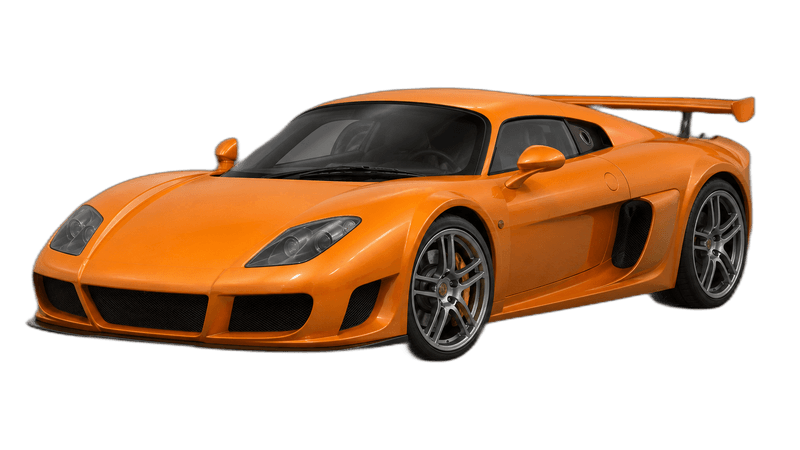
Noble M600
£200,000
usedIndicative market price, updated periodically.
650bhp
Power
3s
0-100 km/h
362km/h
Top Speed
£200,000
Price Used
How hard it pulls.
Peak g-force the instant you bury the throttle, estimated from the car's 0–100 time and drivetrain.
Noble M600Estimated peak launch g from the 0–100 time and drivetrain: an honest approximation, not a measured figure.
The Noble M600 is a 2-door coupe by Noble, with 650 bhp, 819 Nm of torque, a 0-100 km/h time of 3 seconds and a top speed of 362 km/h. Indicative used value: approximately £200,000. Actual values vary with specification, condition and history.
Dream Car Garage Editorial · Last updated 3 November 2026
Overview
We have not driven this car. This review is based on published specifications and the sources listed below.
Scope of this guide
This guide is scoped to the Noble M600 in its 4.4L twin-turbo V8 petrol form with 650 bhp, the rear-wheel drive, mid-engine, two-seat, carbon-bodied coupe that Noble Automotive builds by hand in Leicestershire, England. It does not cover Noble's other models, and it treats the M600 as one model because none of our sources separates the figures by version. Later variants such as the Carbon Sport are mentioned only where a source mentions them.
We have not driven this model for this article. Everything here comes from three cited sources: Noble's own M600 brochure, which we read as a copy archived by the Internet Archive on 16 May 2011 because we could not find an M600 specification page on the current noblecars.com; PistonHeads' report "Noble M600 reborn and revisited" of 4 August 2016; and the government's vehicle recall checker page, which we read on 3 November 2026. We also looked at a few other pages to cross-check figures. Where one of them changes a number we say so, and we do not rely on it for anything else.
The figures at a glance
- Engine: 4.4L twin-turbo V8 petrol, 4439 cc. Noble's brochure prints "Yamaha V8 4439cc Twin Turbo", installed mid and longitudinal, and PistonHeads prints 4,439cc in its 2016 spec box.
- Power: 650 bhp at 6800 rpm, which is Noble's headline figure in the brochure and the figure in the text of the PistonHeads article. The PistonHeads spec box instead prints 669 hp at 6,800 rpm, labelled as quoted maximum net power. We could not reconcile the two, and 650 bhp is the manufacturer's number. A magazine road test we read but do not cite printed 662 bhp, so published figures for this car sit between about 650 and 669.
- Torque: 819 Nm. Both sources give 604 lb ft at 3800 rpm, and 604 x 1.3558 is about 819 Nm, so the metric figure is our own conversion.
- 0-100 km/h: 3.0 seconds. This is a launch claim for 0-62 mph, not a measured 0-100 km/h time. We saw it in PistonHeads' August 2009 launch report, which is not one of our three sources. The 2016 PistonHeads spec box says no 0-62 mph time is claimed, and Noble's brochure gives only 0-120 mph in 8.9 seconds, credited to Autocar. Because 62 mph is almost exactly 100 km/h, we use the figure as it stands, but treat it as a claim.
- Top speed: 362 km/h, which is 225 mph converted. The brochure calls 225 mph an estimate, while the PistonHeads spec box marks 225mph with an asterisk as a test figure from Autocar. The two sources describe the same number in different ways.
- Drive: rear-wheel drive through a six-speed Graziano manual gearbox. PistonHeads adds that an automated manual was optional.
- Weight: 1198 kg in the brochure, which Noble pairs with 542 bhp per tonne. PistonHeads prints 1,198kg in the spec box and describes the car as weighing about 1,200 kg. Other sources quote more for early prototypes, so ask what a particular car weighs.
- Size: 4360 mm long, 2540 mm wheelbase and a 68 litre fuel tank, all from the brochure.
The three power settings
The M600 has a dial for what the brochure calls Adaptable Performance Control. It offers three settings, shown on the dial and on the dashboard display. Road is about 450 bhp with full traction control and a gentle boost curve. Track is about 550 bhp with less intrusive traction control and a steeper boost curve. Race is the full 650 bhp, with more wheel slip allowed, an aggressive boost curve and a sharper throttle. Noble adds that the labels are only names for the power levels and are not advice about where to use them.
For a buyer this matters in two ways. First, the dial is a real control, so check that every setting works and that the car actually delivers the top setting. Second, PistonHeads describes the road setting as already plenty quick in a car of about 1,200 kg, so there is no need to learn the car at full power. The distributor told PistonHeads that boost at high revs in the top setting is 1 bar instead of the 0.6 bar standard, so power arrives instantly and deserves respect.
Where the engine came from
The brochure calls it a Yamaha V8. PistonHeads quotes the distributor's director as saying that Volvo commissioned the basic design from Yamaha, but that this version is a bespoke build by Judd, the racing engine company, and that the output is only about 75 per cent of what the engine can do. The common description of it as a Volvo XC90 engine is, in his words, a misconception. We cannot settle the history from our sources, so if an advert makes a claim about the engine's origin, ask for the engine number and a letter from Noble.
Traction control, brakes and the missing ABS
The M600 does have traction control. It can be switched off with a button under a guard, which the brochure says is taken from a fighter jet so that it cannot be pressed by accident, and it resets to on when the engine is turned off. The car has no ABS, and PistonHeads says it relies on traction control rather than electronic stability control. The brakes are Alcon: 380 mm front discs with six-piston monobloc calipers and 350 mm rear discs with four-piston calipers, with Pagid pads. PistonHeads found them heavy but full of feel, with only a hint of servo assistance.
The wheels are forged Speedline units, 9Jx19 at the front and 12Jx20 at the rear, with Michelin Pilot Sport tyres in 255/30-19 and 335/30-20. These are expensive, specialist sizes, so ask what is fitted, how old the tyres are and who supplies replacements.
Construction and what it means for an owner
Per the brochure, the chassis is a stainless steel and aluminium tub with an integral safety cell and a tubular space frame, a rear crash structure and a carbon composite crash structure in the front boot. The body is carbon fibre composite, and the luggage space is at the front. Each car carries an identification plate on the dashboard with its own build number, and the names of the people who built it are shown on the door sill kick plate.
PistonHeads notes practical points that matter to an owner: a high, broad sill and a bracing bar to step over, pedals that are offset and very close together, a compact driving position, and a very tall gear lever that Noble was looking to shorten. It recommends the factory's custom-fitting service. We found no repair cost for the carbon bodywork in either source, so get a quote before you assume a cosmetic repair is cheap.
Years and numbers built
Noble's brochure is undated. PistonHeads' 2016 article speaks of six years since the car's debut, which points to about 2010, and that is the start year we use. We found no source for an end year, so we leave it open. The same article says Noble had not sold the hundreds that its media profile suggested, and that a new UK and Europe distributor, Super Veloce Racing, had taken exclusive rights earlier in 2016 and was promoting a Carbon Sport demonstrator. We found no production count in our three sources, and an owner's passing remark elsewhere on the same site is anecdote, not a figure, so we do not state one.
What to check before buying
- Ask for the build number from the dashboard plate and have Noble confirm it, along with the build date and any recorded updates.
- Check that the power dial works in all three positions and that the traction control button and its guard operate and reset.
- Ask for the engine number and any evidence of engine work, since the origin of the engine is described differently by different sources.
- Check the clutch and gearbox history. PistonHeads reported a hard-used car at over 40,000 miles needing only a new clutch and consumables, but that is one car.
- Inspect the carbon bodywork, front splitter and wheels for damage, and ask how any repair was done.
- Look at tyre age and size, brake disc wear and the condition of the Alcon calipers.
- Try the entry and the driving position, since the car is a tight fit.
- Get an independent specialist inspection and run the registration through the recall check described below.
Recalls and the DVSA check
We read the government's recall page on 3 November 2026 but did not run a check, because we are not looking at a specific car. The page says you can use a car's registration number to see safety recalls that have not been checked or fixed, plus its MOT history, or check without a registration if you know the manufacturer, model and year of manufacture. It says the manufacturer will tell you if a car has been recalled for a reason other than safety. We found no recall notice for the M600 in any source, and absence from our sources is not a clean bill of health.
Be realistic about what the checker can tell an owner of a hand-built, low-volume car. It can show a safety recall that has been registered, and it can show MOT history. It cannot show whether a factory update has been fitted, whether an engine map has been changed, how the carbon body was repaired or whether the build number matches the car. If it returns nothing, that is an absence of a record, not evidence of a clean car, so also ask Noble directly whether any service bulletin applies to the chassis.
About the photograph
The picture at the top of this page shows a blue 2011 Noble M600 photographed in Oakham, UK, by MrWalkr, published on Wikimedia Commons under CC BY-SA 4.0. We cropped it to 16:9, resized it and blurred the front number plate. We know nothing about that individual car's specification, so it shows the shape only.
Verdict
The M600 in this guide is 650 bhp, 819 Nm, a claimed 3.0 seconds to 100 km/h and a claimed 362 km/h, rear-wheel drive and mid-engine, with a manual gearbox, traction control you can switch off, and no ABS. It is a small-maker car, so its history, its build number and Noble's own confirmation matter more than any headline figure. If you are shopping for one, check the power dial, the engine origin, the tyres and brakes and the carbon bodywork, ask for a full history and treat every published number as a claim with the caveats above. We have not driven it, so use the sources and a proper inspection to decide.
Specifications
Engine
4.4L twin-turbo V8 petrol
Displacement
4.4L
Power
650 bhp
Torque
819 Nm
0-100 km/h
3s
Top Speed
362 km/h
Drivetrain
RWD
Country
UK
Body Style
2-door coupe
Years
2010–present
Price Used
£200,000
Specifications are manufacturer-published figures.
Frequently Asked Questions
What are the specifications of the Noble M600?
The Noble M600 is a 2-door coupe by Noble, with 650 bhp, 819 Nm of torque, a 0-100 km/h time of 3 seconds and a top speed of 362 km/h. Indicative used value: approximately £200,000. Actual values vary with specification, condition and history.
How much does a Noble M600 cost?
Indicative used value: approximately £200,000. Actual values vary with specification, condition and history.
What drivetrain does the Noble M600 use?
The Noble M600 is configured with rear-wheel drive.
What type of car is the Noble M600?
The Noble M600 is a supercars manufactured by Noble in UK. Production started in 2010.