
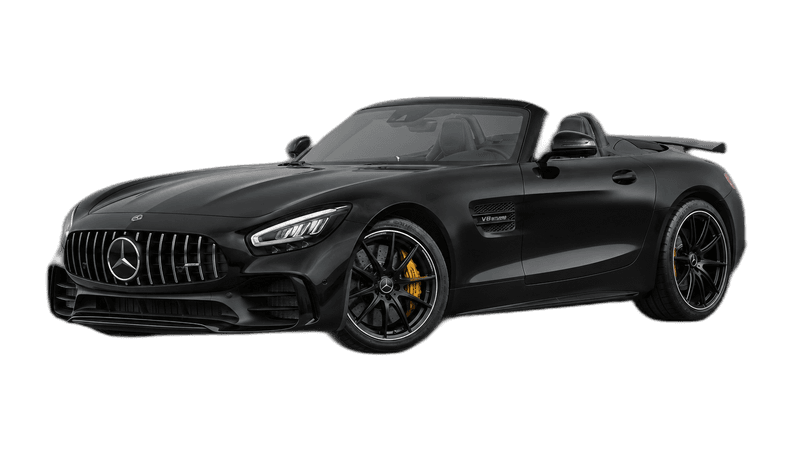
Mercedes-AMG GT Roadster
£78,000
usedIndicative market price, updated periodically.
476bhp
Power
4s
0-100 km/h
302km/h
Top Speed
£78,000
Price Used
How hard it pulls.
Peak g-force the instant you bury the throttle, estimated from the car's 0–100 time and drivetrain.
Mercedes-AMG GT RoadsterEstimated peak launch g from the 0–100 time and drivetrain: an honest approximation, not a measured figure.
The Mercedes-AMG GT Roadster is a 2-door convertible by Mercedes-AMG, with 476 bhp, 630 Nm of torque, a 0-100 km/h time of 4 seconds and a top speed of 302 km/h. Indicative used value: approximately £78,000. Actual values vary with specification, condition and history.
Dream Car Garage Editorial · Last updated 29 October 2026
Overview
We have not driven this car. This review is based on published specifications and the sources listed below.
Why this car
The AMG GT Roadster followed the coupe by two years, translating the front-mid-engined, transaxle-driven formula into open-top form. The launch range comprised the GT Roadster with 469 bhp and the GT C Roadster with 550 bhp; this catalogue entry records the standard specification of 476 bhp, 630 Nm of torque, a run to 100 km/h in 4.0 seconds and a 302 km/h top speed. The fabric roof preserves the low seating position and the transaxle balance that define the car.
We have not driven this model for this article. The assessment below draws on Mercedes-Benz media material for the GT Roadster and the PistonHeads used buying guide for the AMG GT family. The PistonHeads guide covers the range rather than the Roadster alone; treat both sources as inspection prompts for the individual example rather than predictions that every car will behave the same way.
What the Roadster adds
Beneath the fabric roof the Roadster shares its architecture with the coupe: the M178 engine ahead of the cabin, the carbon torque tube running between the seats, and the seven-speed gearbox at the rear axle. To compensate for the removed fixed roof, the windscreen frame and body structure were reinforced, adding some weight over the coupe. The roof itself folds in seconds and, with the side windows raised and the draught deflector in place, the cabin remains civilised at speed. Roof seals, hinges and the storage compartment for the folded top deserve inspection for cleanliness and smooth operation, because a neglected mechanism is an expensive repair.
Engine and drivetrain checks
The M178's known concerns mirror those of the coupe. The turbocharger oil-feed pipes can fail and starve the bearings, so documented inspection or replacement is valuable. The transaxle's mechatronic unit should shift decisively on a long test, and the radiators and intercooler circuits should be clean and free of corrosion residue. The limited-slip differential and adaptive suspension behave as on the coupe, and the larger brakes fitted to higher-output cars wear at a rate proportional to use.
Ownership character
The Roadster trades a small amount of ultimate rigidity for an open-air experience that suits the car's grand-touring stride. Running costs concentrate in the same areas as the coupe: tyres, brakes, cooling and the lubrication system. Values for early roadsters track those of the coupe with a modest premium, figures quoted here only as historical context from the source guide.
The wider Roadster range and daily realities
The Roadster arrived in New York in February 2017, offered in base form at 469 bhp and as the GT C Roadster at 550 bhp, both sharing the M178 and the transaxle layout of the coupe. The fabric roof folds in seconds, and the windscreen frame was reinforced to compensate for the loss of the fixed roof, which adds weight but preserves much of the coupe's rigidity. The roof seals, hinges and stowage mechanism are the parts an owner lives with daily, so a used inspection should operate the roof several times, wet and dry, and check for trapped debris that accelerates seal wear. The engine and gearbox checks repeat the family pattern: turbo oil-feed pipe, gearbox mechatronics, radiator corrosion and clutch-pack wear. The Roadster suits a warmer climate or a committed open-top driver, and the decision to buy one over a coupe should be made on how often the roof will genuinely be down.
Launch context and body engineering
The GT Roadster launched at the New York show in February 2017 in two forms: the base Roadster at 469 hp and the GT C Roadster at 550 hp, both using the M178 twin-turbo V8 with the transaxle layout retained. Removing the fixed roof demanded reinforcement through the sills, windscreen frame and underbody, adding weight the adaptive dampers absorb without drama. The fabric roof folds in seconds and operates at low speed, with the rear stowage cover hinging clear before deployment; an inspection should cycle it fully, wet and dry, and check the seals and drainage channels because water ingress through a tired seal is the most expensive avoidable fault on any open car. The M178 known issues from the coupe carry across unchanged: turbo oil feed pipes, gearbox mechatronics, radiator corrosion in salted climates and clutch wear from launch habits. The buying question this car answers is how often the roof will actually open; a car bought for open-air use that lives roof-up would be better served by the coupe, while an owner who drives top-down regularly gets the full experience the GT was engineered around.
Buying verdict
The strongest cars combine a documented service history with a dry, smoothly operating roof and evidence that the turbo oil-feed issue has been addressed. The Roadster suits an owner who will use the open top as intended, with the roof down on good days rather than sealed shut year-round. The fabric roof mechanism deserves a slow, fully observed cycle in both directions before any money changes hands. Cars that have lived roof-down most of their lives often show cleaner cabin switchgear and seals, and the roof history file carries equal weight with the service book. A roof stored open for months at a time needs its seals conditioned before the first wet-season use, and a seller who cannot show the roof service record is telling you something about the rest of the file. No present valuation, investment assurance or universal failure rate is offered. We have not driven this model for this article.
Specifications
Engine
4.0L (3982 cc) twin-turbo V8 petrol
Displacement
4.0L
Power
476 bhp
Torque
630 Nm
0-100 km/h
4s
Top Speed
302 km/h
Drivetrain
RWD
Country
Germany
Body Style
2-door convertible
Years
2017–2019
Price Used
£78,000
Specifications are manufacturer-published figures.
More from Mercedes-AMG

Frequently Asked Questions
What are the specifications of the Mercedes-AMG GT Roadster?
The Mercedes-AMG GT Roadster is a 2-door convertible by Mercedes-AMG, with 476 bhp, 630 Nm of torque, a 0-100 km/h time of 4 seconds and a top speed of 302 km/h. Indicative used value: approximately £78,000. Actual values vary with specification, condition and history.
How much does a Mercedes-AMG GT Roadster cost?
Indicative used value: approximately £78,000. Actual values vary with specification, condition and history.
What drivetrain does the Mercedes-AMG GT Roadster use?
The Mercedes-AMG GT Roadster is configured with rear-wheel drive.
What type of car is the Mercedes-AMG GT Roadster?
The Mercedes-AMG GT Roadster is a gts manufactured by Mercedes-AMG in Germany. Production ran from 2017 to 2019.