
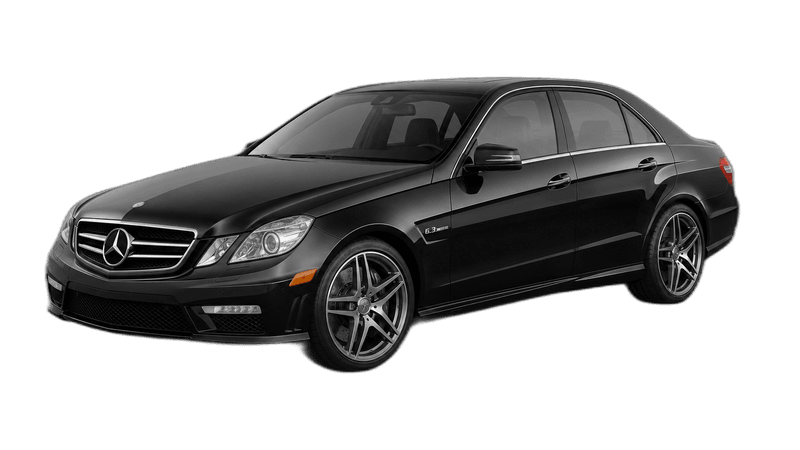
Mercedes-AMG E63 (W212)
£28,000
usedIndicative market price, updated periodically.
557bhp
Power
3.6s
0-100 km/h
300km/h
Top Speed
£28,000
Price Used
How hard it pulls.
Peak g-force the instant you bury the throttle, estimated from the car's 0–100 time and drivetrain.
Mercedes-AMG E63 (W212)Estimated peak launch g from the 0–100 time and drivetrain: an honest approximation, not a measured figure.
The Mercedes-AMG E63 (W212) is a 5-door sedan/saloon by Mercedes-AMG, with 557 bhp, 720 Nm of torque, a 0-100 km/h time of 3.6 seconds and a top speed of 300 km/h. Indicative used value: approximately £28,000. Actual values vary with specification, condition and history.
Dream Car Garage Editorial · Last updated 29 October 2026
Overview
We have not driven this car. This review is based on published specifications and the sources listed below.
Why this car
The W212 E63 AMG replaced the atmospheric M156 6.2-litre with the M157 5.5-litre twin-turbo V8 for the 2010 model year, a shorter, lighter engine that most commentators regard as one of AMG's most significant powerplants. With 557 bhp, 720 Nm of torque, a run to 100 km/h in 3.6 seconds and a 300 km/h top speed, the facelifted car catalogued here combined executive-saloon civility with genuine supercar pace and standard four-wheel drive, while the earlier 525 bhp rear-drive cars from 2009 remain the purist's reference point.
We have not driven this model for this article. The assessment below draws on Mercedes-Benz period press material and the PistonHeads used buying guide for this generation, both listed at the end of this article. Treat their observations as inspection prompts for the individual example rather than predictions that every W212 will behave the same way.
What the W212 E63 is
Launched in 2009 as a 2010 model, the W212 E63 arrived at roughly seventy thousand pounds in the United Kingdom, pitched against the BMW M5 and the Audi RS6 of its era. An E63 Performance Package raised output to 557 bhp, and a P31 development package added roughly thirty horsepower with track-focused brakes and cooling, but the standard car was already the quicker point-to-point machine than the atmospheric car it replaced. From the 2013 facelift four-wheel drive became standard in most markets, earlier in North America, which transformed wet-weather traction, while pre-facelift rear-drive cars remain the purist's choice. The 2013 facelift brought an eight-speed MCT transmission in place of the earlier seven-speed torque-converter unit.
The engine and its known issues
The M157's documented weak points reward a careful read of the service file. The idler pulley on the front of the engine can fail without much warning and, because the debris takes the timing drive with it, a failed pulley can destroy the engine. A heat exchanger between the coolant and oil circuits leaks internally with age, contaminating one fluid with the other. Turbochargers on neglected cars suffer oil-feed line blockage. Cam adjusters can fail, letting the chain jump with misfires caused by fuel dilution, and the intercooler pump is another age-related item. On the electrical side, coil packs fail and engine mounts sag, transmitting vibration into the cabin.
Chassis, drivetrain and the subframe test
The seven-speed gearbox before the facelift uses a torque converter that wears under repeated launch-control use, while the later MCT is more robust. On four-wheel-drive cars the transfer case and front differential dislike mismatched tyre sizes or uneven tread depths across an axle, and the front inner CV boots crack and grind. The single most important structural check is the subframe: front and rear subframes rot from the inside, and a badly rotted example is effectively scrap regardless of engine health. Test the drivetrain under load by hand around the subframe mounts, and treat fresh underseal on a northern European car as a question to answer rather than a comfort.
Running details and daily use
Some ownership details reward knowing before purchase. The M157 demands oil of the specified 229.5 grade, and a car that uses around three hundred millilitres between services is within normal behaviour rather than a warning sign. Fuel tank pressurisation problems are documented and a replacement tank is an avoidable expense if the fault is caught early. Sills and interior trims squeak and rattle on many cars, which is character rather than failure, but a cabin that has been stripped repeatedly for repairs tells its own story. The preceding W211 E63 used the atmospheric 6.2-litre M156 with 507 bhp and is remembered for the piston-slap class action that affected all 2006 and 2007 M156 engines, context that matters when a seller claims the W212's turbocharged engine shares nothing with that episode. On equipment, the P31 pack's roughly thirty extra horsepower mattered less than its Nurburgring-tuned brake package, and the carbon-fibre strut brace and auxiliary oil cooler were standard on four-wheel-drive cars rather than the rear-drive versions, so their presence or absence on a specific car is a specification question worth asking.
Buying and values
Values recorded by PistonHeads in 2020 started around fifteen thousand pounds for early cars, but the guide stresses that rust-rotted subframes and neglected examples make the cheapest cars a false economy, while well-maintained later cars hold above twenty thousand pounds. Coil-over and air suspension failures are four-figure repairs, and individual air struts price by the corner. The seven-speed torque-converter gearbox can wear if the car has lived on launch-control starts, and the engine mounts sag with age, telegraphing vibration into the cabin that a fresh set quietly cures. Third-party warranty cover is hard to arrange on an AMG and costly when available, so a documented specialist history matters more than a low price. Prefer an example with oil-change records at the correct specification, evidence of the heat exchanger and pulley having been addressed, and no tune files on the engine control unit. The 4Matic cars are the usable all-season choice in most markets, while the rear-drive cars reward a more deliberate hand, and both reward identical mechanical diligence.
Ownership verdict
The W212 E63 rewards a buyer who treats the file as the product. The engine's tuning potential is the largest in AMG history and also the largest neglected-maintenance risk. A straight, documented car with healthy subframes offers old-school rear-drive character in a usable package, and the four-wheel-drive cars add genuine all-season usability. No present valuation, investment assurance or universal failure rate is offered. We have not driven this model for this article.
Specifications
Engine
5.5L (5461 cc) twin-turbo V8 petrol
Displacement
5.5L
Power
557 bhp
Torque
720 Nm
0-100 km/h
3.6s
Top Speed
300 km/h
Drivetrain
AWD
Country
Germany
Body Style
5-door sedan/saloon
Years
2013–2016
Price Used
£28,000
Specifications are manufacturer-published figures.
More from Mercedes-AMG

Frequently Asked Questions
What are the specifications of the Mercedes-AMG E63 (W212)?
The Mercedes-AMG E63 (W212) is a 5-door sedan/saloon by Mercedes-AMG, with 557 bhp, 720 Nm of torque, a 0-100 km/h time of 3.6 seconds and a top speed of 300 km/h. Indicative used value: approximately £28,000. Actual values vary with specification, condition and history.
How much does a Mercedes-AMG E63 (W212) cost?
Indicative used value: approximately £28,000. Actual values vary with specification, condition and history.
What drivetrain does the Mercedes-AMG E63 (W212) use?
The Mercedes-AMG E63 (W212) is configured with all-wheel drive.
What type of car is the Mercedes-AMG E63 (W212)?
The Mercedes-AMG E63 (W212) is a super saloons manufactured by Mercedes-AMG in Germany. Production ran from 2013 to 2016.