
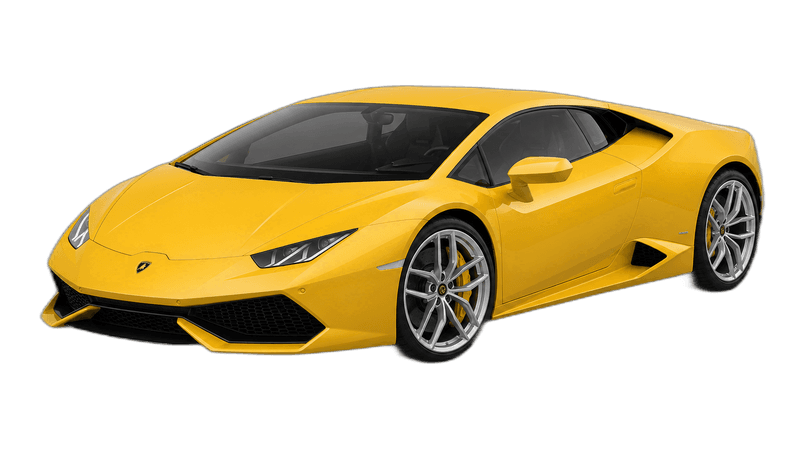
Lamborghini Huracan LP610-4
£170,000
usedIndicative market price, updated periodically.
602bhp
Power
3.2s
0-100 km/h
325km/h
Top Speed
£170,000
Price Used
How hard it pulls.
Peak g-force the instant you bury the throttle, estimated from the car's 0–100 time and drivetrain.
Lamborghini Huracan LP610-4Estimated peak launch g from the 0–100 time and drivetrain: an honest approximation, not a measured figure.
The Lamborghini Huracan LP610-4 is a 2-door coupe by Lamborghini, with 602 bhp, 560 Nm of torque, a 0-100 km/h time of 3.2 seconds and a top speed of 325 km/h. Indicative used value: approximately £170,000. Actual values vary with specification, condition and history.
Dream Car Garage Editorial · Edited by José Teo Lorente Vallecillos · Last updated 28 October 2026
Overview
We have not driven this car. This review is based on published specifications and the sources listed below.
Identify the original all-wheel-drive coupe
The Huracán LP610-4 arrived in 2014 with a naturally aspirated 5,204 cc V10, 610 CV or approximately 602 bhp, and 560 Nm. Its seven-speed dual-clutch transmission drives all four wheels. The quoted 0-100 km/h time is 3.2 seconds and maximum speed exceeds 325 km/h. This entry covers the original coupe, not the LP580-2, a Spyder or the later EVO.
We have not driven this model for this article. This is a desk-researched ownership guide based on Lamborghini's model information, the PistonHeads buying guide and the official recall service. No reliable model-specific production total is established by those sources, so the catalogue count remains unset rather than borrowing a Huracán-family number.
The gearbox is not a Gallardo transmission
The Huracán's dual-clutch gearbox is a significant distinction from the Gallardo's automated manual E-Gear system and the Aventador's ISR. Do not bring a clutch replacement assumption from either of those cars into an inspection of this one. Equally, the different design does not make a diagnostic examination unnecessary. Ask a Lamborghini specialist to assess engagement, shifts and stored faults at appropriate operating temperatures.
PistonHeads discusses an online claim about a fixed launch-control allowance and reports Lamborghini's denial. That story is not evidence of a service limit and should not be used to judge a car. A more useful discussion concerns recorded warnings, sensor diagnosis, maintenance and the actual condition of the transmission. A viewing is not the place to request repeated launches as a substitute for that evidence.
V10 warnings and modified exhausts
Observe a genuinely cold start where practical, then compare running condition after the engine warms. Ask about misfire or reduced-power warnings and request the diagnostic history. The buying guide reports intermittent incidents on some early cars, not a failure rate for every LP610-4. Restarting can remove a visible symptom without establishing why it occurred. Preserve fault information for the inspecting specialist instead of accepting a cleared display as a repair.
List exhaust and electronic modifications separately from factory equipment. The guide warns that an aftermarket exhaust can complicate a warranty discussion. Ask what coverage actually exists, which modifications the provider knows about and whether original parts accompany the car. A seller's claim that a change cannot affect coverage should be checked with the provider rather than repeated as a guarantee.
All-wheel drive starts with the tyres
Inspect the specification, age, condition and wear of all four tyres. The buying guide emphasises rolling circumference because the all-wheel-drive system has to work with the complete wheel and tyre combination. Non-standard wheel sizes deserve specialist assessment, not approval simply because they fit inside the arches. Record the current configuration and compare it with the factory specification.
An alignment report should accompany the physical suspension inspection. Fresh tyres do not explain why an earlier set wore unevenly. Ask about wheel repairs, geometry adjustments and any differential-related work. Check whether optional MagneRide dampers are fitted before judging equipment or ordering parts. The car's build record, rather than an advertisement for another Huracán, establishes its original specification.
Brakes, lift and the underside
Carbon-ceramic brakes were standard on the LP610-4. Obtain measured disc and pad condition, brake-fluid history and an assessment of any warning messages. Surface appearance alone cannot establish remaining service life. The guide discusses heat and brake-fluid concerns under hard use; these are reasons to connect use with maintenance, not proof that every circuit-driven car has been damaged.
If a front lift is fitted, demonstrate it and inspect for leaks, dropping or incomplete operation. Check the front bumper, splitter and underside even when the lift works correctly. A car can have functioning equipment and still carry old contact damage. Ask for written repair details and distinguish replaceable cosmetic parts from structural or suspension work. The inspection report should explain which underbody areas were accessible and which remained hidden.
Cabin checks that photographs cannot replace
Try the seats before committing to their specification. PistonHeads notes that fixed-back and standard seats can place occupants differently; headroom, support and adjustment are personal requirements. If you intend to use a helmet, check the actual seating position rather than assuming every coupe offers the same clearance. Inspect bolster wear, switches and trim without treating low recorded mileage as a guarantee of condition.
Test the reversing camera, both windows, washer operation and the infotainment controls. The early-car guide mentions intermittent camera availability, window re-drop behaviour and washer-pipe concerns. Treat them as prompts to demonstrate the equipment and review previous work, not a prediction that the car will develop all three. Ask the seller to leave unresolved symptoms visible for diagnosis rather than disabling equipment before the inspection.
Service history and recall evidence
Ask for dated invoices rather than only a stamped book. Annual maintenance, brake-fluid work, tyre replacements and diagnostic visits should form a coherent account of use and storage. Historic servicing prices in a 2020 article are not current quotations. Obtain a written estimate for the individual car and ask the specialist to separate immediate work from later monitoring. Where storage interrupted regular use, request the recommissioning record.
Lamborghini's recall tool uses the VIN and covers applicable campaigns from the last 15 years. Check the actual chassis and retain dealer confirmation of completed work. A recall affecting another Huracán does not establish applicability to this one. Likewise, an empty public result does not replace the service file or a dealer discussion about the car's history.
Scope of this guide
The strongest evidence combines an independent inspection, diagnostics, measured consumables and the factory build record. Ask the inspector to record limitations, particularly if a cold start, lift operation or undertray removal was not possible. Resolve important gaps before treating the assessment as complete.
We have not driven this model for this article. The sources below distinguish original specifications from reported ownership experiences. No present transaction price, future value or universal reliability claim is made here. Unofficial production estimates are deliberately excluded. The LP610-4's appeal can be assessed without turning uncertain numbers or internet stories into purchasing instructions.
Specifications
Engine
5.2L (5204 cc) naturally aspirated V10
Displacement
5.2L
Power
602 bhp
Torque
560 Nm
0-100 km/h
3.2s
Top Speed
325 km/h
Drivetrain
AWD
Country
Italy
Body Style
2-door coupe
Years
2014–2019
Price Used
£170,000
Specifications are manufacturer-published figures.
More from Lamborghini
Featured in Carpedia
Frequently Asked Questions
What are the specifications of the Lamborghini Huracan LP610-4?
The Lamborghini Huracan LP610-4 is a 2-door coupe by Lamborghini, with 602 bhp, 560 Nm of torque, a 0-100 km/h time of 3.2 seconds and a top speed of 325 km/h. Indicative used value: approximately £170,000. Actual values vary with specification, condition and history.
How much does a Lamborghini Huracan LP610-4 cost?
Indicative used value: approximately £170,000. Actual values vary with specification, condition and history.
What drivetrain does the Lamborghini Huracan LP610-4 use?
The Lamborghini Huracan LP610-4 is configured with all-wheel drive.
What type of car is the Lamborghini Huracan LP610-4?
The Lamborghini Huracan LP610-4 is a supercars manufactured by Lamborghini in Italy. Production ran from 2014 to 2019.