
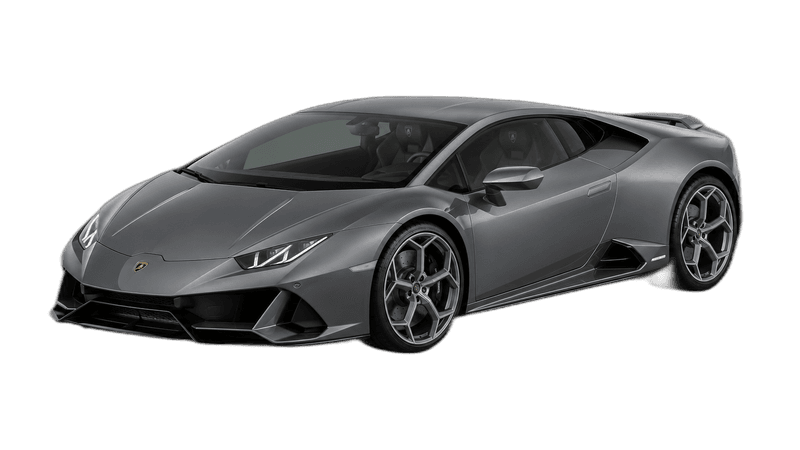
Lamborghini Huracan EVO
£200,000
usedIndicative market price, updated periodically.
640bhp
Power
2.9s
0-100 km/h
325km/h
Top Speed
£200,000
Price Used
How hard it pulls.
Peak g-force the instant you bury the throttle, estimated from the car's 0–100 time and drivetrain.
Lamborghini Huracan EVOEstimated peak launch g from the 0–100 time and drivetrain: an honest approximation, not a measured figure.
The Lamborghini Huracan EVO is a 2-door coupe by Lamborghini, producing 640 bhp, and 600 Nm of torque, with a 0-100 km/h time of 2.9 seconds, and a top speed of 325 km/h, Valued at approximately £200,000.
Dream Car Garage Editorial · Last updated 23 October 2026
Overview
We have not driven this car. This review is based on published specifications, owner reports and market listings.
The last of the naturally aspirated V10s
The Huracán EVO arrived in 2019 as an update to the original Huracán. It kept the 5.2-litre naturally aspirated V10, but added rear-wheel steering, improved aerodynamics and a revised cabin. The engine produces 631 bhp and revs to 8,500 rpm. It is one of the last mainstream supercars without turbochargers.
That engine is the reason to buy the car. It sounds like nothing else at this price, and the throttle response is immediate. The seven-speed dual-clutch gearbox shifts quickly, and the all-wheel-drive system puts the power down without drama. The EVO is not as raw as the original Huracán, but it is faster and easier to drive quickly.
The Huracán is also more usable than expected. The front boot is small but real, the cabin is comfortable for two, and the visibility is better than you might expect. It is not a daily driver in the way a 911 Turbo is, but it can do a weekend trip. The problem is that everything costs more: servicing, tyres, brakes and insurance.
Running costs
Lamborghini recommends an annual service or every 12,000 km (about 7,500 miles), whichever comes first. A minor service at an authorised dealer is £1,500 to £2,500. A major service with fluids, filters and plugs is £4,000 to £6,000. Independent specialists can be cheaper, but they need the right diagnostic equipment and experience.
Tyres are expensive. The Huracán runs 20-inch front and 21-inch rear wheels, and a set of premium tyres is £1,500 to £2,000. The optional carbon-ceramic brakes last a long time on the road, but replacement discs and pads are £8,000 to £12,000. If the car has steel brakes, they are cheaper but still not cheap.
Fuel consumption is around 15 to 20 mpg on a run and low teens in town. Insurance is high, and road tax is at the top band. Budget £5,000 to £8,000 a year for maintenance and consumables if you cover 5,000 miles. A major service or a brake job can double that in a single year.
Known weak points
The V10 is generally robust, but it has a few known issues. The front lift system is a common failure point, and it is expensive to repair. Check that the car raises and lowers smoothly, and listen for a pump or a hiss. The magnetic dampers can leak or lose their damping, especially on cars used on rough roads.
The all-wheel-drive system and the rear-wheel steering are complex. A warning light or a shudder under acceleration should be investigated. The dual-clutch gearbox is strong, but it needs its fluid changed on schedule. A car that jerks or hesitates when cold may need a clutch adaptation or a mechatronic repair.
Electrical faults are another area to check. The infotainment, the digital dashboard, the parking sensors and the climate control can all misbehave. The battery can drain if the car is not used regularly. A trickle charger is essential, but it should not mask a failing battery.
The Huracán is low, so the front bumper and the underside take a beating. Check for scrapes, cracks and repaired panels. The paint is soft, and stone chips are common. A car with paint protection film is a plus, but it can hide poor repairs. Use a paint depth gauge and inspect the panel gaps.
Buying checklist
Ask for the full service history and check that the car has been serviced annually, even if it has covered low mileage. A car with a gap in its history is a risk on a complex V10. Look for invoices that show the correct oil and fluids. A Lamborghini dealer history is nice, but a reputable independent specialist is acceptable.
Check the front lift system from cold. It should raise the nose quickly and without noise. Test the magnetic dampers in all modes and listen for knocking. Check the rear-wheel steering for warning messages. On the test drive, listen for a rattle from the exhaust and a whine from the transmission.
Inspect the carbon-ceramic brakes for cracks and wear. The discs have a limited life, and a car that has been tracked may need new ones. Check the tyres for matching brands and even wear. The Huracán is sensitive to alignment, and a car with worn bushes can chew through a set of tyres.
A pre-purchase inspection by a Lamborghini specialist is essential. The car is expensive to repair, and a diagnostic scan can reveal faults that are not obvious on a test drive. Ask for a compression test and a leak-down test if the car has high mileage or a patchy history.
Market and depreciation
The Huracán EVO has depreciated, but it is still a valuable car. Early 2019 and 2020 cars with 10,000 to 20,000 miles were £150,000 to £175,000 at the time of writing. Later, low-mileage cars with good specification were £175,000 to £195,000. The STO and the Tecnica sit above that, and they hold value better.
Specification matters. The front lift, the magnetic dampers, the carbon-ceramic brakes and the sports exhaust are desirable. A car with a rare colour or a special interior will sell faster. Avoid cars with accident damage, questionable modifications or a patchy history. The cheapest Huracán is rarely the best value.
The Huracán is likely to depreciate further, but the end of naturally aspirated V10 production is supporting values. The car is already a modern classic, and the best examples may appreciate in the long term. That is not a reason to buy one, but it is a reason to choose carefully.
Who it suits
The Huracán EVO suits someone who wants a dramatic supercar with a naturally aspirated V10 and a chassis that is easy to drive quickly. It is comfortable enough for a weekend trip, and it is fast enough to scare you. It does not suit someone who wants a cheap-to-run car, a manual gearbox or a discreet daily driver.
If you want a more usable supercar, the Audi R8 V10 Performance is the obvious choice. It shares the engine and the platform, but it is more comfortable and less extroverted. The Porsche 911 Turbo S is faster and more reliable, but it is less dramatic. The McLaren 720S is more exotic and more expensive.
Alternatives
The Audi R8 V10 Performance is the closest relative. It has the same engine, a similar chassis and a more understated image. It is cheaper to buy and to run, and it has a larger dealer network. The Porsche 911 Turbo S is the all-weather supercar benchmark, with incredible performance and reliability, but it lacks the V10 soundtrack.
The McLaren 720S is faster and more advanced, but it is more expensive to maintain and has a smaller dealer network. The Ferrari F8 Tributo is more exotic and more expensive, with a turbocharged V8. The Huracán is the value pick of the V10 supercars, and it is likely to be the last of its kind.
How this review was compiled
This review is based on Lamborghini's published technical and service information, owner reports from Lamborghini Talk and Huracán forums, UK specialist servicing guides and current Auto Trader listings. The figures are indicative UK prices, not fixed values.
Specifications
Engine
5.2L V10 naturally aspirated
Displacement
5.2L
Power
640 bhp
Torque
600 Nm
0-100 km/h
2.9s
Top Speed
325 km/h
Drivetrain
AWD
Country
Italy
Body Style
2-door coupe
Years
2019–present
Price Used
£200,000
Specifications are manufacturer-published figures.
More from Lamborghini

Featured in Carpedia
Frequently Asked Questions
What are the specifications of the Lamborghini Huracan EVO?
The Lamborghini Huracan EVO is a 2-door coupe by Lamborghini, producing 640 bhp, and 600 Nm of torque, with a 0-100 km/h time of 2.9 seconds, and a top speed of 325 km/h, Valued at approximately £200,000.
How much does a Lamborghini Huracan EVO cost?
The Lamborghini Huracan EVO has a used market value of approximately £200,000.
Is the Lamborghini Huracan EVO AWD or RWD?
The Lamborghini Huracan EVO uses a AWD drivetrain configuration in a 2-door coupe body style.
What type of car is the Lamborghini Huracan EVO?
The Lamborghini Huracan EVO is a supercars manufactured by Lamborghini in Italy. Production started in 2019.