
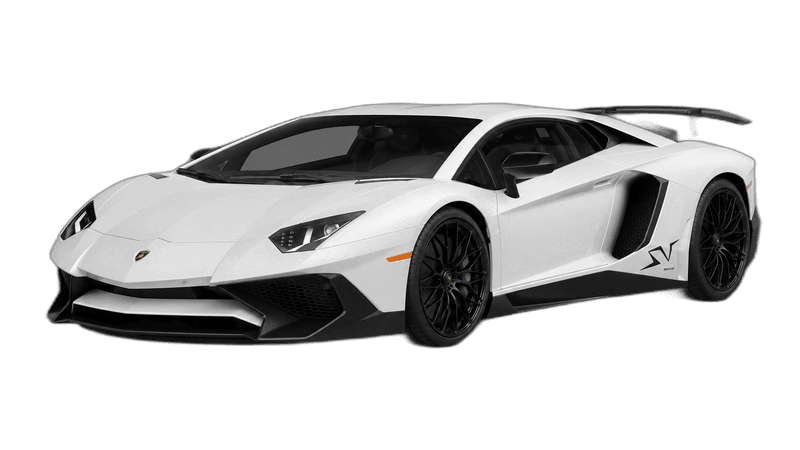
Lamborghini Aventador SV
£450,000
usedIndicative market price, updated periodically.
740bhp
Power
2.8s
0-100 km/h
355km/h
Top Speed
£450,000
Price Used
How hard it pulls.
Peak g-force the instant you bury the throttle, estimated from the car's 0–100 time and drivetrain.
Lamborghini Aventador SVEstimated peak launch g from the 0–100 time and drivetrain: an honest approximation, not a measured figure.
The Lamborghini Aventador SV is a 2 seater fixed-head coupé by Lamborghini, producing 740 bhp, and 690 Nm of torque, with a 0-100 km/h time of 2.8 seconds, and a top speed of 355 km/h, Valued at approximately £450,000.
Dream Car Garage Editorial · Last updated 24 October 2026
Overview
We have not driven this car. This review is based on published specifications, owner reports and market listings.
The case for the Aventador SV
The Lamborghini Aventador SV was unveiled in 2015 as a lighter, more powerful version of the Aventador. It uses a 6.5-litre naturally aspirated V12 producing 740 bhp, a 7-speed ISR single-clutch gearbox and all-wheel drive. Lamborghini built 600 coupes and 500 roadsters, making it a limited-run model.
The SV is a dramatic car. It has a huge rear wing, a more aggressive front end and a stripped-out cabin. Its dry weight is 1,525 kg, which is light for a V12 supercar. The V12 sounds magnificent, and the performance is brutal. It is not a subtle car, and it is not a daily driver. The ride is firm, the visibility is poor and the cabin is cramped. It is a car for special occasions.
The SV is also a collector's car. Limited production, a naturally aspirated V12 and a dramatic design have kept values strong. The SVJ, with 770 bhp and more aero, is the even more extreme version. The SV is the one many enthusiasts prefer for its simpler aero and slightly more usable nature.
What it costs to run
A minor service at a Lamborghini specialist is £1,000 to £1,500, and a major service is £3,000 to £5,000. The V12 uses a lot of oil, and the gearbox fluid and filter should be changed at the recommended intervals. The ISR gearbox is a single-clutch unit, and the clutch wears like a manual. A clutch replacement is £5,000 to £8,000.
Tyres are £1,500 to £2,000 for a set of 20-inch and 21-inch rubber; the front tyres are 255/35 R20 and the rears 355/25 R21, which limits choice and raises prices. Brake discs and pads are £5,000 to £8,000 for the carbon-ceramic system. The carbon-ceramic brakes can last 30,000 miles on the road, but track use shortens their life considerably. Fuel consumption is 12 to 16 mpg on a run and the single digits in town. The insurance group is high, and road tax is at the top rate.
Known weak points
The ISR gearbox is the biggest weak point. It is jerky at low speed, and the clutch wears quickly if the car is used in traffic. The gearbox actuator and sensors can fail. The front lift system can fail, leaving the nose low. Damper leaks and failed adaptive modules are common enough to inspect closely. The carbon-ceramic brakes can crack or chip.
The V12 is generally robust, but it can develop oil leaks and coolant leaks. The exhaust system can crack, and the catalytic converters can fail. Check the battery and charging system, especially if the car has been stored. The carbon fibre body panels are expensive to repair, and the paint is soft. The interior has sticky buttons and switches.
The ISR gearbox's clutch is a wear item, and a replacement is £5,000 to £8,000. The gearbox actuator and sensors can fail. The front lift pump is a known weakness, and the nose is very low. The carbon fibre front splitter and rear diffuser are expensive to replace. The exhaust system can crack, and the catalytic converters can fail.
What to check before buying
Begin with the maintenance invoices, not the paint. A full Lamborghini dealer or specialist history is essential. Check that the major services have been done on time and that the clutch wear has been measured. Ask for a fault-code scan and a report from a Lamborghini specialist.
Inspect the gearbox and the clutch. A car with more than 50 per cent clutch wear will need a clutch soon. Check the front lift for operation and the suspension for leaks. Check the brakes for disc wear and cracks. A car with carbon-ceramic brakes needs a careful inspection; replacement is expensive. Check the carbon fibre panels for damage and the paint for stone chips. Ask for the clutch wear reading, check the gearbox actuator and operate the front lift. A car with a full service history and a recent clutch is worth a premium.
Listen for rattles at start-up and again when hot. Check for exhaust leaks, oil leaks and coolant residue. Use the test drive to check shift speed, smoothness and any hesitation. Check the steering, brakes and suspension. Inspect the paint and the body panels for accident damage. Operate every electrical function, from the climate panel to the driver-assistance menus.
Market and depreciation
The Aventador SV has been a strong market performer. At the time of writing, a good coupe with 5,000 to 15,000 miles was £300,000 to £400,000. The roadster was £350,000 to £450,000. The SVJ was £400,000 to £500,000. Low-mileage, high-spec cars were at the top of those ranges.
The market has cooled from its peak, but the SV remains desirable. The limited production, the V12 and the dramatic design make it a collector's car. The SV Roadster is the open-top version and carries a premium. The SVJ is the more extreme car, with more power and aero. The SV is the purist's choice, with a simpler aero package and a slightly more usable chassis. Provenance and specification matter more than mileage alone when resale time comes.
Who it suits
The Aventador SV suits the collector who wants a dramatic V12 Lamborghini with limited production and a huge presence. It is not a daily driver, and it is not a practical car. It suits someone with a garage, a second car and a maintenance budget. It also suits an investor who understands the market and is prepared to hold for the long term.
If you want a more usable Lamborghini, the Huracán is the obvious alternative. If you want a more extreme car, the SVJ is the one to have. If you want a front-engined V12, the Ferrari 812 Superfast is the rival.
Alternatives
The Lamborghini Aventador S is the standard car, with less power and a softer chassis, but it is still dramatic. The Huracán Performante is smaller, lighter and more agile, with a V10 and all-wheel drive. The Ferrari 812 Superfast is a front-engined V12 with more power and a more comfortable cabin. The McLaren 720S is faster and more modern, but it lacks the Lamborghini's drama.
The Aventador SV is a statement car. It is not the best all-rounder, but it is one of the most memorable cars in its class.
How this review was compiled
This review is based on Lamborghini's published technical and service information, owner reports from Lamborghini Talk and the Lamborghini Owners' Club, UK Lamborghini specialist servicing guides and current Auto Trader listings. Use these as guide prices; the market moves.
Specifications
Engine
6.5L naturally aspirated V12 petrol
Displacement
6.5L
Power
740 bhp
Torque
690 Nm
0-100 km/h
2.8s
Top Speed
355 km/h
Drivetrain
AWD
Country
Italy
Body Style
2 seater fixed-head coupé
Years
2015–2017
Production
600
Price Used
£450,000
Specifications are manufacturer-published figures.
More from Lamborghini
Frequently Asked Questions
What are the specifications of the Lamborghini Aventador SV?
The Lamborghini Aventador SV is a 2 seater fixed-head coupé by Lamborghini, producing 740 bhp, and 690 Nm of torque, with a 0-100 km/h time of 2.8 seconds, and a top speed of 355 km/h, Valued at approximately £450,000.
How much does a Lamborghini Aventador SV cost?
The Lamborghini Aventador SV has a used market value of approximately £450,000.
How many Lamborghini Aventador SV were made?
Lamborghini produced 600 units of the Lamborghini Aventador SV.
Is the Lamborghini Aventador SV AWD or RWD?
The Lamborghini Aventador SV uses a AWD drivetrain configuration in a 2 seater fixed-head coupé body style.
What type of car is the Lamborghini Aventador SV?
The Lamborghini Aventador SV is a supercars manufactured by Lamborghini in Italy. Production ran from 2015 to 2017.